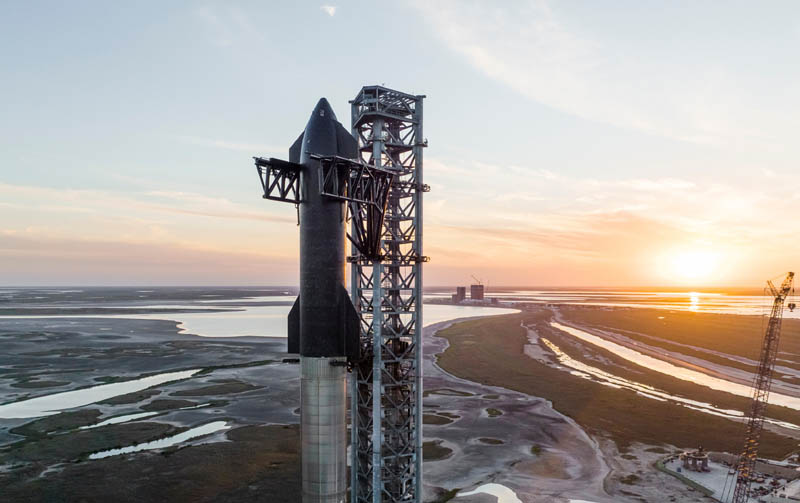
SpaceX just made aerospace history again as its mammoth Starship rocket completed its 10th test flight with multiple breakthrough achievements. Largest and most powerful rocket ever built didn’t just take off successfully—it executed a complex mission profile that included the first-ever deployment of Starlink v3 satellite simulators from the Starship vehicle.
Launch began with a flawless liftoff, followed by successful stage separation between the Super Heavy booster and the Starship upper stage. Initial milestones, while impressive, have become somewhat routine for SpaceX’s iterative testing approach. What wasn’t routine was what happened next.
For the first time since the Starship program began, SpaceX successfully deployed payloads from the vehicle during orbital operations. The company released multiple Starlink satellite simulators—test units designed to validate deployment mechanisms before committing actual Starlink V3 satellites to future missions.
“With the version 3 Starlink satellites, which start launching on Starship in 6 to 9 months, we should be able to get latency below 20ms,” Elon says, explaining that physics will work in SpaceX’s favor through lower orbital altitudes and faster data transmission through space.
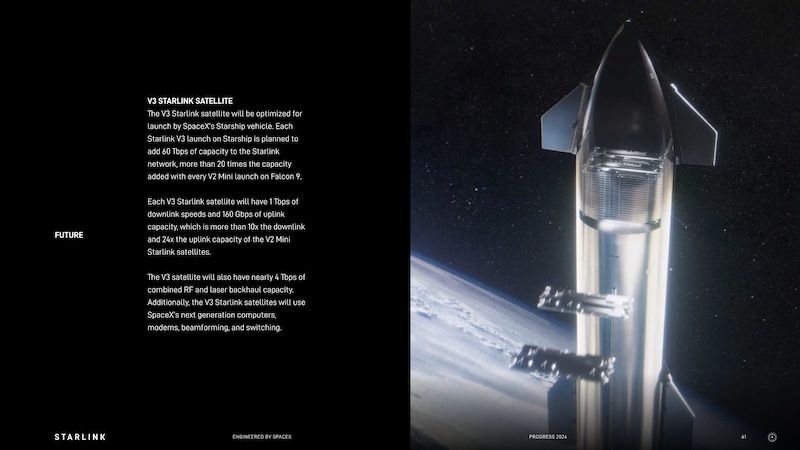
“SpaceX has officially completed its first ever in-space payload operation from its Starship rocket,” confirmed the company via its social channels shortly after the deployment sequence concluded. Achievement represents a critical validation of Starship’s cargo capabilities, essential for its planned role in satellite deployment, lunar missions, and eventually, Mars transportation.
Perhaps equally impressive was the recovery sequence. Super Heavy booster executed a controlled splashdown in the ocean near its designated recovery zone. Meanwhile, the Starship upper stage performed what observers have been waiting to see—a successful atmospheric reentry followed by a controlled flip maneuver that positioned it for a precise splashdown in the Indian Ocean.
The company’s ability to track and manage these operations remotely was facilitated by floating Starlink-connected buoys positioned strategically in the splashdown zones. Distributed communications network allowed for continuous data transmission and video feeds throughout the mission.
Successful test flight validates SpaceX’s revolutionary approach to spacecraft design. Starship rocket’s combination of massive payload capacity, reusability, and now demonstrated deployment capabilities makes it a uniquely powerful platform for space operations.
With each test flight, SpaceX refines its understanding of Starship’s performance envelope while systematically working through technical challenges. SpaceX’s ability to launch, deploy payloads, and recover both stages represents a significant advancement in space transportation economics.
As SpaceX continues to develop this platform, commercial and scientific missions that once seemed economically unfeasible may soon become routine. Starship growing reliability has certainly helped the company’s case with NASA, which has contracted Starship for upcoming Artemis program lunar landings.
If today’s test is any indication, SpaceX’s giant rocket is well on its way to becoming the workhorse that takes humanity’s next giant leap forward—proving that when it comes to space innovation, this Starship has truly launched into a league of its own.
Related Post
Elon Mars Presentation: Starship V3 Launch 2025, Tesla Optimus Robots to Mars 2027
SpaceX Starship Explodes During Static Fire Test at Starbase, All Personnel Safe
SpaceX Starship Flight 9: Booster Reflight Success Ends in Explosive Upper Stage Failure