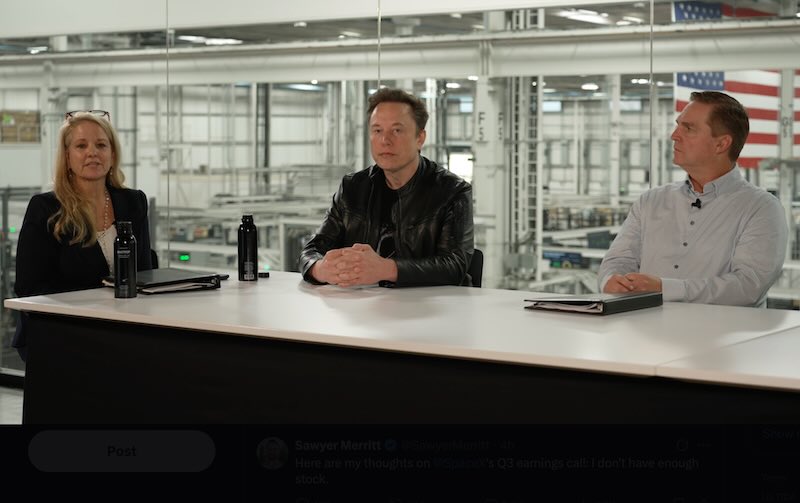
SpaceX dropped its Q3 2026 earnings, and frankly, numbers are staggering. Total revenue hit $14.58 billion, a 161% year-over-year jump that blew past analyst estimates of $12.7 billion. Adjusted EBITDA came in at $8.81 billion, up 306% YoY, while GAAP net income swung from a $1.05 billion loss to a $4.40 billion profit. These aren’t incremental gains; they’re a fundamental reshaping of what a private aerospace and technology company can achieve. And here’s the thing, SpaceX says it’s just getting started.
Three segments now define SpaceX’s business: Space at $1.77 billion (+6% YoY), Connectivity at $5.25 billion (+69% YoY), and SI, formerly branded as the AI division, at $7.56 billion (+830% YoY). Last figure deserves a second look. Q3 2026 earnings revealed that SI is now the company’s single largest revenue segment, surpassing both its legacy launch business and its fast-growing Starlink connectivity arm in a single quarter.

Quarter-over-quarter, SI revenue grew 195%, powered by 1.7 gigawatts of installed compute as of September 30. Capital expenditure tells the same story: SpaceX spent $19.59 billion in Q3 alone, nearly triple the $6.9 billion spent in Q3 2025, with $16.4 billion of that, roughly 84% of total quarterly capex, directed at SI infrastructure.
Starlink ended Q3 with 13.6 million consumer subscribers, up from 12 million in Q2 and an 89% increase year-over-year. Growth isn’t limited to residential customers, either. As of September 30, more than 3,800 aircraft were equipped with Starlink terminals. More significantly, SpaceX has contracted with approximately 12,000 aircraft, about a quarter of the entire global commercial fleet.
To meet that demand, SpaceX quadrupled aviation terminal production since the start of 2026 and expects to double output again before year-end. It’s a logistics and manufacturing challenge that most companies would struggle to articulate, let alone execute.
Among Q3 2026 earnings disclosures, one data point caught analysts off guard: Grok Bot now has 800k paid weekly users, more than doubling from the prior month. Elon called it “the fastest growth of a product I’ve ever seen in my life,” adding that per-user engagement is actually increasing over time rather than tapering off, a metric that typically distinguishes durable product adoption from novelty-driven spikes.
Enterprise Grok Bot is expected to reach wide deployment within weeks. Elon also indicated that Grok Bot will likely consume the majority of SI compute capacity going forward, which helps explain the company’s extraordinary infrastructure investment trajectory.
Currently tracking to bring 200k Nvidia GB200s online per month through the remainder of 2026, SpaceX is targeting an incremental 10 gigawatts of compute by end of 2027 and an additional 20 gigawatts of power and cooling capacity in the same timeframe.
SpaceX has also revealed concrete timelines for its semiconductor ambitions. The company is targeting its first test chip in May or June of 2027 at the Research Chip Fab facility at Giga Texas, with volume production at the much larger Terafab facility targeting Q3 2028. Terafab’s primary location will be in Texas.
Forward-looking signals from Q3 2026 earnings are, if anything, more striking than the results themselves. CFO Bret Johnsen projected total company revenues of $33 billion to $37 billion for Q1 2027, a quarterly run rate that would place SpaceX among the most valuable technology businesses on the planet. Elon went further, suggesting SpaceX could exit 2027 with an annualized revenue run rate of somewhere between $500 billion and $1 trillion.
On compute economics, Elon noted that the current payback period on compute infrastructure is under 12 months, flagged that a six-month payback period is “not impossible” for next year.
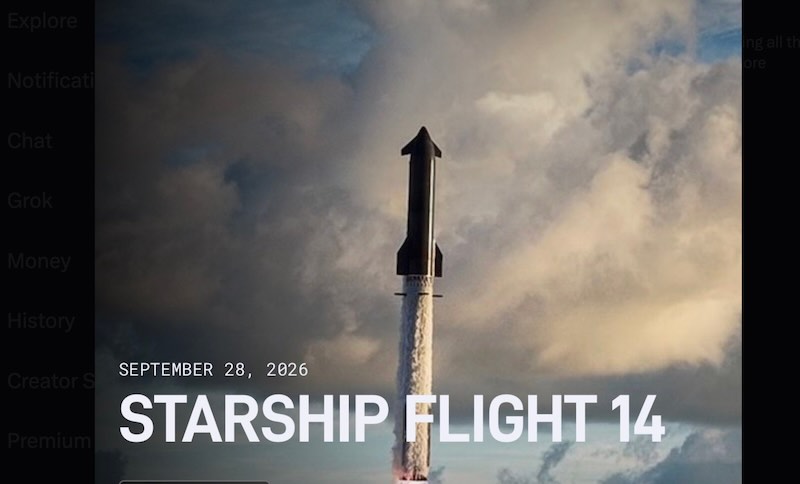
On Starship: Flight 15 is expected to include a catch attempt next month, a milestone that would mark another step toward full and rapid reusability at scale.
Then there’s the Tesla merger question. Elon confirmed that both Tesla and SpaceX have formed special committees at shareholder request, though he noted he’s recused from discussions given his conflicted position. “I don’t think we should assume that a merger is a certainty,” he said, before adding that he personally believes it would be a good idea given potential synergies across SI, chip design, robotics, and connectivity. No agreement has been reached, and no timeline has been set.
Whether a merger materializes or not, one thing is clear: with infrastructure spending at historic levels, subscriber growth accelerating across every vertical, and an SI segment that barely existed a year ago now anchoring the entire revenue stack, SpaceX isn’t just building toward orbit — it’s building toward an entirely different economic stratosphere.
Real question isn’t whether SpaceX can keep this pace. It’s whether the rest of the industry can even stay in its SpaceX.
Related Post
Starship Flight 14: SpaceX Targets First Orbital Test And Starlink V3 Launch
SpaceX Starlink Mobile Acquires 800MHz Spectrum as FCC Approves 15k-Satellite Constellation
American Airlines Brings Starlink Wi-Fi to Its Entire 1,030+ Aircraft Mainline Fleet