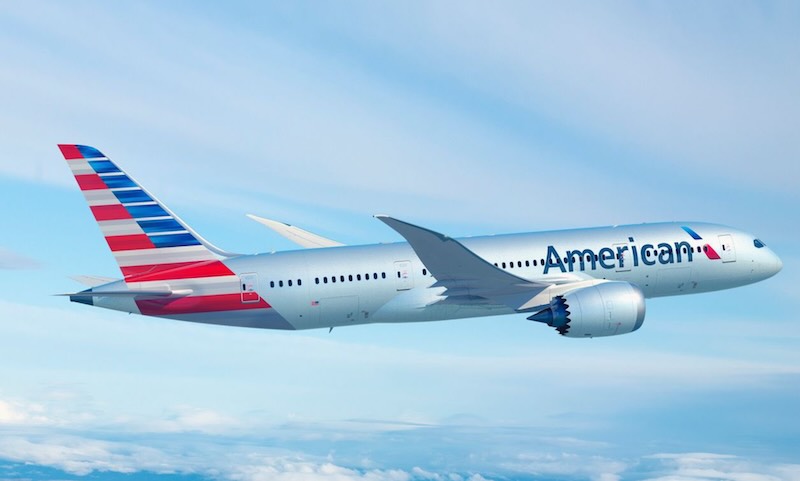
American Airlines announced today that it’s expanding its SpaceX Starlink partnership from the previously confirmed 500 Airbus aircraft to its full mainline operation. Carrier will bring Starlink to all mainline aircraft, including both Airbus narrowbody and Boeing narrowbody and widebody planes, covering a fleet of more than 1,030 aircraft. That’s a significant jump from where this deal started, positions American as one of the most Starlink-committed carriers in the world.
This isn’t just a connectivity upgrade. It’s a business statement.
Installation is set to begin in early 2027, and the rollout will eventually reach more than 1k planes, making it one of the world’s largest Starlink-connected fleets. Hardware powering this is Starlink’s Performance Aero Terminal, which can deliver speeds of up to 1 Gbps per terminal, (Starlink multi-gigabit in-flight Wi-Fi). Spec alone puts this well above the bandwidth ceiling of legacy in-flight Wi-Fi systems from providers like Viasat or Panasonic, which American currently uses on its Boeing aircraft.
For passengers, the practical difference matters. Streaming, real-time collaboration, video calls, and online gaming at cruising altitude have historically been unreliable at best and completely unavailable at worst. This changes the calculus entirely.
Scale here is hard to dismiss. American operates approximately 1,030 mainline aircraft, making it the second-largest commercial airline fleet in the world. Previously, Starlink deal covered only about one-third of that fleet, a gap that made the announcement feel incomplete. Original commitment included roughly 500 Airbus narrowbody aircraft, leaving out more than 400 Boeing 737s, 67 Boeing 777s, and 70 Boeing 787 Dreamliners. Today’s expansion closes that gap for the mainline operation.
That said, one notable area still unaddressed is the regional fleet operated under American’s wholly owned subsidiaries — none of those aircraft are currently included in any Starlink commitment. United, notably, began its Starlink rollout at the regional level, so there’s still a meaningful contrast in approach between the two carriers.
Three of the four major US carriers now have Starlink agreements in place. Alaska Airlines, United, and American have all committed to the service, leaving Delta as the last major holdout. United was the earliest mover, beginning to offer free Starlink Wi-Fi to its loyalty members in 2025 and rolling the system across a fleet of more than 1k aircraft. Southwest, meanwhile, is on track to have 300-plus aircraft equipped with Starlink by the end of 2026.
Delta remains the last major U.S. airline without a Starlink agreement, currently partnered with Amazon’s Project Kuiper for a planned rollout starting in 2028. Whether that timeline holds, or whether Delta eventually reassesses, will be worth watching closely.
Passenger impact of today’s announcement is genuinely substantive. More than 165 million travelers fly on American’s mainline aircraft each year, and a network this size means Starlink coverage will touch a huge portion of domestic and international itineraries. Reliable connectivity at 35k feet isn’t a novelty feature anymore, it’s becoming a baseline expectation, and American is now fully committed to meeting it.
To put it simply: American Airlines didn’t just upgrade its Wi-Fi, it upgraded its entire in-flight air-gument for why passengers should choose it over the competition.
Related Post
Delta Bets on Amazon LEO Over Starlink for In-Flight Wi-Fi — Here’s Why
Starlink Business Aviation Prices Double — New Rates Explained
Amazon Leo Aviation Antenna Takes Aim at Starlink In-Flight Wi-Fi Dominance