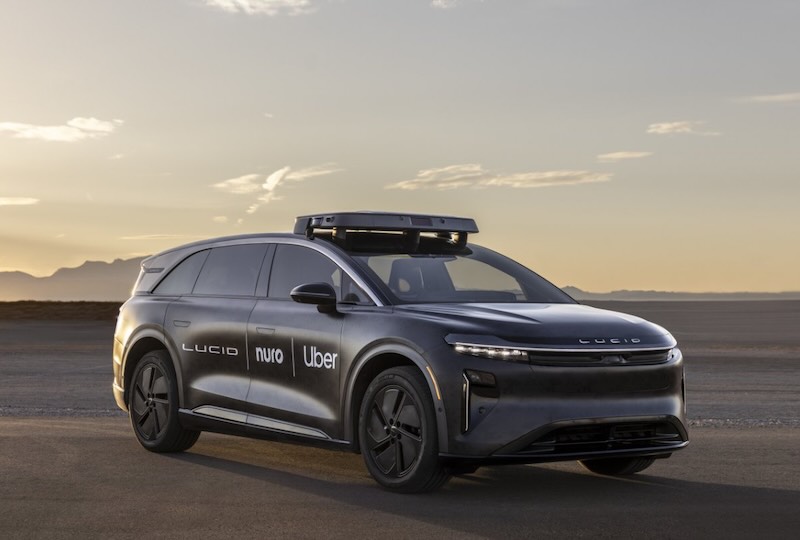
Uber’s making its boldest autonomous vehicle play yet, dropping $300 million into EV manufacturer Lucid Motors while simultaneously backing startup Nuro in a three-way partnership that’s designed to flood American streets with 20k self-driving electric SUVs. Ride-hailing giant isn’t just dipping its toes into the robotaxi waters—it’s diving headfirst into what could become the most significant transformation of urban mobility since the smartphone app revolutionized how we hail rides.
Starting late next year, Uber plans to deploy Lucid’s Gravity SUVs equipped with Nuro’s autonomous driving technology across one major U.S. city, with the rollout extending over six years beginning in 2026.
Beyond the $300 million investment in Lucid, the company’s pouring an undisclosed “multi-hundred-million dollar” amount into Nuro—sources suggest this investment actually exceeds what Uber’s paying Lucid. That’s serious money for a company that’s spent years working toward profitability.
“Autonomous vehicles have enormous potential to transform our cities for the better,” said Dara Khosrowshahi, Uber’s CEO. “We’re thrilled to partner with Nuro and Lucid on this new robotaxi program, purpose-built just for the Uber platform, to safely bring the magic of autonomous driving to more people across the world.”
Partnership took a full year to negotiate, according to Nuro co-founder and president Dave Ferguson. “I think that’s probably a reflection of how meaty it is,” Ferguson explained, noting that Uber conducted extensive due diligence with nearly every autonomous vehicle company before selecting Nuro as its technology partner.
Nuro’s approach to autonomous driving differs significantly from Tesla’s pure-vision methodology. The company employs a multi-sensor setup combining cameras, LiDAR, and radar systems for redundancy and safety. Strategy contrasts sharply with Tesla’s camera-only approach, which relies heavily on AI processing and neural networks.
Technical divide raises important questions about scalability and reliability. While multi-sensor setups like Nuro’s provide additional safety redundancies, they also introduce fusion challenges, calibration complexities, and higher manufacturing costs. Tesla’s pure-vision system simplifies hardware requirements but places greater emphasis on software sophistication and data processing capabilities.
Nuro’s training infrastructure utilizes NVIDIA DRIVE Thor SoCs, though specific compute capacity details remain proprietary. The company has collected operational data from 59 U.S. cities and logged over one million autonomous miles. However, these numbers pale in comparison to Tesla’s massive data advantage—Tesla’s fleet has accumulated over 3.6 billion Full Self-Driving miles, and their Dojo supercomputer trains neural networks using 70k GPU hours.
Nuro-equipped Gravity vehicles will achieve Level 4 autonomy, meaning they can handle all driving tasks within specific operational domains without human intervention. Though it’s worth noting that Level 4 systems typically operate within geo-fenced areas under predetermined conditions.
Ferguson described the integration process as “almost a delight,” citing the redundancies built into Lucid’s Gravity platform. Collaboration between hardware and software teams appears to have proceeded smoothly, which isn’t always the case in complex autonomous vehicle partnerships.
Competitive landscape remains intense, with companies like Waymo similar partnerships with ride-hailing platforms.
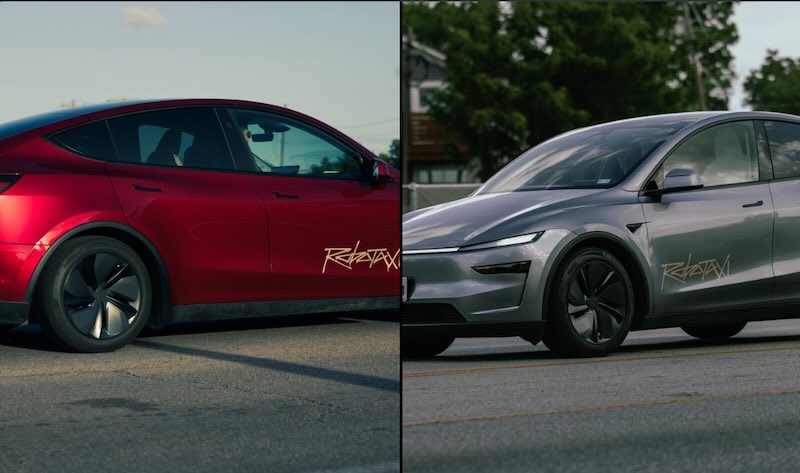
Tesla has received permission to launch its Robotaxi service in Austin, Texas, beginning June 22nd, with an invitation-only early access program. Tesla has started distributing targeted invitations to selected users for the pilot program that will operate within a limited geographical area.
Whether Uber’s partnership with Lucid and Nuro succeeds depends largely on execution rather than vision. Companies have assembled impressive technical capabilities and financial resources, but the autonomous vehicle industry has repeatedly demonstrated that translating promising technology into reliable commercial operations remains extraordinarily difficult.
Multi-sensor versus pure-vision debate will likely be settled by real-world performance data rather than theoretical advantages. Nuro’s approach offers redundancy and safety margins, while Tesla’s strategy prioritizes simplicity and scalability. Both methodologies have merit, but only sustained operation in complex urban environments will determine which approach delivers better results.
Ferguson’s confidence in the partnership reflects broader industry optimism about autonomous vehicles, but the timeline for widespread deployment continues to slip. Uber’s substantial financial commitment suggests the company believes the technology has finally reached commercial viability, but previous predictions about autonomous vehicle timelines have proven overly optimistic.
Success of Uber’s robotaxi program will ultimately depend on whether the partnership can navigate regulatory approval, achieve consistent technical performance, and gain public acceptance. If they succeed, urban transportation could undergo its most significant transformation in decades. If they fail, it’ll be another expensive lesson in the challenges of bringing autonomous vehicles to market.
Related Post
Tesla Robotaxi App Update: Austin Service Area Doubles with New Features
Tesla vs Waymo: Kyle Vogt Explains the Real Robotaxi Divide That Matters Most
Tesla Robotaxi vs UBER: Former Executive Reveals Why CyberCab Will Transform Ride-Hailing