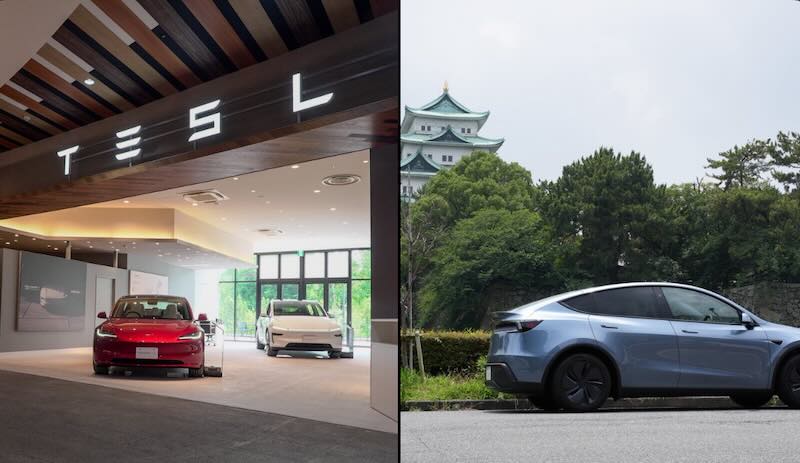
Tesla plans to double its retail footprint in Japan by the end of 2026, expanding from 23 current locations to approximately 50 outlets. Expansion strategy focuses on commercial complexes as the company positions itself to capture market share in Japan’s nascent electric vehicle sector.
While Japan’s EV adoption remains relatively low compared to other markets, Tesla sees opportunity where others see challenges. Tesla’s aggressive expansion comes as it faces softening demand in its core markets of the U.S., Europe, and China, yet continues to show strong performance in Japan.
Despite not disclosing official Japanese sales figures, estimates indicate Tesla’s domestic sales grew approximately 70% year-over-year in the first half of 2025, reaching around 4,600 units. Growth trajectory stands in stark contrast to the broader Japanese EV market, which declined 7% during the same period.
The company has set an ambitious target to overtake Mercedes-Benz as Japan’s leading imported automaker by 2027. Goal requires significant volume increases, considering Mercedes-Benz sold 53,195 vehicles in Japan during 2024.
Japan’s overall EV market faces multiple headwinds that have contributed to two consecutive years of declining sales. From January to June 2025, EV sales totaled just 27,321 units, reflecting muted consumer enthusiasm and inadequate policy support for electrification.
Delayed expansion of charging infrastructure compounds these challenges, creating barriers to EV adoption that foreign manufacturers like Tesla must navigate. However, domestic automakers Toyota, Honda, and Nissan haven’t yet delivered compelling EV offerings to stimulate market growth.
Japan’s legacy automakers won’t introduce their next-generation electric models until around 2026, creating a strategic window for Tesla to Double its retail presence and establish market dominance. While global EV demand has entered a cooling phase, analysts believe Japan’s EV wave remains inevitable.
If domestic manufacturers fail to accelerate their electrification strategies, U.S. and Chinese players stand to gain substantial market share. Tesla’s retail expansion strategy appears designed to capitalize on this potential shift in consumer preferences.
With Tesla preparing to double down on Japan’s market potential, the company is betting that patient investment in retail infrastructure will pay dividends when the country’s EV adoption eventually accelerates.
Related Post
Toyota Signs Deal for First China-Based Lexus EV Plant in Shanghai Jinshan District
Toyota and Waymo Partner to Revolutionize Autonomous Driving Technology
Tesla Model Y L Fall Unveiling: Extended Wheelbase EV Targets Family Market