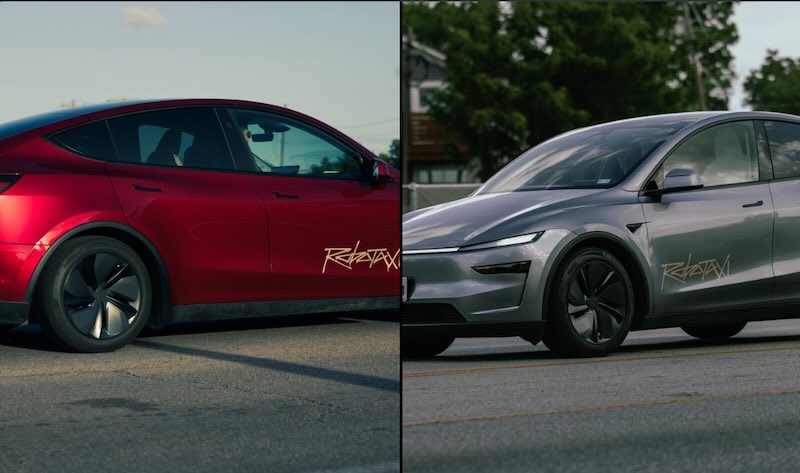
Tesla’s FSD technology has reached a turning point. The company’s Model Y vehicles are now operating as robotaxis on public roads in Austin, Texas, without anyone in the driver’s seat. Isn’t a controlled test environment or a closed course. These are production vehicles navigating real traffic, making real decisions, and carrying no human supervision inside the cabin.
Two separate Tesla Model Y Robotaxi units have been confirmed operating independently on Austin’s public infrastructure. Vehicles carry different license plates, indicating Tesla is expanding its unsupervised deployment. Elon Musk confirmed the operation: “Testing is underway with no occupants in the car.”
Timeline tells the story. Tesla launched its robotaxi pilot on June 28 with a safety driver in the passenger seat. By December 15—just 170 days later, that safety driver was gone. Progression mirrors Waymo’s early rider program, which took 173 days to remove its safety driver in 2017. Yet there’s a difference that matters.
Tesla produces over 4,500 Model Y units weekly at Giga Texas. That’s the same facility, the same production line, and the same supply chain used for consumer vehicles. Waymo and other competitors build custom vehicles in limited quantities at substantially higher costs. When you’re trying to scale a robotaxi network, manufacturing capacity isn’t just an advantage, it’s the entire business model.
Hardware foundation matters here. FSD Unsupervised runs on sensors and computing platforms already installed in mass-production vehicles. There’s no specialized robotaxi hardware to source, no custom manufacturing process to establish, no separate supply chain to manage. Tesla simply activates the software.
Real question isn’t whether Tesla can remove the safety driver. That’s done. The question is how quickly the company can scale operations from two vehicles to 200, then to 2k. Manufacturing capacity suggests Tesla can scale faster than any competitor in North America. A decade of R&D and multiple hardware iterations have led to this moment.
How do you compete with a Tesla Model Y Robotaxi that rolls off the same production line as a consumer vehicle? You probably don’t.
Related Post
Elon on Waymo: “Never really had a chance against Tesla” Waymo Details AI Safety Strategy
Tesla FSD V14.2.1 Lets You Text and Drive Depending on the Context of Surrounding Traffic
Tesla Cybertruck Drives 1,200 Miles FSD 14.2 Autonomously, Full Self-Driving Milestone Achieved