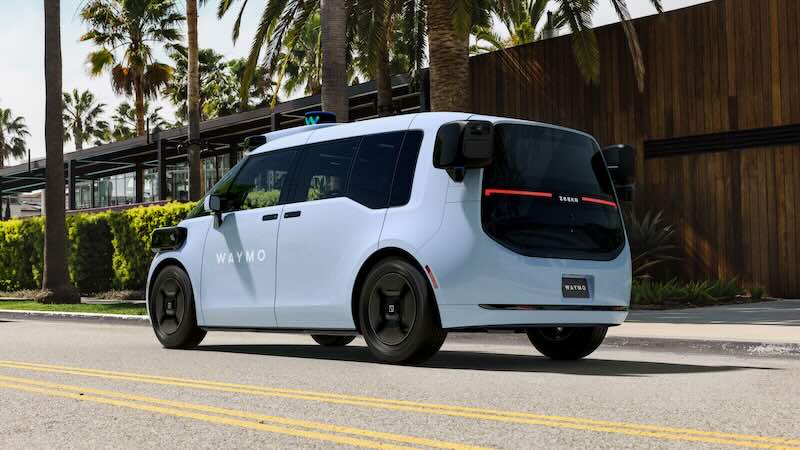
Waymo dropped a technical breakdown of its autonomous vehicle strategy, it’s clear the company isn’t interested in half-measures. Waymo detailed a three-pronged AI architecture designed to prove safety through data rather than promises. Comes as the autonomous vehicle race heats up, with competitors making bold claims about their own timelines and capabilities.
Waymo’s system centers on what the company calls the Waymo foundation model, a unified world-model that powers three critical components. Driver handles real-time navigation, Simulator creates realistic training environments, and the Critic evaluates performance to identify weak spots. Isn’t just about teaching a car to drive. It’s about building an entire ecosystem where each element reinforces the others.
Architecture combines what Waymo describes as “Think Fast/Think Slow” processing. Rapid sensor-fusion handles immediate decisions while deeper semantic reasoning tackles complex scenarios, like spotting a burning vehicle ahead and determining the safest response. The company trains large “Teacher” models for each function, then distills them into smaller “Student” models that can actually run in production vehicles.
Numbers tell an interesting story. Waymo reports more than 100 million fully autonomous miles driven, with crash data showing a 10-fold reduction in severe-injury incidents compared to human drivers. Jeff Dean, Chief Scientist at Google DeepMind and Google Research, weighed in on the announcement, calling Waymo’s system “the most advanced, large-scale application of embodied AI today.”
That claim drew immediate pushback. One commenter challenged Jeff Dean to compare Waymo’s achievements against Tesla’s approach. Dean responded with specifics: “I don’t think Tesla has anywhere near the volume of rider-only autonomous miles that Waymo has (96M for Waymo, as of today). Safety data is quite compelling for Waymo, as well.”
Elon Musk jumped into the conversation with characteristic confidence. “Waymo never really had a chance against Tesla,” he wrote. “This will be obvious in hindsight.”
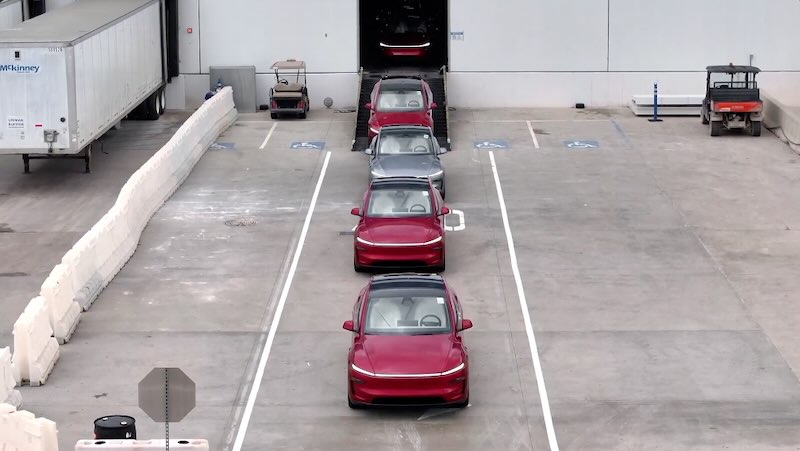
Elon outlined Tesla’s roadmap on other interview, stating that FSD Unsupervised is “pretty much solved at this point” and promising Robotaxis without safety monitors launching in Austin within 3 weeks, (Tesla embeds hidden “Unsupervised” FSD geofence in Bay Area), also teased a new FSD model is coming in about 1-2 months.
Elon also teased a significantly larger model arriving in early 2026, enhanced with reasoning capabilities and reinforcement learning. He acknowledged a potential bottleneck: scaling to “a few hundred gigawatts of AI chips per year” might require Tesla to build its own fabrication facility.
What’s emerging is a fundamental split in how companies approach autonomous vehicles. Waymo emphasizes validation, simulation, and incremental deployment based on safety data. Tesla appears focused on rapid iteration and broader rollout through over-the-air updates. Whether one strategy proves superior remains an open question, but the stakes for public safety and transportation couldn’t be higher. For now, riders will have to decide which path they trust when they’re ready to let go of the Way-mo.
Related Post
Tesla FSD V14.2.1 Lets You Text and Drive Depending on the Context of Surrounding Traffic
Tesla vs Waymo: Kyle Vogt Explains the Real Robotaxi Divide That Matters Most
Tesla Robotaxi Review: 69 Rides Reveal Surprising Strengths and Critical Gaps