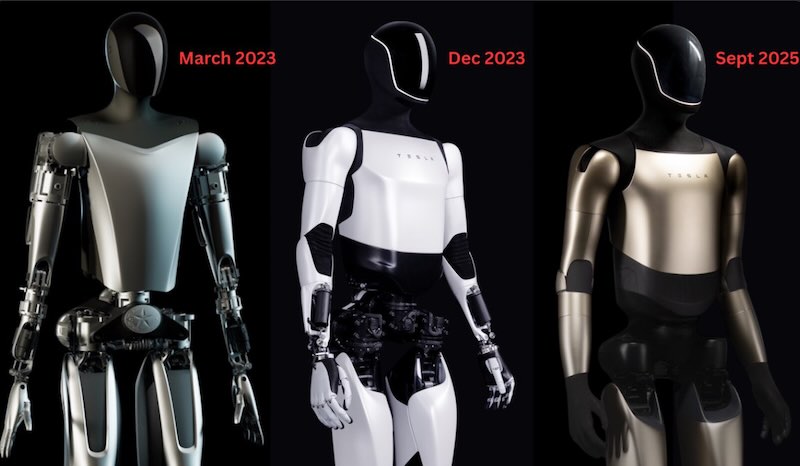
Tesla filed a set of international patents that could represent the most consequential engineering disclosure in the Optimus program’s short history, check out. The filings, published today, cover the forearm, wrist, and joint architecture of what many observers believe is the Tesla Optimus robot hand destined for Optimus v3 platform. Elon Musk has cited the hand and forearm as among the hardest unsolved problems in humanoid robotics — and now, at least on paper, it looks like Tesla’s engineering team may have cracked it.
Why the hand has always been the hard part, for years, building dexterous robotic fingers meant accepting a compromise: pin joints. Two parts meet, a shaft runs through them, one part pivots around the other. Clean, predictable, manufacturable at scale. Almost every humanoid robot finger built over the last decade has used some version of this architecture — including, until recently, Optimus itself.
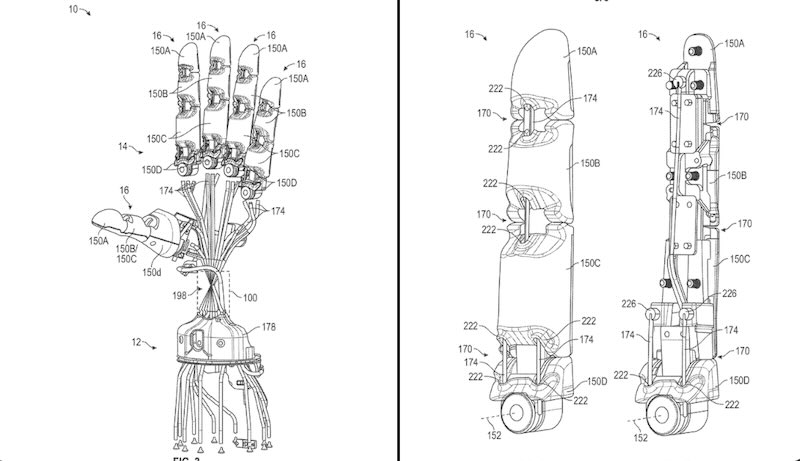
May, 2024, Tesla previous-gen Optimus hand patent details their innovative systems and methods for building a robotic hand and cable-driven fingers configured to mimic human hands and fingers with unprecedented realism.
The trouble is that pin joints carry three compounding liabilities at finger scale. Wear accumulates at two small friction surfaces, and cycling a joint millions of times — which any working robot hand absolutely will — erodes those surfaces faster than acceptable maintenance windows allow. Routing power and data cables through a joint means forcing those lines around the pin, and anything that flexes repeatedly will eventually fatigue out. But the third problem is the one most engineers quietly avoided discussing: human fingers aren’t pin joints.
Watch your index finger curl slowly. Knuckle bone ends don’t pivot around a fixed axis — they roll and slide against each other simultaneously, shifting the rotation axis throughout the range of motion. Anatomists call this rolling-sliding articulation. It’s why a human finger curls smoothly rather than producing the kinked, stepwise arc a pin joint generates.
Tesla built Optimus with pin joints for three years. Then the engineers looked at actual human anatomy and copied that instead.
Tesla Optimus robot hand patent outlines a tendon-driven, cable-actuated assembly that maps almost directly onto biological architecture. Actuators sit in the forearm, not in the fingers, replicating the arrangement of human forearm muscles. 3 thin, flexible control cables per finger run from those actuators, through the wrist, and into each finger segment, standing in for biological tendons.
Each finger carries 4 degrees of freedom, wrist carries 2. That’s a meaningful step beyond the functional range most commercial humanoid platforms currently offer.
Wrist routing section of the filing is particularly noteworthy. Cables transition from a lateral stack on the forearm side to a vertical stack on the hand side, with a purpose-engineered transition zone that minimizes stretch, torque, friction, and crosstalk during yaw and pitch movements. Precise cable channels within each finger segment dictate which joints bend and when — some cables route behind joints, others forward — enabling selective, independent finger actuation.
This is, structurally, how a human hand works. Tesla has replaced muscles with actuators and tendons with cables, and the architecture underneath is recognizably biological.
Last November, Elon stated publicly that Optimus V3 would feature 25 actuators per forearm and hand. Today’s patent filings align with that figure and strongly suggest Tesla Optimus hand architecture disclosed here is precisely what’s headed into production.
Engineering jump from pin joints to rolling-contact, tendon-driven articulation isn’t incremental — it’s structural. And if the V3 reveal delivers on what these patents promise, Tesla won’t just have built a better robot hand. They’ll have built the most anatomically faithful robotic hand at commercial scale.
Optimus, it seems, is finally getting a grip.
Related Post
Tesla Optimus Robot: Video Showing Off New Hand With 22 Degrees of Freedom
Tesla Optimus Robot BOM Breakdown Reveals High Costs, Challenges Ahead
Tesla Optimus: The $30k Robot Revolution | Coming 2025 | Serve, Clean, Befriend