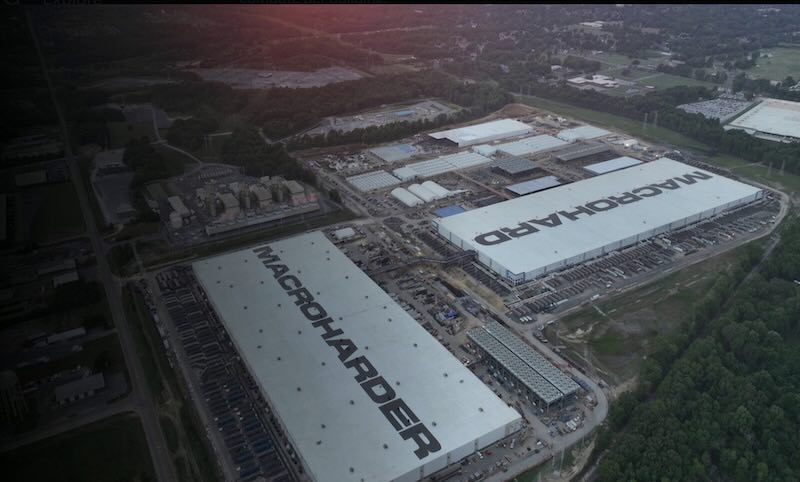
SpaceX is scaling its AI infrastructure at a pace that’s hard to ignore. Elon has officially unveiled the names of two new supercomputer clusters currently under construction, Gun Range and Spam, adding roughly 420K Nvidia GB300 GPUs to what’s already one of the most ambitious private AI computing buildouts in history. Gun Range is tracking for a late-November launch, while Spam is expected to come online in December. Combined, two clusters represent over $35 billion in GPU investment.
This isn’t a slow rollout. SpaceX is moving fast, and the numbers reflect it.
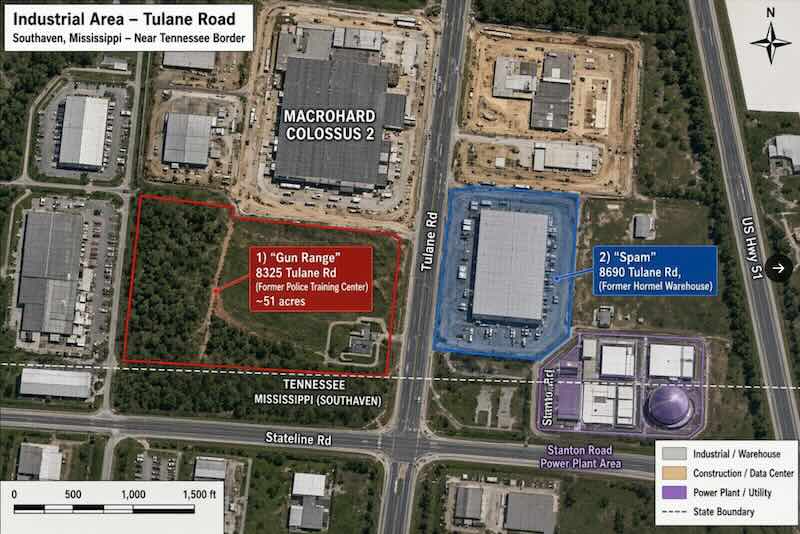
Gun Range will house approximately 220k GB300s, configured for training, matching the specs of both Macrohard and Macroharder, the company’s existing clusters in Memphis. Spam, by contrast, takes a different approach.
SpaceX repurposed an old Hormel Foods distribution warehouse in Southaven, Mississippi, yes, one that used to store canned meat products, renamed it Spam. The facility will house around 200k GB300s, but unlike its counterparts, it’s configured for inference rather than training. That distinction matters. Inference workloads don’t demand the same networking complexity as training runs, which means Spam uses simpler networking architecture and less than half the fiber of a training cluster. It’s a leaner, more cost-efficient deployment for serving live AI models at scale.
Elon confirmed the details directly: Spam cluster will have roughly 200k GB300s configured for inference, with simpler networking and less than half the fiber of a training cluster.
To understand the scope of SpaceX’s supercomputer ambitions, it helps to walk through the full Memphis picture. Colossus II, which Elon toured on-site, once around midnight and again the following morning, is anchored by Macrohard at roughly 810k square feet, housing about 550k GB200s. Macroharder clocks in at around 312k square feet with approximately 220k GB300s, packing in comparable compute despite a significantly smaller footprint. That efficiency gap is intentional.
Elon characterized Minihard as a product, something that continues to evolve, much like Tesla’s manufacturing lines or SpaceX’s rocket systems. It sits adjacent to rows of Megapacks, integrating energy storage directly into the compute infrastructure. A land swap is already clearing space for a fifth data center at the site, and a warehouse across State Line Road is being evaluated as a potential sixth.
Meanwhile, in Brownsville, 444 acres now fall under Starbase for permitting purposes, suggesting SpaceX’s infrastructure footprint may stretch well beyond Memphis alone.
The speed of SpaceX’s supercomputer deployment is notable even by hyperscaler standards. Between Macrohard, Macroharder, Minihard, Gun Range, and Spam, SpaceX is assembling a GPU fleet that rivals, in some configurations, may exceed, what major cloud providers have deployed for internal AI workloads. GB300 architecture, paired with 800-gigabit NICs on the training clusters, positions SpaceX to run frontier-scale model training in-house.
For context: 800 gig NICs are critical for reducing inter-GPU communication bottlenecks during large training runs. Skipping that on Spam isn’t a compromise, it’s the right call for inference, where latency and throughput matter more than raw interconnect bandwidth.
SpaceX isn’t just building compute. It’s building a differentiated compute strategy, training clusters for developing models, inference clusters for serving them, and energy infrastructure woven in from the start.
Call it whatever you want, but when it comes to AI infrastructure, SpaceX is clearly delivering the goods — Spam included.
Related Post
Macrohard: How Tesla and xAI Are Turning Every AI4 Into a Mobile Computer
xAI $30B Colossus 2 Supercomputer: Elon Musk Plans Million-GPU System in Memphis
Anthropic Partners With SpaceX Colossus 1 Supercomputer for Massive Compute Expansion