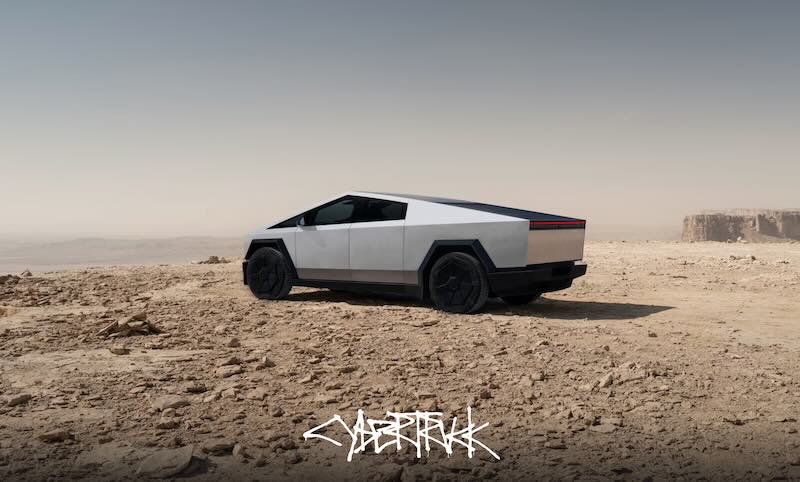
Tesla announced last Friday that it’s winding down Cybertruck production at its Gigafactory Texas facility, and the reason isn’t entirely what most observers expected. Elon confirmed the wind-down in an X post, stating the move is designed to free up capacity for increased Cybercab output, Tesla’s autonomous robotaxi that the company has positioned as central to its long-term strategy. For the thousands of customers still holding deposits on a Cybertruck that hasn’t been delivered, this news lands hard.
This isn’t just a production shuffle. It’s a formal declaration that Tesla’s future is no longer about the Cybertruck, it’s about the Cybercab, and the company isn’t waiting around.
Elon was direct on X: the order rate for the Tesla Cybertruck far exceeds Tesla’s current production rate, and that gap isn’t going to close before the line shuts down. He acknowledged Tesla will return deposits for a significant number of customers, not because the truck is unprofitable, he said, but because the opportunity cost of Cybertruck’s manufacturing complexity doesn’t justify the yield loss on Cybercab units.
That’s a notable framing. Elon pushed back on what he called misreporting by legacy media, insisting profitability isn’t the issue. What it is, then, is a prioritization decision and Cybercab won.
For anyone who put money down expecting delivery before mid-2027, the math doesn’t work. Elon’s statement left several questions unanswered, including whether Cybertruck production might shift to another facility or simply stop altogether. That ambiguity isn’t reassuring for buyers who’ve been in the queue for years.
Texas plant is currently the only Tesla facility equipped to manufacture the specialized components Cybertruck requires, which makes a production relocation scenario increasingly unlikely. If the Austin line goes dark, the truck almost certainly goes with it.
It’s worth revisiting what Tesla originally said this vehicle would become. At a May 2023 shareholder meeting, Elon projected Tesla could eventually sell between 250k and 500k Cybertrucks annually. Reality unfolded very differently.
U.S. sales reached 38,965 units in 2024 and fell to 20,237 in 2025, a 48% decline. Through the first nine months of 2026, only 11,586 Cybertrucks sold in the U.S., down another 28% YoY. That trajectory didn’t leave Tesla many options.
From the start, Elon acknowledged “enormous challenges” with scaling production and reaching cash flow positivity with Cybertruck, famously saying in 2023, “We dug our own grave with the Cybertruck.” Stainless steel exoskeleton, the unconventional manufacturing process, the sheer engineering divergence from Tesla’s existing lineup, it all added up to a vehicle that consistently punished the company’s production economics.
During Q3 2026, Tesla produced more than 464k vehicles total, but the “Other Models” category, which includes Cybertruck, accounted for just 7k units, down 40% from the previous quarter. At that output level, the production line’s real estate becomes very hard to justify.
The Cybercab, which features butterfly doors and no steering wheel, pedals, or mirrors, is a core component of Elon’s push to reposition Tesla as an AI and robotics company rather than a traditional automaker. That strategic pivot has been underway for some time, but Cybertruck wind-down makes it official.

Tesla began offering paid Cybercab rides in Austin in September, and the capacity equation is straightforward: with Tesla’s installed capacity for both Cybertruck and Cybercab sitting at approximately 125k units each, phasing out Cybertruck could effectively double Cybercab production capacity.
What comes next for buyers? If you’re holding a Cybertruck deposit right now, the most honest advice is to watch Tesla’s communications carefully. The company hasn’t signaled whether it’ll stop taking new orders, but doing so would be a logical next step — there’s no point collecting deposits Tesla already knows it can’t honor before the line closes.
Cybertruck was always a product that existed on the edge of feasibility. It was a statement vehicle, a technology testbed, a declaration that Tesla could build something no one else would attempt. As the Cybertruck lead engineer Wes Morrill noted on X, truck served as “an incredible technology development platform” that lives on through the Cybercab. That’s a generous send-off for a vehicle that never achieved its commercial promise, but it’s also not inaccurate.
For Cybertruck, the opportunity has finally passed, it turns out, the opportunity cost was the whole point.
Related Post
Tesla Cybercab: Inside the Robotaxi Production Line Rewriting Autonomous Driving
Cybertruck Earns IIHS Top Safety Pick+ Rating, Only Electric Truck to Achieve Top Honor
Tesla Robotaxi Fleet Tops 1,000 Vehicles, Is the AV Race Already Over?