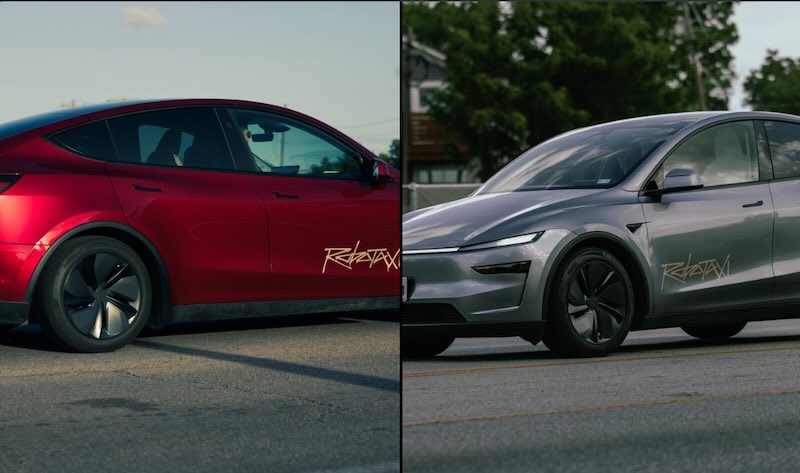
Tesla has filed for regulatory approval in Phoenix, Arizona to begin testing and eventually operating its Robotaxi service, marking a strategic move to challenge Waymo’s established autonomous ride-hailing operations. Submitted to the Arizona Department of Transportation on June 26th, represents Tesla’s latest effort to expand its autonomous vehicle testing beyond its current Austin pilot program.
Arizona Department of Transportation confirmed that Tesla has applied for permission to test autonomous vehicles both with and without human safety drivers. A final decision on the applications is expected by the end of July, with Tesla expressing specific interest in operating within the Phoenix metro area.
Tesla’s Arizona application follows the company’s launch of its Robotaxi pilot program in Austin, Texas earlier this month. Pilot fleet utilizes Model Y vehicles equipped with Tesla’s latest FSD V13+, operating under remote supervision from an undisclosed operations center.
Each Tesla Robotaxi vehicle includes a human operator in the passenger seat to assist invited participants testing the service. Operator can intervene at any time if needed, providing an additional safety layer during the testing phase. Allows Tesla to gather real-world data while maintaining operational safety standards.
Waymo, a subsidiary of Alphabet, has been offering fully autonomous ride-hailing services in the Phoenix area since 2020, establishing a significant market presence. Head start gives Waymo operational experience and regulatory relationships that Tesla will need to navigate as it enters the market.
Competitive landscape in Phoenix represents a critical test for Tesla’s autonomous vehicle technology. While Tesla was once considered a leader in self-driving technology, it now finds itself working to close the gap with Waymo’s established operations.
Tesla and Waymo pursue fundamentally different technological approaches to autonomous driving. Waymo relies on a sensor-rich system that incorporates LiDAR technology and high-definition maps to navigate complex driving scenarios. Approach provides multiple data sources for decision-making but requires significant infrastructure investment.
Tesla focuses on a vision-based system powered by neural networks, arguing that this approach will eventually make autonomous vehicles cheaper and more scalable. The company’s strategy depends on camera-based sensors and machine learning algorithms to interpret driving environments, potentially reducing hardware costs compared to LiDAR-based systems.
Tesla’s vision-based approach to autonomous driving remains unproven at scale, despite the company’s confident projections about cost advantages. Effectiveness of this technology compared to Waymo’s sensor-rich approach will likely be demonstrated through real-world testing and commercial deployment.
The Phoenix market will provide valuable insights into how Tesla’s Robotaxi service performs against established competition. Consumer acceptance, safety performance, and operational efficiency will all factor into the success of Tesla’s expansion efforts.
Elon indicated on X this week that Tesla’s Robotaxi service is “very likely” to expand to the San Francisco Bay Area within the next month or two. Timeline suggests Tesla’s intent to grow the service aggressively across multiple markets simultaneously.
Related Post
Tesla vs Waymo: Kyle Vogt Explains the Real Robotaxi Divide That Matters Most
Tesla Robotaxi First Collision Has Been Recorded, Raises Autonomy Questions
Tesla Robotaxi Faces Steering Issues and Operational Problems on Launch Day