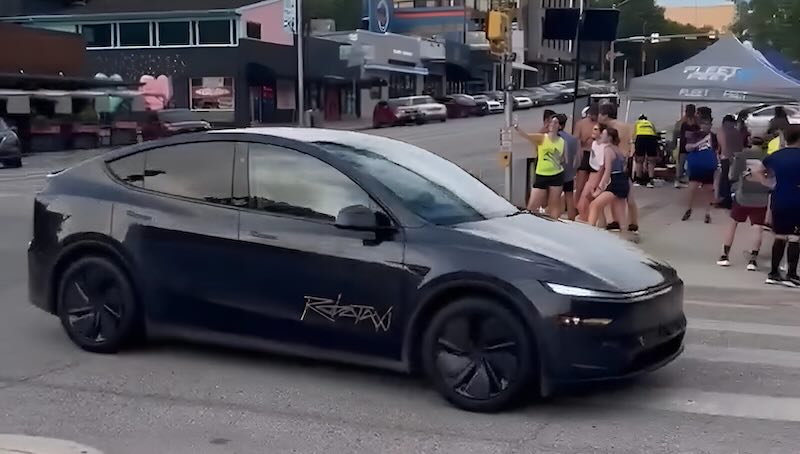
There’s something worth pausing on in Tesla’s latest Robotaxi software patch. Turn signals no longer trigger an audible click inside the cabin. That’s it. That’s the update. To most people, it barely registers — yet it says something substantive about where Tesla’s competitive edge actually lives. It’s not in raw fleet numbers or flashy launch events. It’s in the quiet, granular control the company holds over every layer of the product, from the software stack to the physical seat the passenger is sitting in.
That kind of control is what makes a small robotaxi update that highlights Tesla’s vertical integration a genuinely important case study in how autonomous vehicle companies are, or aren’t, positioned to compete over the long run.
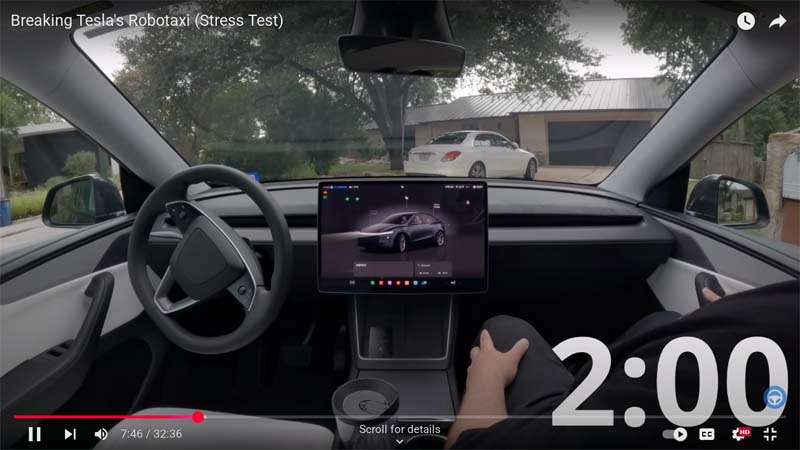
Why a turn signal sound actually matters, When you build your own hardware and your own software, cabin-level adjustments like this are a single engineer’s afternoon. When you’re Waymo — sourcing vehicles from Jaguar or Zeekr and layering your autonomous stack on top — that same change becomes a multi-team coordination effort. You’re navigating another manufacturer’s vehicle architecture, their CAN bus configurations, their audio systems. It’s not impossible, but it introduces friction that compounds across every refinement cycle.
Tesla doesn’t have that friction. The company designs the vehicle, writes the firmware, and ships the Robotaxi software directly to the fleet. That’s the core of what vertical integration means in practice: not just cost savings in manufacturing, but the ability to iterate on the full product without organizational handoffs slowing things down.
Here’s the number that tends to dominate Robotaxi coverage: Waymo currently operates roughly 4,000 vehicles across its commercial network. Tesla, by contrast, has fewer than 500 Model Y Robotaxis in commercial service. Approximately 2,100 CyberCabs have already come off the production line, but they haven’t all entered revenue service yet, Cybercab hits Austin roads with no wheel or pedals.
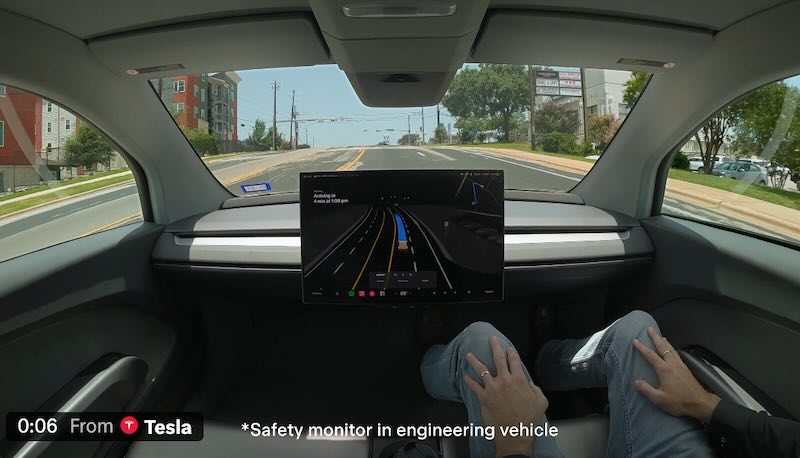
On paper, that looks like a significant gap. And it is — for now. But fleet size is a trailing indicator. It tells you where a company is, not how fast it’s going or what infrastructure it’s building to scale.
The more telling signal came from Tesla’s earnings call. Key point: Tesla expects the time needed to launch Robotaxi service in a new city to eventually approach zero. Not “improve significantly.” Not “decrease meaningfully.” Approach zero. Stated ambition isn’t city-by-city deployment — it’s state-level expansion, executed with the kind of speed that makes conventional geographic rollout strategies look antiquated.
That’s a bold claim, and it deserves some scrutiny. Reaching that milestone would require a level of regulatory pre-approval, real-time safety monitoring, and generalizable driving intelligence that hasn’t been demonstrated at scale yet. Waymo spent years validating San Francisco before expanding to Los Angeles. Phoenix took years of data collection before commercial rides launched. Idea that any company could bypass that validation cycle entirely is, at minimum, unproven.
But that doesn’t make the ambition irrelevant. It clarifies what Tesla is building toward — and a small robotaxi update that highlights Tesla’s vertical integration is, in that context, a preview of the operating model that makes such ambition plausible.
Think through the economics for a moment. Right now, every Robotaxi operator expanding to a new city incurs substantial upfront costs: mapping, regulatory filing, safety driver deployment, local operations staffing, charging infrastructure setup. Waymo’s expansion from Phoenix to San Francisco to Los Angeles took years and enormous capital. Even with a strong brand and proven technology, each new city is a discrete capital project.
If Tesla’s deployment timeline truly compresses to near-zero, those costs don’t just shrink — the entire competitive calculus shifts. Geographic expansion becomes less a constraint and more a switch. Operators with city-specific expansion timelines can’t compete with that pace if it materializes.
This is where the turn signal update loops back in. a small robotaxi update that highlights Tesla’s vertical integration isn’t just a product note — it’s a signal about organizational design. Tesla’s ability to push a cabin audio change to its entire fleet without a hardware partner in the loop is the same capability that would allow it to push a new geofence expansion, a revised routing policy, or an updated safety behavior to every vehicle simultaneously.
Waymo has enormous strengths: years of operational data, a proven commercial product, and a regulatory track record that’s genuinely hard to replicate. But its architecture requires coordination with vehicle OEMs at every hardware-adjacent decision point. That’s a structural ceiling on iteration speed that doesn’t exist for Tesla.
Neither company has “won” the Robotaxi market. What’s becoming clearer, though, is that the companies with full-stack control over their vehicles are building a different kind of infrastructure — one where software updates carry the weight of product decisions that other operators have to negotiate through supply chain relationships.
The turn signal is a small thing. But in an industry where product iteration speed is increasingly the moat, small things have a way of turning signal into advantage.
Related Post
Tesla Cybercab Robotaxi First Responders Guide: What the Docs Reveal
Waymo Robotaxis Freeze During SF Power Outage, Traffic Light Failure Analysis
Tesla CyberCab Hardware Details Revealed: Starlink V5, Cameras & More