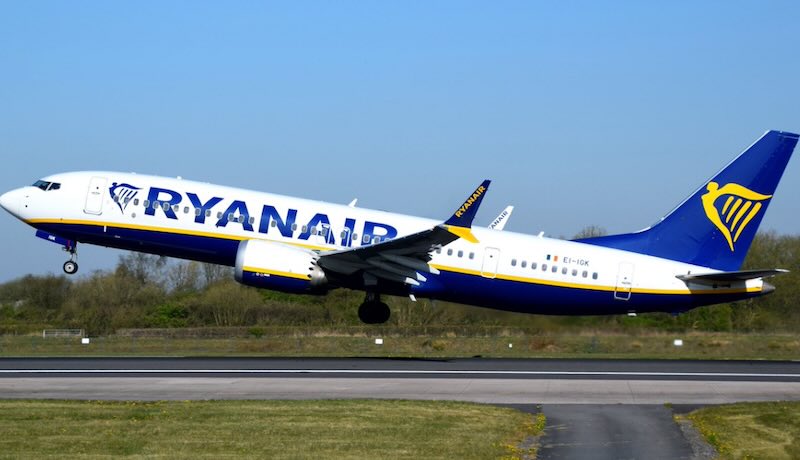
Ryanair has announced it will not equip its fleet with Starlink internet service, marking a sharp departure from competitors racing to upgrade in-flight connectivity. The budget carrier’s decision centers on operational costs rather than technical limitations, setting up a debate about passenger priorities and fuel efficiency claims.
CEO Michael O’Leary stated the airline won’t install Starlink systems due to a projected 2% fuel penalty from antenna weight and aerodynamic drag. The executive argues passengers aren’t willing to pay for WiFi during Ryanair’s typical one-hour flights, making the investment economically unviable for the carrier’s short-haul business model.
Stance contradicts moves by major carriers. Lufthansa and SAS selected Starlink specifically because its equipment generates less drag than competing systems. Alaska Airlines projects annual savings exceeding 800k gallons by replacing older, heavier WiFi hardware with Starlink’s streamlined technology, decided to accelerate its Starlink Wi-Fi deployment across the entire fleet.
Elon Musk challenged O’Leary’s figures directly, suggesting the CEO received inaccurate information. Elon questioned whether airlines can precisely measure fuel differences on one-hour flights, noting that incremental drag becomes negligible during ascent phases due to high angle of attack. He asserted Starlink would actually improve efficiency compared to most connectivity solutions.
Michael Nicolls, VP of Starlink Engineering, provided specific numbers disputing Ryanair’s claims. While acknowledging legacy terminals might cause 2% fuel increases, Nicolls stated Starlink’s low-profile design raises consumption by approximately 0.3% on a 737-800 burning 800 gallons per hour. Michael also disputed assumptions about passenger demand for in-flight WiFi.
Online reactions expressed skepticism toward both the fuel penalty magnitude and passenger reluctance claims. Many respondents insisted strong demand exists for in-flight connectivity regardless of flight duration, suggesting Ryanair may be underestimating customer preferences.

Disagreement highlights competing priorities within aviation. Budget carriers traditionally minimize amenities to maintain low fares, while full-service airlines increasingly view connectivity as essential infrastructure. Starlink’s thinner antennas represent a technical advancement over bulky legacy systems, potentially resolving the fuel-versus-features trade-off.
Whether Ryanair maintains its position or eventually joins competitors in offering high-speed internet remains uncertain. For now, passengers seeking connectivity during European short-haul flights will need to look skyward—at airlines other than Ryanair.
Related Post
SpaceX Slams American Airlines Over Amazon Leo Talks, Starlink vs Leo Satellite Internet Battle
United Airlines Fixes Starlink Wi-Fi After Radio Interference
United Airlines Soars with Starlink: A New Era of In-Flight Connectivity