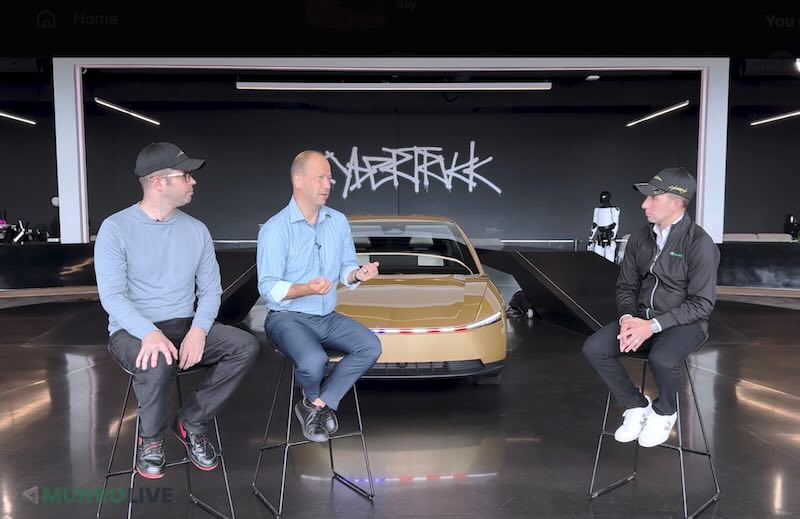
There’s a moment in every technological shift when the engineering stops being theoretical and starts being consequential. Tesla’s Cybercab appears to be at that inflection point. Following a detailed walkthrough of Cybercab production line by the Tesla Vehicle and Robotaxi Engineering team, captured on video by Munro Live — what’s emerged isn’t just a new vehicle. It’s a fundamental rethinking of how autonomous transportation gets built, deployed, and scaled.
Cybercab isn’t trying to be a car with self-driving features bolted on. It’s designed from the ground up to operate without a human at the wheel, and the engineering decisions behind it reflect that priority at every level.
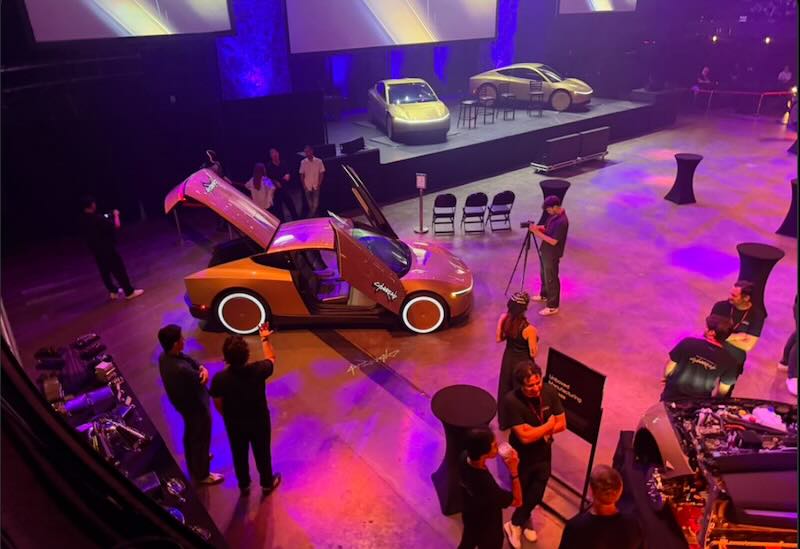
Munro Live sat down with Lars Moravy, Tesla VP of Vehicle Engineering, and Tesla Robotaxi Engineering team for a full tour of the Cybercab production line, covering design, automation, and the technology behind it.
One of the more striking revelations from the Munro Live walkthrough: the Cybercab line doesn’t run every day. Not because of supply issues, but because the line moves too fast. It’s currently outpacing robotaxi deployments across Tesla’s operational zones, creating an unusual bottleneck where manufacturing capacity exceeds rollout velocity.
That’s a meaningful inversion of the typical automotive production challenge.
Lars: “We actually don’t run the line every day because the line can run so fast it’s currently outpacing our robotaxi deployments, so it’s a bit of a race right now to see who can go faster.”
The line itself runs at roughly 80% automation across approximately 25 fully automated final assembly stations — somewhere between 5 and 10 times fewer than a comparable Model Y line. Tesla’s Unboxed Process requires about 50% less floor space per vehicle, and the absence of a paint shop saves Tesla several hundred million dollars in infrastructure alone.
Cybercab is built to a 500,000-mile lifespan standard, a benchmark that signals its commercial intent clearly. This isn’t a consumer vehicle expected to turn over in five to seven years. It’s fleet infrastructure.
4680 battery cells are housed in separate potted modules: if a module fails, it can be swapped rather than requiring full pack replacement. Enclosure uses steel, a first for Tesla – architecture accommodates a future transition to LFP chemistry, preserving cost flexibility as the fleet scales.
Drivetrain configuration is front-wheel drive with an 11:1 gear ratio. New inverter developed for the Cybercab is also slated to roll out across the Model 3 and Model Y lineup this year. Key specs from the Munro Live walkthrough:
- Final assembly runs ~25 fully automated stations — roughly 5–10× fewer than a Model Y line
- Nearly 80% of the production line is automated
- The Unboxed Process uses about 50% less floor space per car
- No paint shop — saving Tesla several hundred million dollars in capex
- 4680 cells in separate potted modules; failed modules can be swapped independently
- Steel battery enclosure — a first for Tesla — with room for LFP cells later
- FWD with an 11:1 gear ratio; new inverter also coming to Model 3 & Y this year
- Built to a 500,000-mile service life
Cybercab’s broader engineering philosophy connects directly to how Tesla’s leadership frames the autonomy transition. Lars, VP of Vehicle Engineering, put it plainly during the Munro Live interview: his personal goal is that his own children never have to drive a car.
Lars: “I’m a big car culture guy. I love cars, I collect them, and I work on them as a hobby. In the long run, that might be how most cars end up — more like horses today, something people do for enjoyment rather than necessity. But the first step is getting people comfortable with autonomy.”
FSD rollout across the existing Tesla fleet functions as both a product and a trust-building mechanism. Millions of Tesla owners have experienced supervised autonomy in real-world conditions, creating a baseline of familiarity with the technology before fully driverless deployment scales. Consumer acceptance of autonomous vehicles has historically lagged behind the technology itself, and Tesla’s strategy addresses that gap directly through fleet exposure.
Operationally, Tesla has now significantly expanded its robotaxi geofence in Houston, Texas. New boundary is shaped — not coincidentally, like a Starship rocket, a detail that didn’t go unnoticed among observers tracking the rollout.
Tesla has officially expanded its robotaxi operational zone in Houston. New boundary is now significantly larger and shaped like a Starship rocket, a nod to the SpaceX program that shares infrastructure ambition with Tesla’s autonomy roadmap.
Geofence expansions are incremental by design, and each one generates the edge-case data that continues to improve FSD performance. Houston’s geography, traffic patterns, and weather conditions offer a substantially different dataset than California’s, strengthening the model broadly.
Tesla Cybercab’s deployment pace is now, according to the production team, the primary constraint on how fast the fleet grows, not manufacturing capacity. Position most automakers would consider an enviable problem.
Related Post
Tesla CyberCab Launches in Austin: Inside the Robotaxi Service That Changes Everything
Tesla CyberCab Hardware Details Revealed: Starlink V5, Cameras & More
Tesla Cybercab Fleet Demand Hits Tens of Thousands — What Buyers Need to Know