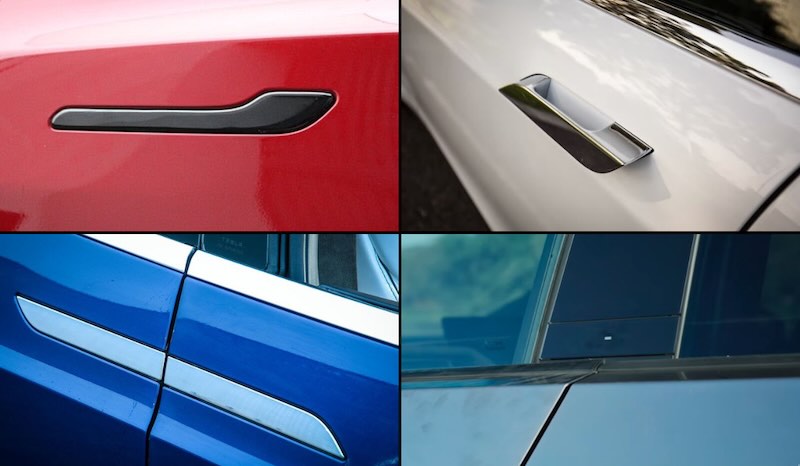
Automotive industry’s love affair with sleek, flush-mounted door handles may soon hit a roadblock. Chinese regulators are reportedly preparing to ban retractable car door handles starting in 2027, citing serious safety concerns that outweigh their minimal aerodynamic benefits.
Flush door handles, which sit nearly level with a vehicle’s body until activated, have become a hallmark of modern EV design. But their popularity appears to be on a collision course with mounting safety evidence. According to multiple reports, these handles fail significantly more often during side impacts than traditional fixed handles, potentially trapping occupants inside damaged vehicles when seconds matter most.
The safety issues extend beyond crash scenarios. During heavy downpours, some flush-fit door handles have experienced electrical shorts, effectively locking people inside their vehicles. Chinese consumers have reported an increasing number of finger injuries from handles that unexpectedly retract or create pinch points.
What’s particularly telling about this potential regulation is the cost-benefit analysis. While manufacturers have touted flush door handles as aerodynamic improvements, their actual contribution to efficiency is minimal. These design elements typically reduce a vehicle’s drag coefficient by approximately 0.01, translating to roughly one to two miles of additional range under various testing protocols.
The draft regulation spells out specific requirements that would effectively eliminate fully concealed door handles:
“Every door (except the tailgate) must have an exterior handle with a mechanical release function. Design must allow the non-collision side doors to be opened from the outside, without tools, even if the doors are locked and in the event of an airbag deployment or a battery thermal incident. At all times, each exterior handle must provide hand clearance of at least 60 mm × 20 mm × 25 mm relative to the body surface.”
Tesla would face significant redesign challenges if flush door handles are banned. The company’s signature fully hidden electric door handles on models like the Model 3 and Model Y require a press-to-pop-out action before pulling, precisely the two-step process the regulation aims to eliminate.
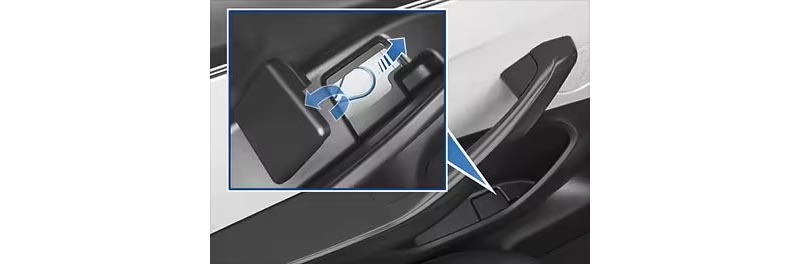
Interestingly, Tesla appears to have anticipated this regulatory shift. Design chief Franz von Holzhausen recently revealed on Bloomberg’s Hot Pursuit podcast that the company is developing a new approach: “The idea of combining the electronic one and the manual one together into one button, I think, makes a lot of sense. That’s something that we’re working on.”
Other manufacturers would face varying degrees of impact. Volkswagen’s ID lineup and the Xiaomi SU7 use semi-hidden push-to-unlock handles that would likely remain compliant, while the Xiaomi YU7’s powered flush mechanism would require redesign.
Given China’s outsized influence in the global EV market, a flush door handles ban would likely reshape design trends worldwide. Manufacturers typically avoid creating market-specific exterior components due to cost implications, meaning Chinese regulations could effectively become global standards.
For consumers, this regulatory push highlights the tension between style and substance in automotive design. While flush door handles contribute to the futuristic aesthetic that many EV buyers desire, their practical benefits may not justify the potential safety risks they introduce.
As the automotive industry continues its electric transformation, this potential regulation serves as a reminder that not all innovation represents meaningful progress. When it comes to flush door handles, manufacturers may soon need to get a better grip on balancing form and function.
Related Post
Tesla New Model Y Matrix LED Headlights: Smart Lighting Meets Safety Innovation
Tesla Robotaxi: How Removing Steering Wheels Could Drive Autonomous Acceptance
Tesla Adds Emergency Rear Door Release to Refreshed Model 3 Highland in Safety Upgrade