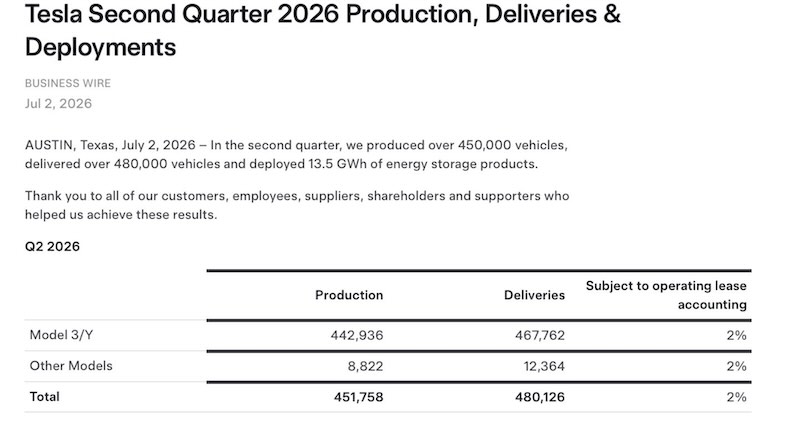
Tesla delivered 480,126 vehicles in the second quarter of 2026, and the figure lands well past what most of Wall Street had penciled in. Tesla Q2 2026 report, filed as an 8-K on July 2, shows deliveries climbing 25% year-over-year against a company-compiled analyst consensus of 406,024 vehicles. Production, meanwhile, came in at 451,758 units — a gap between build and delivery that suggests Tesla is finally working through the inventory backlog that dogged it earlier this year.
That production-to-delivery spread matters more than it might first appear. Tesla delivered roughly 28,000 more vehicles than it built during the quarter, which means the company drew down existing stock rather than adding to it. Q1 2026 had gone the other direction entirely, with Tesla producing 50,000-plus more cars than it could move off lots. Reversing that trend, even briefly, tells a different story than the one analysts were bracing for heading into the print.
What makes the Tesla Q2 2026 beat notable isn’t just the headline number, though. It arrives after the federal EV tax credit expired in the U.S. last year, a policy shift that was widely expected to sap domestic demand for the foreseeable future. Instead, growth abroad appears to have picked up the slack, with Europe and other international markets doing much of the heavy lifting.
Energy storage told its own story this quarter. Tesla deployed 13.5 GWh of storage products, nudging past the 13.8 GWh consensus estimate’s neighborhood and marking one of the stronger deployment quarters the segment has posted. Storage carries meaningfully higher margins than the vehicle business, so continued strength there gives Tesla a second growth lever that isn’t tied to car sales at all.
Full financial results, including margins and earnings per share, won’t land until July 22. Until then, the delivery numbers alone are doing plenty of talking — and for now, Tesla’s growth story isn’t stalling out. It’s charging ahead.
Related Post
Tesla Q2 2025 Deliveries: 384,122 Vehicles Beat Analyst Expectations, Production was 410,244
Tesla Model S and X Were Discontinued — Here’s the Real Reason Why