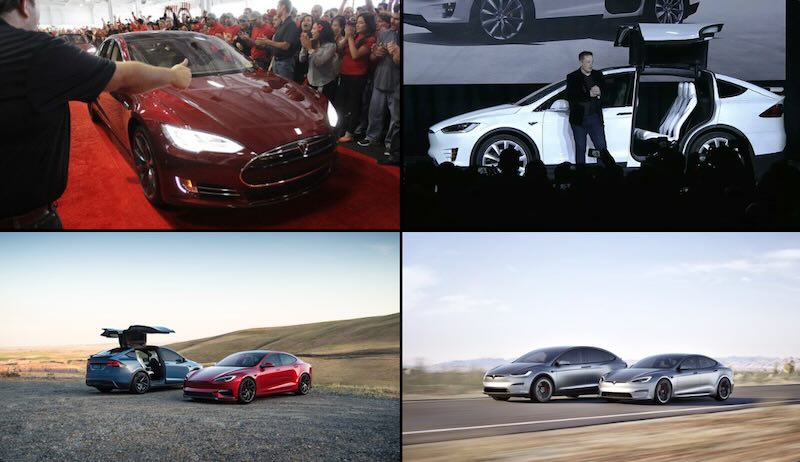
Tesla’s decision to discontinue the Model S and Model X wasn’t a hasty move—it was a calculated pivot that’s been in the works for over 18 months. In a revealing interview with Ryan McCaffrey, Tesla’s VP of Vehicle Engineering Lars Moravy and Chief Designer Franz von Holzhausen pulled back the curtain on why the company’s flagship sedans are getting sunset. Answer involves crash test regulations, humanoid robots, and a reality check about which vehicles make sense in an autonomous world.
Euro NCAP updates its testing protocols roughly every five years, and the requirements keep getting tougher. According to Lars, Model S/X platforms weren’t originally engineered for the small overlap and offset crash scenarios that European and IIHS standards now demand. “We made bandaids along the way to make sure it was being safe in those positions, but it was just like man it’s going to be a massive overhaul,” Lars explained.
Tesla faced a choice: sink hundreds of millions into redesigning two platforms that launched over a decade ago, or redirect those resources toward future products. The company chose the latter.
Here’s where things get interesting. Tesla needs a pilot production facility for its Optimus humanoid robot. Fremont factory space currently dedicated to Model S and Model X production? That’s prime real estate. “We also need a pilot factory for Optimus. And it just kind of was like serendipitous,” Moravy said. Rather than building a separate Optimus facility while simultaneously overhauling the Model S and Model X lines, Tesla saw an opportunity to consolidate.
The numbers tell the story. Over their production runs, Tesla manufactured approximately 755k units between both models—400k Model S vehicles and 355k Model X vehicles. Respectable figures, but nowhere near the volume Tesla’s newer platforms achieve.
Lars didn’t mince words about another factor: “The future is autonomous. These cars were the first ones we designed. They’re the least ready for that world.” Model S/X represent Tesla’s pre-Autopilot thinking. Retrofitting them for a fully autonomous future would require extensive engineering work that the company simply doesn’t want to pursue.
Instead, Tesla’s betting on newer architectures built from the ground up with autonomy in mind.
Interview wasn’t all about discontinued models. Lars and Franz confirmed that the long-awaited next-gen Roadster will be manufactured in Texas. “We can say it’s going to be built in Texas. We’ve made first plans on that and you start to see a lot of things start to unfold in the next months,” they revealed.
Tesla’s factory footprint continues expanding in the Lone Star State, and the Roadster will be the latest vehicle to call it home.
The Model S and Model X served Tesla well, but their era has passed. Sometimes you need to model a new strategy.
Related Post
Tesla Model S End of Production: The Car That Rewrote the Auto Industry
Tesla Model S & Model X Plaid Signature Edition: 350 Exclusive Units at $159,420
Tesla Ends Model S & X Production, Goes All-In on Robots & Autonomy, Q4 2025 Earnings