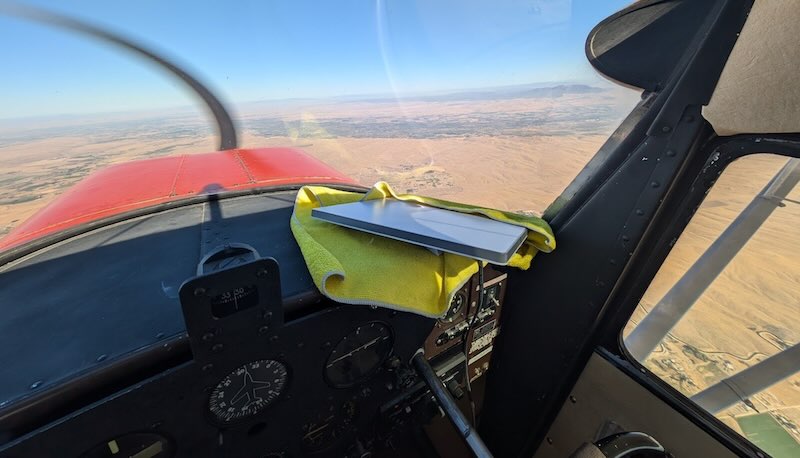
Flying with fast Wi-Fi on board is about to cost a lot more. SpaceX quietly updated its Starlink support pages this week, and buried in that update is a pricing overhaul for Starlink Business Aviation that will hit corporate flight departments and charter operators hard. We’re talking about a doubling of rates in some cases, not a modest bump.
Here’s what actually changed, and why it matters if your company writes the check for in-flight internet.
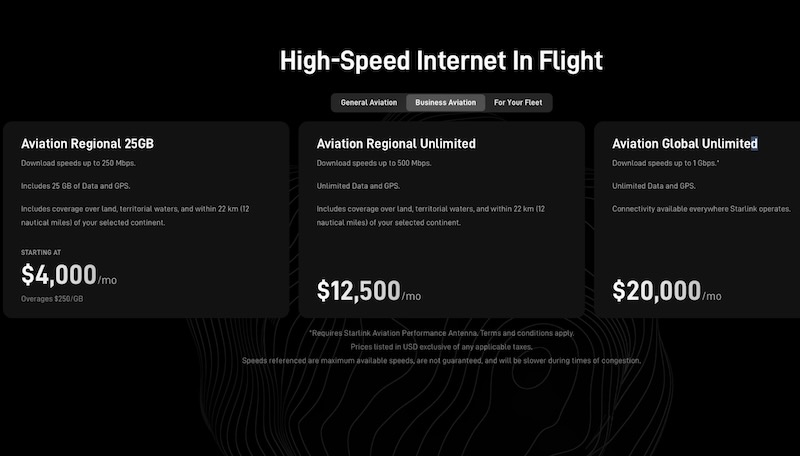
Let’s start with the numbers, because they tell the story on their own. Aviation Regional 25GB plan jumped from $2k a month to $4k. That’s it — same basic service, twice the cost. You still get 25GB of data included (a small bump from 20GB before), speeds up to 250 Mbps, and coverage limited to one continental region. Go over your data allotment, and it’s $250 per additional gigabyte.
Then there’s a brand-new tier: Aviation Regional Unlimited, priced at $12,500 a month. This one’s interesting because it didn’t exist before. It gives operators unlimited data within a single continental region, plus a speed boost up to 500 Mbps. Basically, SpaceX built a middle option for flight departments that stay close to home but chew through data fast.
And at the top sits Aviation Global Unlimited, formerly known as Aviation Jet Unlimited. Same worldwide coverage, same theoretical 1 Gbps ceiling, but the price has climbed from $10k to $20k a month. Worth noting: hitting that full gigabit speed requires the Starlink Aviation Performance Antenna, so if your aircraft doesn’t have that hardware installed, you won’t see those numbers regardless of which plan you’re on.
One thing hasn’t moved, though. General Aviation plans, the ones built for smaller aircraft, are staying at current pricing. So this shakeup is squarely aimed at business and private jets, not the little guys.
Timing matters here too, especially if you’re already a customer trying to figure out your budget.
New sign-ups are paying the new rates immediately. If you’re already a Starlink Business Aviation customer, though, you’ve got a little breathing room — SpaceX says existing accounts won’t move to the new pricing until their next billing cycle on or after August 7th. That’s roughly a month to figure out whether to stick with your current tier, downgrade, or start shopping around.
And the price hikes don’t stop at monthly service. Installing Starlink hardware on a business jet now costs about $200,000, up from $145,000 just last year, per SpaceX’s own documentation.
None of this happens in a vacuum, either. SpaceX raised residential Starlink prices earlier this year and tacked on a new rental fee for dish hardware. The company also went public last month, which tends to put pressure on management to show revenue growth every quarter. And let’s not forget April, when GA pilots got blindsided by a speed cap that knocked them off the cheaper Roam plan entirely, forcing many into pricier aviation tiers overnight.
So does this mean airlines are next? Unclear. SpaceX handles commercial airline deals separately, negotiating fleet-wide contracts case by case, and the company hasn’t said whether those are getting a refresh too. A request for comment to SpaceX went unanswered.
Bottom line? If your business relies on Starlink to keep passengers connected at 40,000 feet, budget season just got a lot more interesting — because staying linked in the sky now comes with a much steeper price of admission.
Related Post
SpaceX Unveils AI Satellites, New Starlink Terminals & Terafab Factory Plans
Delta Rejects Starlink for Amazon Kuiper, Passengers Face Years-Long Wait for Slower WiFi
Starlink Multi-Gigabit In-Flight Wi-Fi Is Here — And It’s Redefining Cabin Connectivity