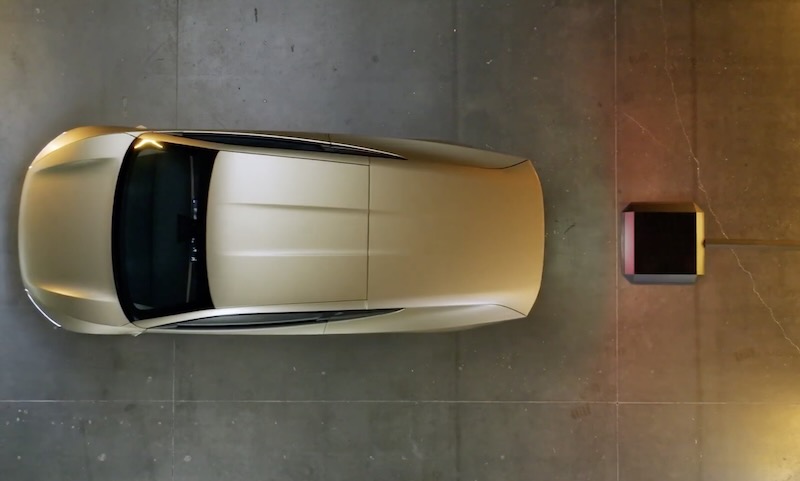
Tesla’s charging infrastructure ambitions in Austin, Texas just got a lot more concrete, timing couldn’t be more pointed. A new permit filing reveals that Tesla plans to install 80 wireless vehicle chargers as part of Phase 2 of a new Robotaxi charging hub in Austin, in direct preparation for Cybercab expansion. It’s the kind of quiet regulatory paperwork that signals a much larger operational shift is imminent, especially now that a public launch appears to be days away.
Tesla has been telling its own staff that the Cybercab is nearly ready to start carrying people in public, with a timeline that’s a lot tighter than most people were expecting. To underscore that point, Tesla’s Robotaxi account on X posted that riders who complete trips through August 23 will be entered into a drawing to attend a “Cybercab launch event,” with the incentive that more rides equals better odds.
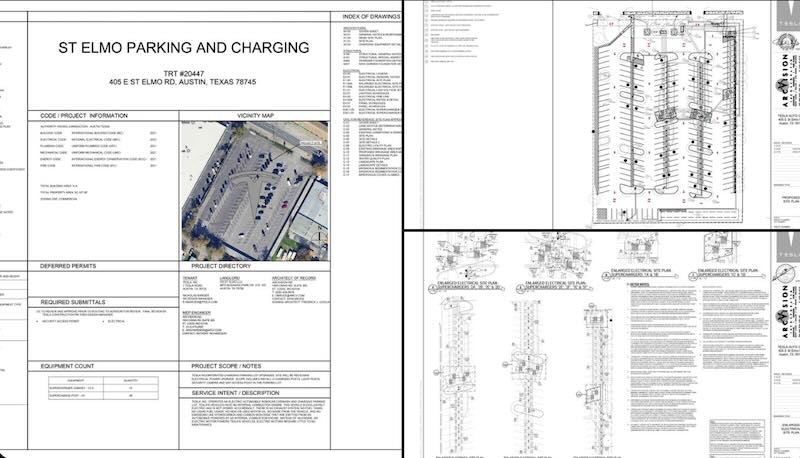
Tesla’s plan is to build the Supercharger hub across multiple phases, with the second phase introducing wireless induction charging, something the company has been developing specifically for its Robotaxi fleet. Phase 1 isn’t sitting idle either. Permits have already been filed for 48 V3 Supercharger stalls in a vehicle storage lot directly across from Tesla’s St. Elmo service center.
What makes Tesla’s Robotaxi wireless charging hub in Austin genuinely notable isn’t just the scale, it’s the engineering stack underneath it. Earlier this year, FCC granted Tesla a waiver allowing it to deploy Ultra-Wideband (UWB) radio technology as part of its wireless charging system for the Cybercab. Technology enables precise peer-to-peer positioning between a UWB transceiver on the vehicle and a second transceiver on a ground-level pad, ensuring optimal alignment before power transfer begins.
That precision matters operationally. Even a small misalignment can dramatically reduce efficiency or prevent charging altogether, which is why UWB was identified as the correct solution for a fleet that can’t rely on human intervention. Before deploying UWB broadly, Tesla plans to use Bluetooth as an interim alignment solution. Tesla has stated the system’s efficiency will well exceed 90%, a critical benchmark for a commercially viable autonomous fleet.
Internal communications reveal Tesla intends to begin with employee-only trips on public roadways before expanding access through its broader autonomous ride-hailing platform in Austin just days afterward. That’s an aggressive, compressed sequence, it’s worth noting the stakes involved.
“We do need to be cautious about causing any accidents or causing any harm to anyone,” Elon said during the company’s Q2 2026 earnings call. “If we injure even one person, it’ll be worldwide headline news, and regulators will immediately clamp down on our activities.”
Tesla’s Austin Robotaxi service currently runs on roughly 186 registered Model Y vehicles, and it’s not yet clear whether Cybercabs will replace or supplement that existing fleet. What is clear is that the infrastructure is being built to support a much larger, plug-free operation. Cybercab entered production at Giga Texas in April, with initial units serving as test mules across a variety of environments and climates, spanning states including Texas, California, Nevada, Massachusetts, and beyond.
With 80 wireless chargers permitted, a UWB-based alignment system greenlit by the FCC, and a public launch event now confirmed for Austin, Tesla’s Robotaxi wireless charging hub isn’t just infrastructure, it’s current proof that Cybercab’s autonomous future is fully charged and ready to roll.
Related Post
Tesla Unveils Wireless Charging for CyberCab with 90%+ Efficiency
Tesla Robotaxi CyberCab Wireless Charging Speed of 25kW: The Future of Urban Mobility
Tesla Cybercab: 300-Mile Range from Sub-50kWh Battery Promises Industry-Leading Efficiency