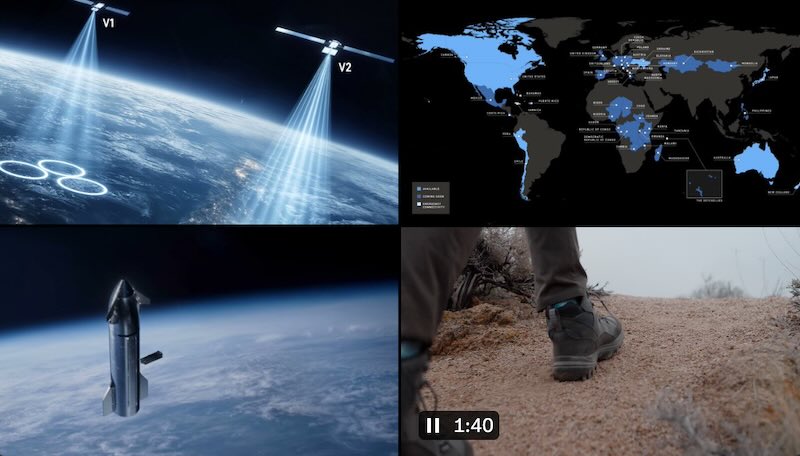
SpaceX has secured FCC approval to acquire three spectrum licenses from Tristar, covering 15 MHz in the 1695–1710 MHz band. This isn’t just a regulatory checkbox, it’s another calculated move in Elon’s push to build what could become the most disruptive wireless network in American history. Approval also came with FCC waivers permitting SpaceX to use that spectrum for satellite communications, bypassing the need to build traditional cell tower infrastructure entirely.
That’s a significant departure from how spectrum has historically been deployed, signals that regulators are willing to accommodate SpaceX’s unconventional approach.
FCC approval arrives just two weeks after SpaceX announced a separate agreement to acquire nationwide 800 MHz low-band spectrum. Low-band frequencies are particularly valuable for one reason: they penetrate walls. Makes them essential for indoor coverage, historically the Achilles’ heel of satellite-based connectivity.
SpaceX has outlined plans to combine its existing satellite constellation with terrestrial infrastructure, creating a hybrid network architecture that doesn’t neatly fit into any existing telecom category. The goal, as SpaceX has stated, is “one network that provides Americans with a reliable service indoors, outdoors, in cellular dead zones, and everywhere in between.”
That’s an extraordinarily broad coverage claim. And yet, given the trajectory of Starlink’s expansion, it’s not obviously overreaching.
Starlink Mobile is positioned to become the first network operator to simultaneously deploy both satellite and terrestrial spectrum at scale. No existing carrier, not AT&T, not Verizon, not T-Mobile, operates that kind of dual-layer infrastructure under a unified network identity.
This matters because traditional carriers have always faced a fundamental tradeoff: terrestrial networks offer high capacity and low latency in populated areas, but coverage gaps remain in rural zones, mountainous terrain, and remote regions. Satellite networks flip that equation, broad geographic reach, but historically limited throughput and indoor penetration.
SpaceX’s strategy eliminates that tradeoff entirely, at least in theory. 1695–1710 MHz band licenses, combined with 800 MHz low-band acquisition, give Starlink Mobile a spectrum portfolio capable of supporting both high-capacity urban service and deep rural penetration.
It’s worth pausing on those FCC waivers. Regulators don’t typically hand out exemptions from cell tower build-out requirements without deliberation. By granting SpaceX permission to use terrestrially licensed spectrum for satellite operations, FCC has essentially validated a new model for spectrum deployment, one that doesn’t depend on physical tower infrastructure to justify a license.
That’s a policy shift with implications well beyond SpaceX. Other satellite operators will be watching closely, and some may move to pursue similar waiver arrangements as Starlink Mobile demonstrates proof of concept.
To be clear, SpaceX hasn’t launched Starlink Mobile commercially yet, and the gap between spectrum acquisition and a fully operational consumer network remains substantial. There are engineering challenges, pricing questions, and device compatibility considerations that haven’t been publicly addressed in detail.
Still, the velocity of SpaceX’s spectrum accumulation is striking. Two major spectrum moves in two weeks, across two different frequency bands, with regulatory waivers attached, that’s not the pace of a company that’s still in the exploratory phase. It’s a company executing against a specific buildout plan.
Wireless industry has watched SpaceX transform satellite internet from a niche backup service into a legitimate broadband alternative for tens of millions of users. Starlink Mobile suggests the next target is the cellular market itself.
Whether the incumbent carriers treat that seriously today or wait for a commercial launch to confirm the threat, SpaceX’s spectrum portfolio is already taking shape, it’s shaping up to be the most Star-linked competition the wireless industry has ever faced.
Related Post
AT&T, T-Mobile and Verizon Form Joint Venture to Counter SpaceX Starlink Mobile
Starlink Mobile Wins FCC Approval for International Service
Starlink Mobile Could Reach 15,000 Satellites by 2028, SpaceX Says