SpaceX has secured the regulatory clearance it needed. The FCC has officially granted the company authority to provide the international telecommunications services that underpin Starlink Mobile, and that authority lets SpaceX carry traffic between the United States and other countries. On paper, it reads like routine licensing. In practice, it removes one of the last procedural obstacles standing between the service and a global footprint.
Grant addresses cross-border communications, not domestic spectrum. SpaceX can now route Starlink Mobile calls, messages, and data between U.S. subscribers and networks abroad without seeking separate authorization each time. Filed back in May, the request sought global facilities-based and resale authority — language that covers both SpaceX-operated infrastructure and capacity the company might purchase from other operators.
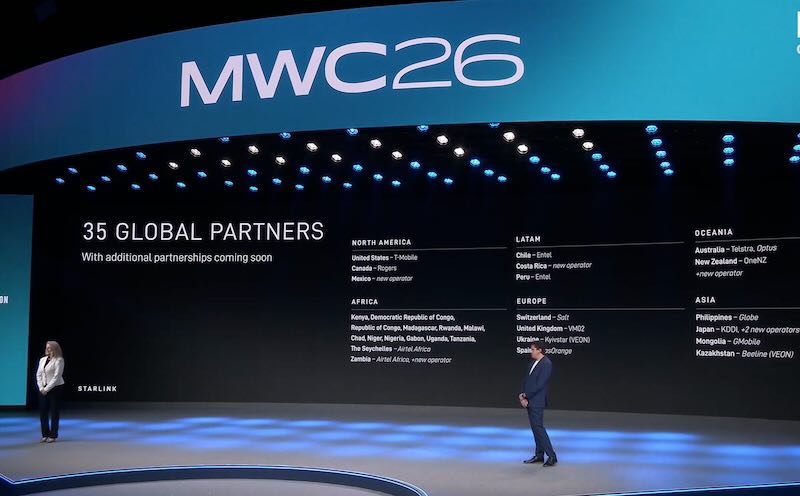
The May application named its targets plainly. SpaceX told regulators it intended to offer international telecommunications services across every destination market where its subsidiaries operate, and those subsidiaries number in the dozens across Latin America, Europe, Asia, and Africa. That’s not a pilot program. That’s a company assembling the licensing groundwork for commercial launches on several continents at once.
Right now, U.S. customers reach Starlink Mobile through T-Mobile, where it operates as T-Satellite. Proposition is narrow but useful: connectivity in dead zones where terrestrial coverage disappears. Bandwidth remains constrained, so the experience suits text and basic messaging far better than anything demanding.
SpaceX intends to replace that limitation with hardware. The company plans to upgrade Starlink Mobile using next-gen satellites capable of beaming 5G service directly from orbit, with download rates reaching 150Mbps. Should those figures hold up in commercial deployment, service stops functioning as an emergency fallback and starts resembling a primary connection for customers in rural and remote territory.
SpaceX has adopted two postures simultaneously, and they don’t sit comfortably together. Domestically, the company has positioned Starlink Mobile as an eventual competitor to the three major U.S. carriers, including the very partner distributing it today. A year ago, the company’s chief executive publicly considered whether the service might operate as a global carrier in its own right.
Can Satellites compete with cell towers? Internationally, the strategy leans on cooperation. SpaceX announced a deal with Japanese telecom KDDI covering Starlink Mobile Gen 2, claiming 100x the data density along with support for native calls, high-speed applications, and streaming. Meanwhile, T-Mobile and AT&T have downplayed the competitive threat, arguing satellites won’t deliver coverage matching their tower networks. SpaceX has countered with plans for a ground network built on femtocells — small, inexpensive radio units, though industry analysts remain skeptical that the approach scales economically.
Skepticism is reasonable. Satellite capacity divides across enormous coverage areas, and physics doesn’t negotiate. Still, regulatory approval was the piece SpaceX couldn’t engineer its way around, and it now has that piece. Whether subscribers eventually cut ties with terrestrial carriers depends on hardware that hasn’t flown yet and partnerships that haven’t launched commercially. Having cleared Washington, the company faces the harder audience next: customers who’ll judge Starlink Mobile on whether it keeps them connected while they’re actually mobile.
Related Post
AT&T, T-Mobile and Verizon Form Joint Venture to Counter SpaceX Starlink Mobile
Starlink Mobile Could Reach 15,000 Satellites by 2028, SpaceX Says
SpaceX Gains 65 MHz for Starlink Mobile — But a $2.4B Escrow Condition Has EchoStar Pushing Back