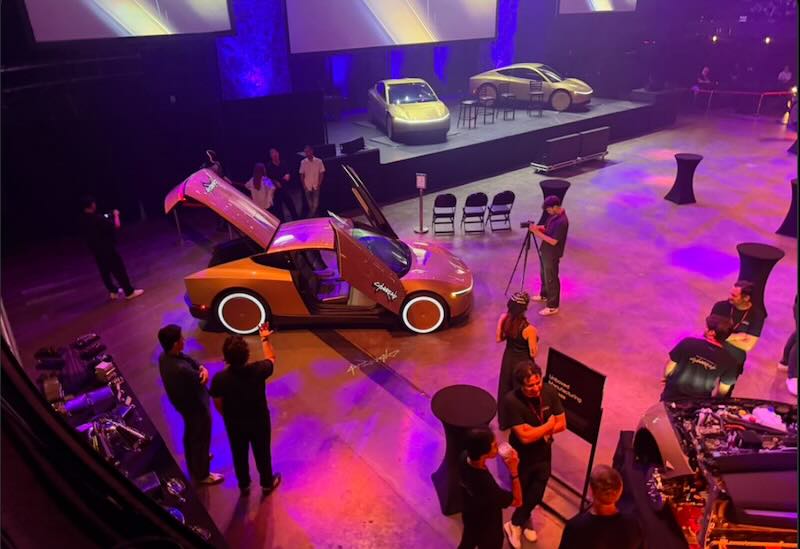
For years, the autonomous vehicle industry moved like a slow-burning fuse, lots of noise, very little ignition. Waymo quietly built a fortress. Cruise stumbled badly. Uber sold off its self-driving unit. And Tesla? Tesla kept promising Full Self-Driving was “almost there” while critics rolled their eyes. But something shifted in 2026, and the numbers are now too significant to dismiss. Tesla’s Robotaxi fleet registered in Austin, Texas, has climbed to 927 vehicles (507 Model Ys and 420 CyberCabs). Factor in deployments across California’s Bay Area and Florida, and Tesla’s total commercial autonomous fleet has likely crossed the 1,000-vehicle threshold. That’s not a pilot program anymore. That’s a market entry.
Waymo currently operates roughly 4K+ vehicles and is accelerating expansion into Europe, so there’s still a meaningful scale gap between the two companies. Waymo’s operational maturity is undeniable, it’s logged millions of rider-only miles and has regulatory approvals across multiple U.S. cities. Tesla’s Robotaxi numbers look modest by direct comparison.
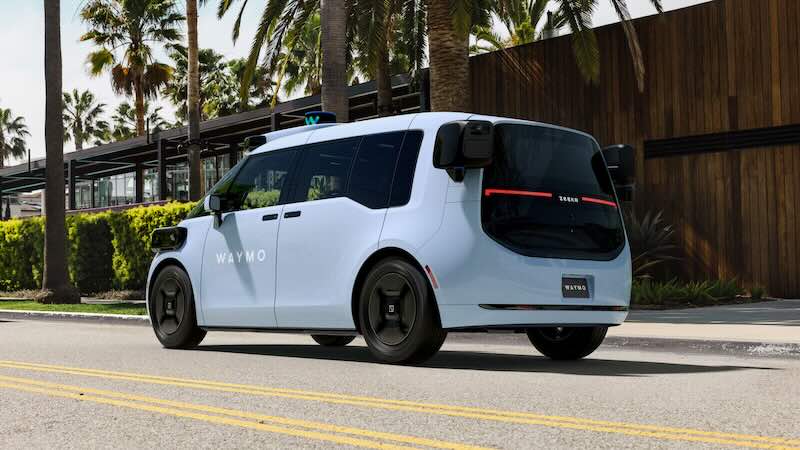
But the comparison itself deserves some scrutiny. Waymo and Tesla aren’t exactly running the same race. Waymo is a L4 autonomous driving company, meaning its vehicles operate without any driver in specific geographic domains. Tesla, until recently, operated primarily at L2, advanced driver assistance that still requires human supervision. That distinction matters enormously from a regulatory, liability, and commercial standpoint.
Here’s where Tesla’s Robotaxi strategy gets more interesting: the company built its autonomy stack using the same neural network architecture powering its consumer fleet. Every Model Y on a public road, not just the Robotaxi units, has been feeding data back into Tesla’s training pipeline. Scale of that data advantage is genuinely difficult to quantify, but it’s substantial.
Tesla isn’t the only company pursuing this dual-track approach, either. China’s XPeng and Momenta have both begun deploying L2 and L4 capabilities on a unified, data-driven platform. Neither has matched Tesla’s deployment scale yet, but their technical architecture is philosophically aligned. This emerging category, companies building a continuous capability ladder from assisted driving to full autonomy on a shared data backbone, might be the more accurate competitive frame than simply comparing fleet sizes.
There’s a persistent talking point in automotive circles that mass-produced L4 autonomous driving remains years away. It’s worth pausing on that claim, because it’s becoming increasingly hard to define. What does “mass” mean if 1K+ Tesla Robotaxis are already operating commercially across multiple U.S. states? What does “production” mean when those vehicles rolled off the same Fremont and Austin assembly lines as consumer Teslas?
The traditional framing of autonomy deployment, a specialized vehicle, purpose-built for robotaxi service, deployed in a geo-fenced urban corridor, is Waymo’s model. It’s proven, it’s safe, and it’s genuinely impressive engineering. But it’s also capital-intensive and geographically constrained by design.
Tesla’s approach inverts that model entirely. Robotaxi isn’t a separate vehicle program, it’s a software and business model designation applied to hardware that already exists at scale. A CyberCab rolling through Austin and a Model Y in the Robotaxi program both share fundamental platform DNA with the consumer vehicles sitting in driveways across North America.
That convergence creates an interesting question for fleet operators, regulators, and investors: does the vehicle category matter more than the capability it delivers? If a Tesla Robotaxi can navigate urban Austin without human intervention, is it meaningfully different from a Waymo just because it can also be purchased as a personal vehicle?
Tesla’s decision to extend Robotaxi operations beyond Austin, into the Bay Area and Florida, reflects operational confidence, not just promotional messaging. Regulatory approvals in California, particularly in the Bay Area, carry significant weight. California’s DMV has historically been among the most rigorous autonomous vehicle oversight bodies in the country. Clearing that bar matters.
Florida’s inclusion is also strategically telling. State’s driving environment, high traffic density, mixed road types, unpredictable weather, isn’t a sandboxed test environment. It’s operationally complex, and deploying there suggests Tesla’s real-world performance data met internal thresholds for expansion.
Waymo’s parallel push into Europe adds another dimension to the competitive picture. European regulatory environment for autonomous vehicles is distinct from the U.S., and Waymo’s move signals that the global market for L4 service is developing faster than many analysts projected even 18 months ago.
What’s becoming clear in late 2026 is that the autonomous vehicle industry has moved past the “is this possible?” phase into the “how fast can we scale?” phase. Tesla’s Robotaxi fleet crossing 1K+ vehicles isn’t a milestone in isolation, it’s a data point in a broader pattern of commercial acceleration across multiple players, geographies, and regulatory regimes.
The remaining question isn’t whether autonomous vehicles will be a mass-market reality. It’s which companies will have enough fleet presence, regulatory goodwill, and operational efficiency to survive long enough to find out. Tesla, it seems, is determined to drive that point home.
Related Post
Waymo Names Its New Robotaxi Van Ojai as Fleet Expansion Accelerates
Grok Bot Is Now Available in Robotaxi, Tesla Cybercab AI Assistant Explained
Tesla Gets Full Nevada Robotaxi Permit — Up to 5,000 Vehicles Approved for Las Vegas