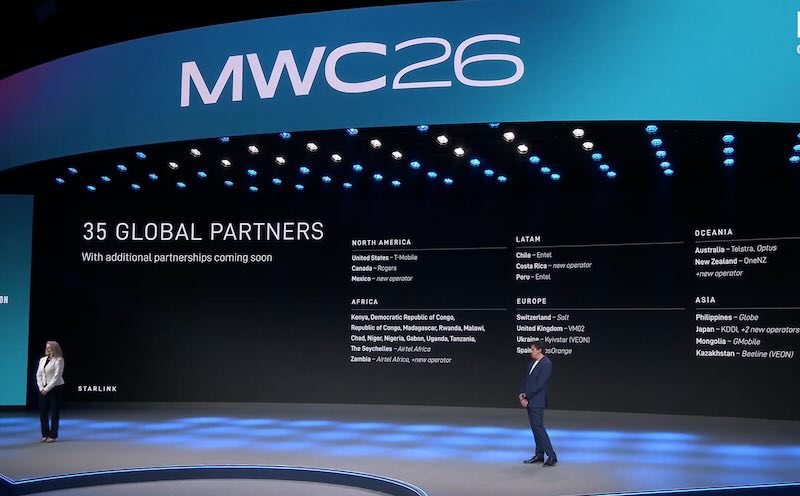
Tomorrow’s FCC vote isn’t just a regulatory formality, it’s shaping up to be one of the more consequential decisions in recent wireless history. On October 29th, Commission will vote on a proposal that would make an additional 482MHz of spectrum available for direct-to-device satellite services. A significant expansion, pushing the number of eligible frequency bands from 5 to 11. For companies like SpaceX, which operates Starlink Mobile, it’s a potential runway to build out cellular coverage without leaning as heavily on traditional carrier partnerships.
The stakes, as you’d expect, are enormous, both for the satellite industry and for the carriers that dominate today’s wireless landscape.

October 22, SpaceX has secured FCC approval to acquire three spectrum licenses from Tristar, covering 15 MHz in the 1695–1710 MHz band, combined with 800 MHz low-band acquisition, give Starlink Mobile a spectrum portfolio capable of supporting both high-capacity urban service and deep rural penetration. May, The FCC has approved SpaceX’s acquisition of roughly 65 MHz of nationwide radio spectrum from EchoStar
At its core, the FCC’s spectrum vote proposal addresses a practical bottleneck: satellite networks currently operate within a constrained set of frequency bands, which limits their ability to reach phones directly without a carrier middleman. Opening up an additional 482MHz changes that calculus considerably.
AT&T, Verizon, and T-Mobile aren’t staying quiet. All three met with the FCC on October 20th to argue against the proposal, citing that roughly 300 million users rely on the bands in question. Their position? Satellite operations in these frequencies aren’t technically feasible and would introduce interference risks that could undermine existing service quality.
It’s a significant objection, and it carries weight. Carriers aren’t speculating, they’re protecting infrastructure that underpins a massive portion of U.S. wireless connectivity. Whether FCC finds their technical arguments persuasive enough to slow things down remains to be seen.
3 days after the carrier coalition met with FCC, SpaceX showed up with its own ask. On October 23rd, the company filed requests that go beyond simply endorsing baseline proposal. SpaceX wants the 902–928 MHz band added to the proposed satellite-to-phone rules, a move that would open up additional frequencies for Starlink specifically.
Beyond the spectrum request itself, SpaceX is also pushing for modernized interference rules. The company argues that existing regulations are outdated and that satellite networks should have more operational flexibility based on the frequencies they’re using. Additionally, SpaceX is requesting that satellite deployment requirements be brought in line with those governing terrestrial cellular networks, a change it says would encourage broader coverage across underserved areas.
The company’s stated objective is straightforward: enable satellite and terrestrial networks to operate seamlessly alongside each other, so Americans stay connected regardless of location. It’s a compelling pitch, particularly for rural communities where carrier infrastructure is thin or nonexistent.
Win or lose, tomorrow’s decision doesn’t end the process. After FCC vote, proposal enters an approximate 30-day public comment period, followed by another 30 days for reply comments, though the exact timeline can vary depending on how the Commission structures the proceeding.
That means even if the vote clears, final rules are months away from taking effect. Carriers will almost certainly use that comment window to reinforce their objections, and satellite companies like SpaceX will be filing in support. Record built during that period will shape how FCC ultimately writes any final rules.
The FCC’s spectrum vote is being watched well beyond SpaceX and the three major carriers. It sets a precedent for how regulators treat the growing category of direct-to-device satellite services, a segment that’s moved from experimental to commercially viable faster than most expected. If the Commission approves the expansion, it signals an openness to reshaping the competitive landscape of U.S. wireless in ways that carriers have long resisted.
Related Post
SpaceX Starlink Mobile Gen 2: 150Mbps Speeds from Space Coming Mid-2027
Starlink Mobile Wins FCC Approval for International Service
Starlink Mobile Could Reach 15,000 Satellites by 2028, SpaceX Says