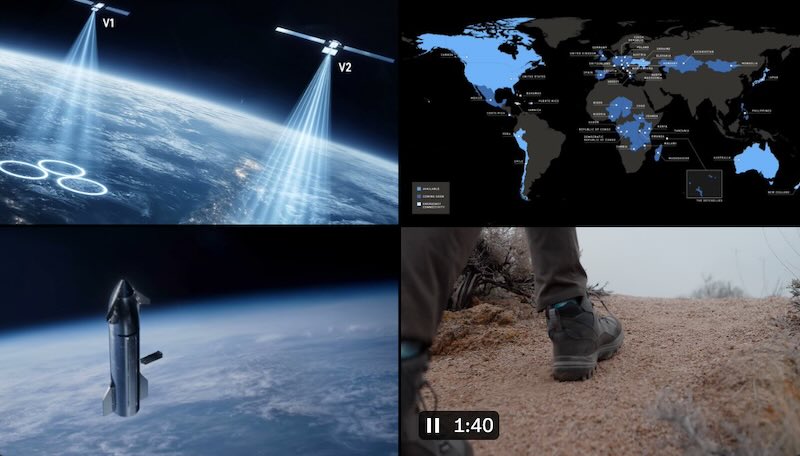
SpaceX is preparing to scale its phone-to-satellite service to unprecedented levels. The company’s freshly rebranded Starlink Mobile offering aims to connect hundreds of millions of devices worldwide through a next-generation satellite constellation launching in mid-2027. During a keynote at MWC in Barcelona, Michael Nicolls, SpaceX’s VP for Satellite Engineering, outlined ambitious expansion plans that could transform how mobile connectivity works in remote areas, though the company is carefully positioning the technology as a complement to existing cellular networks rather than a replacement.
The service previously operated under the “Direct to Cell” branding, but SpaceX officially introduced the Starlink Mobile name this week alongside a dedicated website. Rebrand comes as the company filed trademark applications last year, signaling a more unified marketing approach. However, naming situation remains somewhat fragmented. Partner carriers have developed their own labels for the service, T-Mobile markets it as T-Satellite in the United States, while Rogers in Canada simply calls it Rogers Satellite.
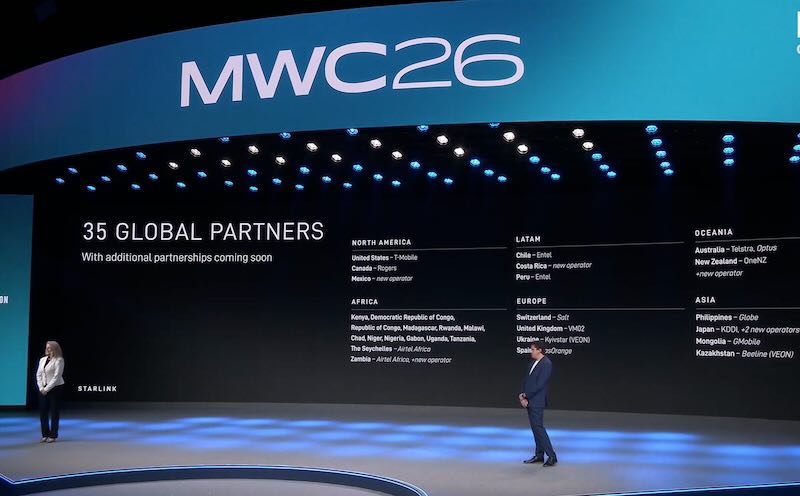
Currently, Starlink Mobile operates through approximately 650 first-generation satellites and has already connected over 16 million unique users since launch. Service maintains 10 million monthly active users across partner networks, including T-Mobile, Rogers, and KDDI in Japan. SpaceX projects this figure will surge past 25 million by the end of 2026, well before the second-generation satellites even reach orbit.
Upcoming V2 Satellite system represents a substantial leap in capability. Each next-gen satellite will feature a phased array antenna 5x larger than the current generation, enabling dramatically improved performance. According to Michael, these satellites will deliver 4x the bandwidth per beam compared to their predecessors.
Mathematical improvements are striking. V2 satellites will achieve nearly 100x the data density of the first-generation hardware. Performance boost comes from the larger phased arrays creating smaller, more focused spot beams on the ground, combined with 16x the number of beams per satellite. System is designed to deliver download speeds up to 150Mbps directly to unmodified smartphones, genuine 5G performance from space, even in areas where terrestrial infrastructure doesn’t exist.
SpaceX plans to launch the first batch of second-generation Starlink Mobile satellites in mid-2027 using the company’s Starship. Massive rocket will enable SpaceX to deploy more than 50 satellites per launch, allowing for rapid constellation buildout. The company’s stated goal is deploying a constellation capable of global, continuous coverage within six months of starting launches—approximately 1,200 satellites.
Long-term regulatory filings suggest the constellation could eventually expand to 15,000 satellites. Scale would create what Michael described as the “largest 4G coverage by geographic area in the world,” serving users in cellular dead zones across every continent.
Despite Elon’s occasional social media musings about competing directly with mobile carriers, SpaceX struck a decidedly collaborative tone at MWC. Michael emphasized that Starlink Mobile represents a key component of hybrid networks combining terrestrial and satellite capabilities. “Satellite is complementary to terrestrial networks; it cannot provide the data density that terrestrial networks have,” he explained. “But it can augment terrestrial networks in the places where terrestrial networks cannot reach. Or when terrestrial networks need additional capacity.”
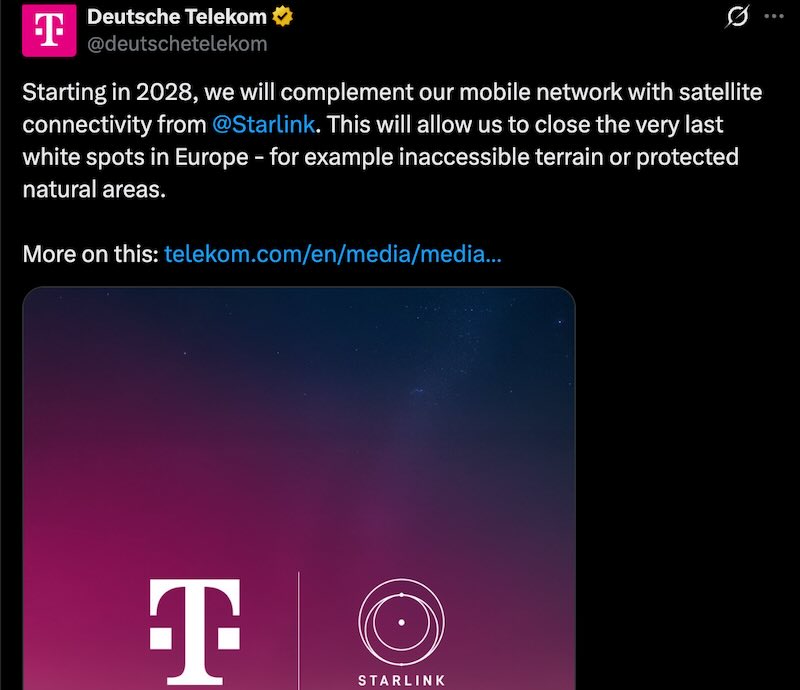
Messaging makes strategic sense at an event filled with telecommunications executives. SpaceX is actively seeking additional partnerships, the company announced a deal with Deutsche Telekom to serve over 140 million subscribers across 10 European countries. Deutsche Telekom plans to launch the service in 2028, using the new Mobile Satellite Service spectrum to close coverage gaps in inaccessible terrain and protected natural areas.
SpaceX’s careful positioning acknowledges fundamental physics. Satellites orbiting hundreds of miles above Earth simply cannot match the data density of ground-based cell towers serving concentrated urban populations. What Starlink Mobile offers instead is ubiquity, ability to provide baseline connectivity anywhere on the planet, whether that’s a hiking trail in the Alps or a rural farm in Montana.
Technology addresses a persistent problem in wireless infrastructure. Building traditional cell towers in sparsely populated areas rarely makes economic sense for carriers, leaving vast geographic regions without reliable coverage. Satellite systems can fill these gaps without requiring carriers to deploy expensive ground infrastructure that serves relatively few customers.
For SpaceX, the path forward involves launching more satellites while remaining mobile-friendly with terrestrial partners, a strategy that could make Starlink Mobile the ultimate coverage solution for cellular networks worldwide.
Related Post
T-Mobile Starlink Satellite Cellular Apps Supported: Real-World Test Results Before October Launch
SpaceX Plans 2027 Launch for Second-Gen Cellular Starlink, 100x Faster Connectivity
iPhone Users Can Now Access Apple Apps via T-Mobile Cellular Starlink Satellite Service