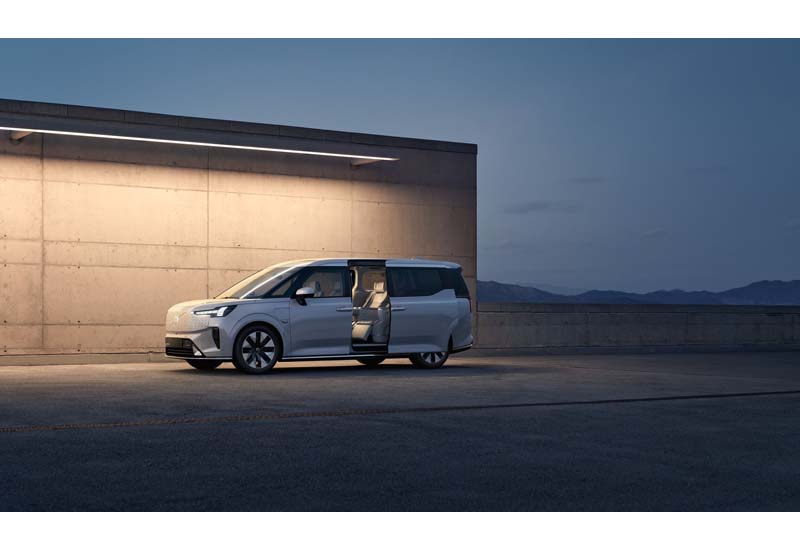
Volvo Cars has terminated its relationship with Luminar Technologies, pulling the lidar sensor from its upcoming EX90 and ES90 electric vehicles.
Volvo’s statement doesn’t mince words. “Volvo Cars has decided to remove the lidar sensor from its EX90 and ES90 cars and discontinue its relationship with supplier Luminar,” the company announced. Stems directly from what Volvo describes as “Luminar’s failure to meet its contractual obligations.”
For an automaker that positioned lidar as a cornerstone technology for advanced safety features, this represents a dramatic reversal. Volvo initially committed to making Luminar’s sensors standard equipment across its next-gen vehicles, a decision that now appears increasingly problematic as the supplier’s financial situation deteriorates.
Volvo maintains its vehicles can still “deliver a high level of safety and driver support, enabled by the cars’ powerful core computing coupled with their advanced sensor set—with or without a lidar.” However, this assertion raises questions about the technology’s actual importance to the company’s safety systems.
If lidar wasn’t critical to Volvo’s vision for autonomous capabilities, why integrate it as standard equipment in the first place? Timing of this pivot, coinciding with Luminar’s financial troubles rather than a planned technological evolution, suggests the decision wasn’t entirely voluntary.
The supplier’s situation has grown dire. Luminar warned investors in regulatory filings that bankruptcy may be unavoidable. The company has “submitted a significant loss claim to Volvo and has suspended further commitments to supply LiDAR to Volvo,” according to SEC documents.
Luminar added that while “discussions with Volvo regarding this dispute” continue, “there is no assurance that the matter can be properly resolved—or resolved at all.”
The contrast with competitors grows sharper. Mercedes-Benz has already opened talks with Flyme Auto and Chongqing Qianli Technology Co., a Shanghai-listed autonomous-driving systems developer. Notably, Qianli Technology operates as a smart-driving platform within Geely—Volvo’s parent company.
That raises an uncomfortable question: with advanced autonomous technology resources available within its corporate structure, why hasn’t Volvo moved faster to secure alternative lidar suppliers or partnerships?
Volvo’s response to this supply chain crisis reveals a company caught between its safety commitments and supplier reliability. Whether Volvo can truly deliver on its autonomous driving promises without lidar remains to be seen, but the company’s credibility on this technology has certainly taken a hit from the Luminar fallout.
Related Post
Volvo NOVO Energy Cuts 50% of Workforce Following Partner Northvolt Bankruptcy
Geely Aims for Full Ownership of Zeekr with Buyout Bid, Strategic EV Portfolio Consolidation
VW Scania Secures Northvolt Industrial Battery Division Following Swedish Battery Maker Bankruptcy