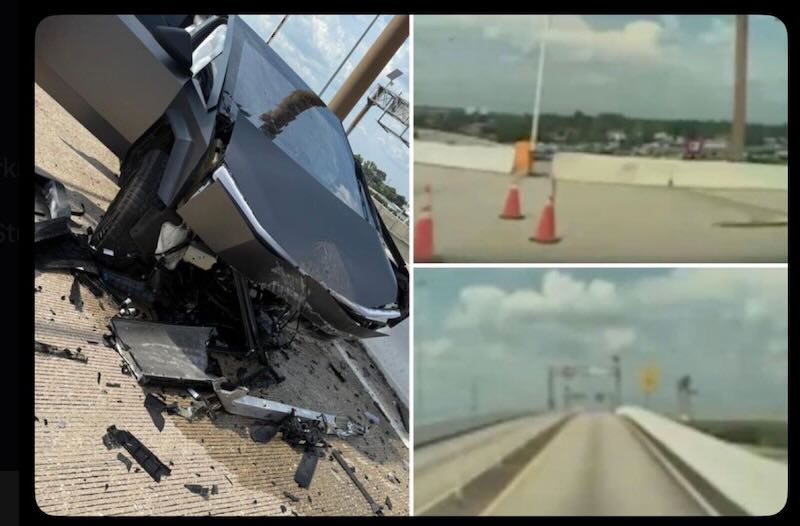
A law firm has filed a $1 million lawsuit against Tesla following an August 2025 crash involving a Cybertruck on Houston’s 69 Eastex Freeway. Attorney Bob Hilliard stated that his client, Justine Saint Amour, was operating the vehicle with Autopilot engaged when the incident occurred. However, claim contains a significant technical error: Autopilot, Tesla’s legacy lane-keeping system, never shipped on the Cybertruck.
Lawsuit’s foundation appears questionable from the start. Tesla’s Autopilot, a driver assistance feature distinct from Full Self-Driving, wasn’t made available for the Cybertruck. This raises immediate concerns about the accuracy of the allegations and whether the legal team understood the technology they’re challenging.
According to available evidence, the driver admits disengaging the system before the collision occurred. Video footage from the incident shows the Cybertruck beginning to turn with the highway ramp before the trajectory suddenly changes. Rather than following the curve, the vehicle drives straight into a wall.
Elon Musk addressed the lawsuit directly, stating that the driver disengaged Autopilot four seconds before impact. “As anyone knows who uses it, that video is not how Autopilot drives,” Elon commented on the incident. The telemetry data suggests the driver wasn’t maintaining proper attention, became startled, and failed to correct the vehicle’s path.
Video evidence doesn’t show any attempt to steer back toward the on-ramp. Instead, the Cybertruck’s path shifts from following the curve to proceeding directly forward into the barrier, behavior consistent with manual driver error rather than automated system malfunction.
Tesla hasn’t issued an official response to the legal action yet. However, the circumstances present several problems for the plaintiff’s case. First, the fundamental claim that Autopilot was engaged conflicts with the fact that this feature wasn’t available on the vehicle model in question. Second, the driver’s own admission about disengaging the system places manual control at the moment of impact.
Lawsuits targeting high-profile companies aren’t unusual, pattern often involves drivers attributing crashes to vehicle systems rather than accepting responsibility for their actions.
Discovery and additional data collection will provide more clarity as the case proceeds. Based on current evidence, the incident doesn’t resemble typical Full Self-Driving behavior, even from earlier versions like FSD V13. The Cybertruck crash appears to be a case of driver error dressed up as system failure.
Related Post
Tesla Cybertruck Protects Father and Daughter in 60 MPH Collision with Drunk Driver
Cybertruck Earns IIHS Top Safety Pick+ Rating, Only Electric Truck to Achieve Top Honor
Tesla Cybertruck Champion: Wes Morrill Earns Spot on TIME’s Climate Leaders List