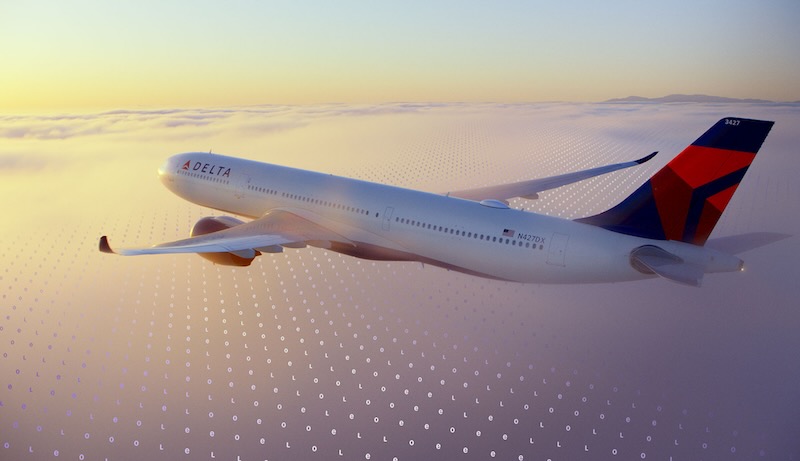
Delta Air Lines isn’t following the crowd. While nearly every major U.S. carrier has signed on with SpaceX’s Starlink for in-flight connectivity, Delta has decided to place its chips on Amazon’s yet-to-be-proven LEO satellite internet service. It’s a bold move, one that raises as many questions as it answers.
On Tuesday, Amazon confirmed the partnership, revealing that Delta’s High-Stakes Bet involves equipping 500 aircraft with LEO antennas beginning in 2028. That’s roughly half of Delta’s fleet, and a significant commitment to a service still in private beta.
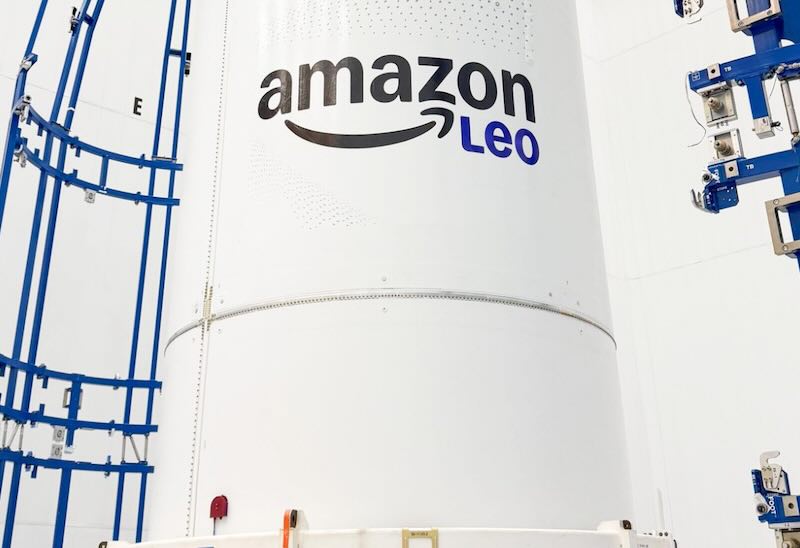
Each aircraft will feature a single LEO antenna capable of delivering download speeds up to 1Gbps and upload speeds reaching 400Mbps. Amazon is promising passengers a ground-like internet experience — streaming, gaming, uploading — all at 35,000 feet.
Better still, the service will be free for passengers enrolled in Delta SkyMiles, the airline’s no-cost loyalty program. That’s a compelling value proposition, assuming Amazon delivers.
Here’s where things get complicated. Amazon’s LEO constellation currently spans only around 200 satellites, far too few for reliable, wide-scale coverage. Starlink, by contrast, is already operational on multiple carriers, including United Airlines and Alaska Airlines. Hawaiian Airlines, a Starlink partner, recorded median download speeds near 160+ Mbps last year, according to Ookla.
Starlink could realistically outfit Delta’s entire fleet by the end of 2027. LEO won’t even begin installations until 2028. So why did Delta wait?
Delta hasn’t been transparent about its reasoning, but a few factors likely influenced Delta’s High-Stakes Bet. First, there’s the existing Amazon web services relationship, AWS currently powers Delta’s reservation systems and customer-facing applications. Second, satellite industry analysts have noted that SpaceX tends to offer fleetwide, all-or-nothing agreements, which may have limited Delta’s flexibility.
Delta also isn’t abandoning its current providers entirely. T-Mobile/Viasat and Hughesnet will continue servicing the rest of the fleet, a clear hedge against LEO’s uncertainties.
To its credit, Amazon has committed billions securing launch capacity for over 100 missions through Q1 2029. JetBlue has also signed on with LEO, with partial availability expected in 2027. Momentum is building, even if the timeline remains aggressive.
For frequent Delta flyers, Delta’s High-Stakes Bet is a waiting game. Better connectivity is coming — eventually. Until LEO proves itself operationally, Delta’s in-flight internet experience will remain dependent on its existing, lower-performance providers.
Delta CEO Ed Bastian called it “the best, fastest, and most cost-effective technology available.” Whether that confidence is earned, passengers will have to wait until 2028 to find out.
Related Post
Amazon Leo Satellite Internet Takes On Starlink With Three New Terminals, Launch Details
SpaceX Slams American Airlines Over Amazon Leo Talks, Starlink vs Leo Satellite Internet Battle
Blue Origin TeraWave: 6 Tbps Satellite Network Targets Enterprise Market, 2027 Launch