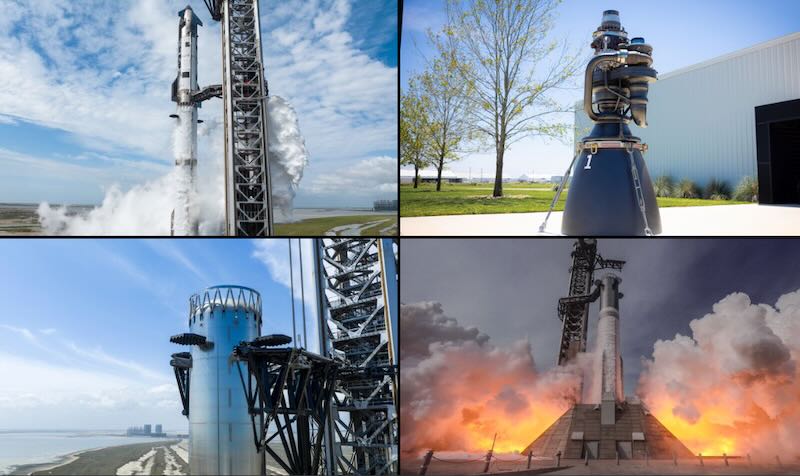
SpaceX doesn’t iterate quietly. When the company announced Starship V3, it didn’t just publish a changelog, it essentially described a new rocket wearing familiar branding. Scheduled for its first test flight on May 19th with a launch window opening at 6:30 PM ET, this vehicle represents the most ambitious single-generation leap the program has made since its inception. And given how fast Starbase has moved over the past three years, that’s saying something.
So what’s actually different? Nearly everything.
Super Heavy V3 isn’t a refinement of its predecessor — it’s a structural argument. Grid fin count drops from four to three, but each remaining fin is 50% larger and repositioned lower on the booster to reduce heat exposure during hot staging. The fin hardware itself has been relocated inside the fuel tank, which keeps critical components away from the thermal chaos of ascent.
Integrated hot stage is perhaps the boldest structural call. SpaceX removed the disposable interstage shield entirely, leaving the booster dome directly exposed to upper-stage engine ignition. Tank pressure and steel shielding now handle what a dedicated shield previously managed. It’s a weight and complexity trade-off that either works brilliantly or becomes a very expensive lesson.
Propellant loading also gets a meaningful upgrade — two separate quick-disconnect systems replace the single previous unit, adding redundancy while reducing pad interface complexity. The fuel transfer tube, described as roughly the size of a Falcon 9 first stage, enables simultaneous startup of all 33 Raptors and faster flip maneuvers during booster return.
Upper stage changes are equally significant. Propulsion system is a clean-sheet redesign, supporting a new Raptor startup method, increased propellant volume, and an improved reaction control system. Engine shrouds are gone. Large aft cavity has been removed. Fluid and electrical systems have been rerouted throughout.
Flap actuation has shifted from two actuators per flap to a single actuator with three motors, a change that improves redundancy without adding mass. Starlink satellite deployment gets faster throughput via an upgraded dispenser mechanism.
More critically, Starship V3 introduces hardware specifically built for long-duration spaceflight: orbital coast capability, cryogenic fluid management, vacuum-insulated header systems, and high-voltage cryogenic recirculation. Four docking drogues and propellant transfer connections have been added, directly enabling the in-space refueling architecture that Moon and Mars missions depend on.
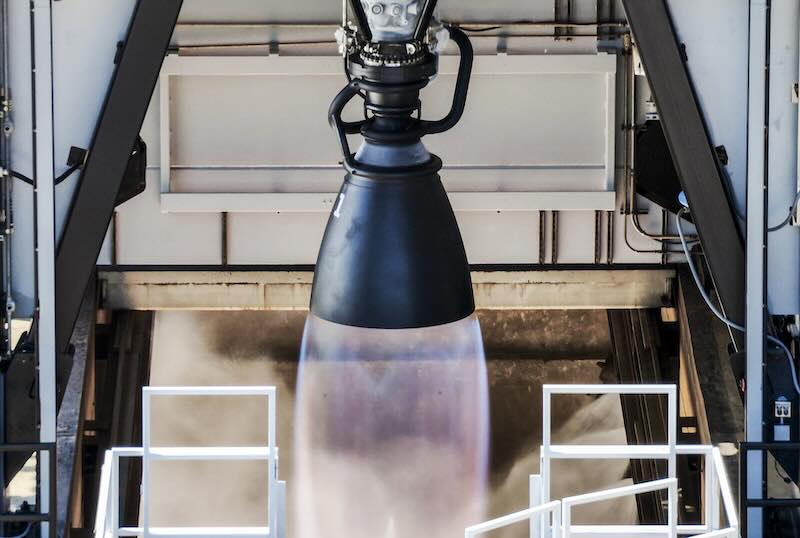
The Raptor 3 engine increases sea-level thrust from 230 to 250 metric tons-force, while vacuum variants climb from 258 to 275 tf. Sea-level engine mass drops from 1,630 kg to 1,525 kg. Sensors and controllers are now integrated directly into the engine body, which eliminates the need for external shrouds and saves roughly one ton per engine across vehicle systems.
That’s not a minor efficiency gain — across a 33-engine booster, it represents a meaningful reduction in liftoff mass.
Launch Pad 2 at Starbase has been rebuilt to match. A bidirectional flame diverter is designed to eliminate the ablation and refurbishment that’s followed previous launches. Mechazilla chopstick arms are shorter for faster movement and have switched from hydraulic to electromechanical actuators. Methane and oxygen systems are now separated, with critical valves and filters moved into a protected bunker.
SpaceX has framed the May 19th flight test as a debut for every new element simultaneously — booster, ship, engines, and pad — all flying together for the first time. Primary goal is demonstrating these systems in a real flight environment, not achieving any specific mission milestone.
Meanwhile, Elon has already signaled that V4 will be 15–20% longer, and SpaceX is reportedly scouting domestic and international sites for additional spaceports.
Starship V3 may be the most capable rocket ever assembled. On May 19th, we’ll find out if it’s also the most capable rocket ever launched.
Related Post
SpaceX Installs Massive Fuel Transfer Tube in Next Generation V3 Super Heavy Booster
SpaceX Starship Rocket Aces 11th Test Flight, Setting Stage for Version 3
The All-In Podcast: SpaceX IPO, Tesla, The Space Opportunity