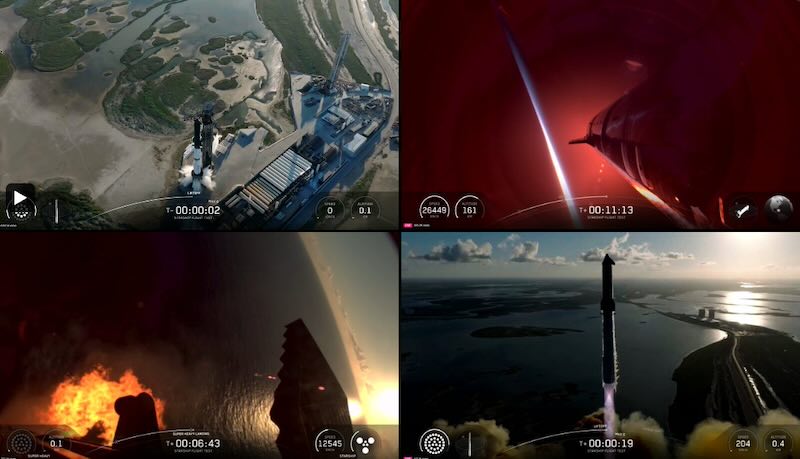
SpaceX’s Starship rocket, the largest and most powerful launch vehicle ever built, just completed its 11th test flight (Ship 38) with unprecedented success. Today’s mission marks a significant milestone as the final launch of Starship version 2 before the company transitions to version 3.
The behemoth rocket lifted off without a hitch, demonstrating remarkable stability throughout its ascent. Stage separation executed perfectly, with the Heavy Booster splashing down in the ocean exactly as planned. Controlled descent represents a significant engineering achievement for SpaceX’s reusability goals.
For just the second time in Starship’s testing program, the vehicle successfully deployed Starlink simulators. Engineers had implemented several refinements following the previous flight’s minor deployment issues, resulting in a smoother release process with “no bumps or wobbling on the way out,” according to mission control.
Perhaps most impressive was Starship’s performance during atmospheric reentry. Stunning views transmitted via Starlink captured the plasma field surrounding the vehicle as it plunged back toward Earth. Heat shield held up better than in any previous test, showing SpaceX has made critical improvements to this essential component.
Starship executed a complex flip maneuver with precision before splashing down exactly on target in the Indian Ocean. This controlled descent demonstrates Starship’s increasingly refined navigation and control systems.
With this successful test flight, SpaceX has cleared the runway for Starship version 3. The company’s methodical approach to testing and iteration continues to pay dividends as they rocket toward their ultimate goal of Mars transportation.
Related Post
SpaceX V3 Starlink Satellites: 20x More Powerful Than Previous Generation, Launch on Starship
SpaceX Installs Massive Fuel Transfer Tube in Next Generation V3 Super Heavy Booster
Starlink V3 Satellites Promise Sub-20ms Latency Launch in 6-9 Months