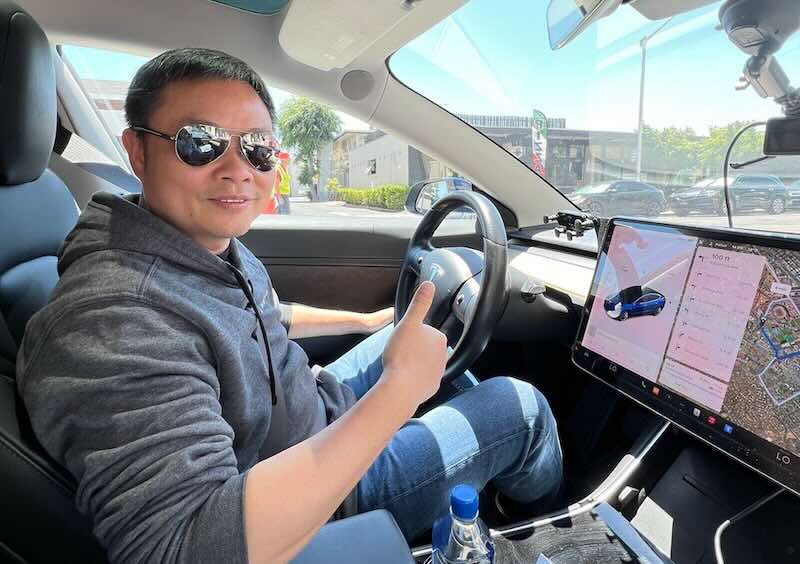
XPeng Motors CEO He Xiaopeng isn’t mincing words about autonomous driving’s future. In a candid industry discussion, the executive laid out his company’s ambitious timeline—claiming vision-based systems will definitively outperform LiDAR technology within three years. This bold prediction comes as automakers worldwide grapple with competing sensor technologies, massive compute requirements, and the complex realities of global market expansion.
He Xiaopeng’s stance on autonomous driving sensors couldn’t be clearer. “From advanced driver assistance to full autonomy, we’re all in on vision,” He Xiaopeng declared, positioning XPeng firmly in the camera-first camp. Xpeng’s bet on vision systems stems from their perceived higher performance ceiling compared to traditional LiDAR solutions.

According to Xiaopeng, camera-based systems will eventually detect minute road hazards that escape LiDAR’s capabilities—think scattered nails that could puncture tires or slightly shifted manhole covers. “LiDAR simply can’t do that,” he argued, highlighting the granular detection abilities that vision systems promise to deliver.
The foundation supporting XPeng’s vision revolution? Exponential growth in vehicle computing capacity. He noted that today’s vehicles already pack 10 times more compute power than models from just a few years back, XPeng unveils Turing chip for pure vision autonomous driving – 1500+ tops performance. Looking ahead, He Xiaopeng expects another 10-fold to several dozen-fold increase within the next decade.
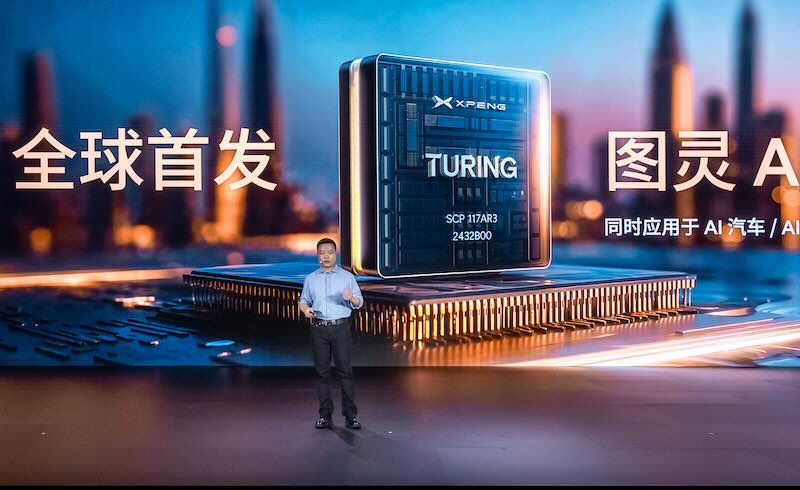
Unlike competitors who focus computing resources solely on autonomous driving functions, XPeng’s in-house platform considers multiple vehicle systems and use cases. “This leap in compute power isn’t incremental—it’s exponential,” He emphasized, predicting every OEM will feel the transformation’s impact within two years maximum.
Traditional automakers concentrated primarily on hardware quality, but He Xiaopeng argues that today’s EV landscape demands a three-pronged approach: hardware quality, software excellence, and global compliance standards. Safety, in his view, isn’t a single control point but rather a comprehensive closed-loop process spanning from initial product design through worldwide deployment.
The most challenging aspect? Global quality adaptation—adjusting to different regions’ regulatory frameworks, road conditions, and consumer expectations. He described this challenge as industry-wide, particularly affecting EV manufacturers pursuing international expansion.
To guide development decisions, He presented an evolved version of traditional “barrel theory” principles: No short boards represent non-negotiable safety standards. Mid boards rising means unreleased features revealed at launch. Long boards differentiated focus on design elements, intelligent capabilities, and core driving performance metrics including power delivery, braking response, steering precision, and range optimization.
Despite China’s impressive EV momentum in international markets, He Xiaopeng offered a measured perspective on globalization timelines. “True globalization will take 10 to 20 years of serious learning,” he acknowledged, drawing from XPeng’s early international experiences.
The company’s first-gen P7 sedan faced significant challenges in European markets—customers found the styling unappealing, demanded larger trunk space, and expected adaptive air suspension in sedan configurations.
He Xiaopeng emphasized that emotional value varies significantly across regions, noting that Chinese automotive brands face cultural hurdles. “Until Chinese culture—film, media, and aesthetics—go global, emotional value in cars won’t translate either,” he explained, highlighting the deep connection between cultural influence and automotive appeal.
XPeng’s design philosophy prioritizes mainstream appeal over niche aesthetics. “A good-looking product must be cool to most people—not just a niche group of art lovers,” He Xiaopeng stated. This approach requires designers to anticipate global aesthetic trends two years in advance, ensuring products resonate with diverse international audiences.
Related Post
XPeng Accelerates European Expansion: CEO Confirms Local Production Plans for Market Conquest
XPENG Iron: New Humanoid Robot Sparks Design Debate in Tech Industry
XPeng Accelerates European Expansion: CEO Confirms Local Production Plans for Market Conquest