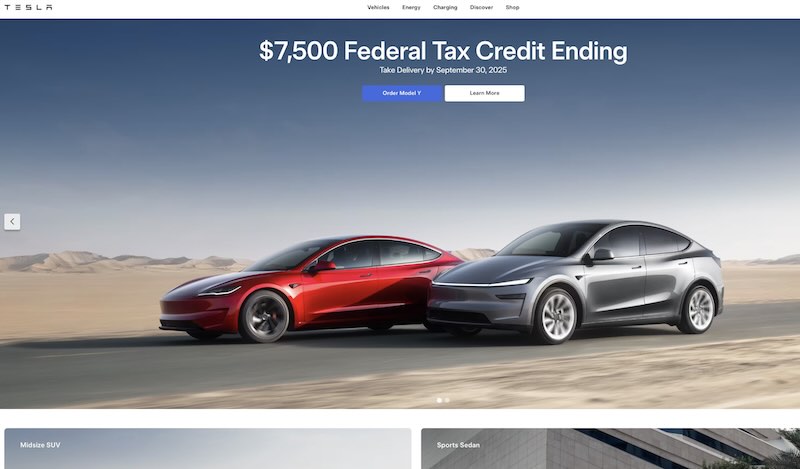
California officials are scrambling to develop state-level incentives to replace federal electric vehicle tax credits that expire in September. California Air Resources Board has recommended maintaining the $7,500 new EV credit and $4,000 used vehicle incentive, though funding sources remain unclear as the September 30 deadline approaches.
The recommendation highlights California’s commitment to maintaining EV adoption momentum despite federal policy changes. However, state officials acknowledge that any replacement program would depend heavily on available resources, creating uncertainty for consumers and automakers planning future purchases.
State regulators haven’t identified specific funding sources for the California EV tax credit replacement program. Officials indicate that both the governor and legislature must approve any incentive structure before implementation can begin. Approval process includes determining not only funding mechanisms but also eligibility requirements and credit amounts.
The proposed California EV tax credit could mirror the federal $7,500 amount, though officials suggest it might offer lower incentives depending on budget constraints. Program structure will significantly impact funding requirements, particularly regarding income limits and vehicle price caps.
Stakeholder advocacy has produced competing visions for the California EV tax credit replacement. Some groups are pushing for programs without income restrictions or maximum suggested retail price (MSRP) limits, arguing broader accessibility will drive greater adoption rates.
Conversely, other advocacy organizations want the California EV tax credit limited to medium and low-income residents with strict MSRP caps. These groups argue that targeted incentives provide better value for taxpayers while ensuring benefits reach consumers who need financial assistance most.
This tension reflects broader questions about EV incentive design. Should programs maximize total adoption through broad eligibility, or should they focus resources on specific demographic groups?
Beyond financing concerns, California regulators are reconsidering the state’s 2035 zero-emission vehicle sales requirement. Advanced Clean Cars policy mandates 100 percent zero-emission new vehicle sales by 2035, though automakers have expressed concerns about meeting this timeline.
State officials expect significant advocacy from multiple stakeholders regarding this requirement. Manufacturers will likely push for timeline adjustments, citing production capacity constraints and market readiness concerns. Environmental groups, meanwhile, will probably advocate for maintaining the current schedule despite federal policy reversals.
The regulatory environment has shifted dramatically since the original policy adoption. Officials note that the regulation was implemented before federal clean vehicle initiatives faced systematic dismantling, creating new challenges for state-level programs.
Federal and state policy conflicts may trigger legal challenges that could delay or derail the California EV tax credit replacement program. As the federal government reduces clean vehicle incentives, state-level programs become more important but potentially more controversial.
California’s history of environmental leadership often puts it at odds with federal policy directions. State’s ability to implement and fund its own California EV tax credit program without federal interference remains uncertain, particularly if legal challenges emerge.
The stakes extend beyond California’s borders, as other states often follow California’s regulatory lead on environmental issues. Success or failure of the California EV tax credit replacement could influence similar programs nationwide.
Related Post
Tesla $7,500 Federal Tax Credit Ending Sept 30, 2025 – Delivery Deadline Info
Tesla Nevada LFP Battery Factory Nears Completion, Cuts China Dependence
Tesla Becomes Own Insurance Underwriter in California, Offers Policyholder Discounts