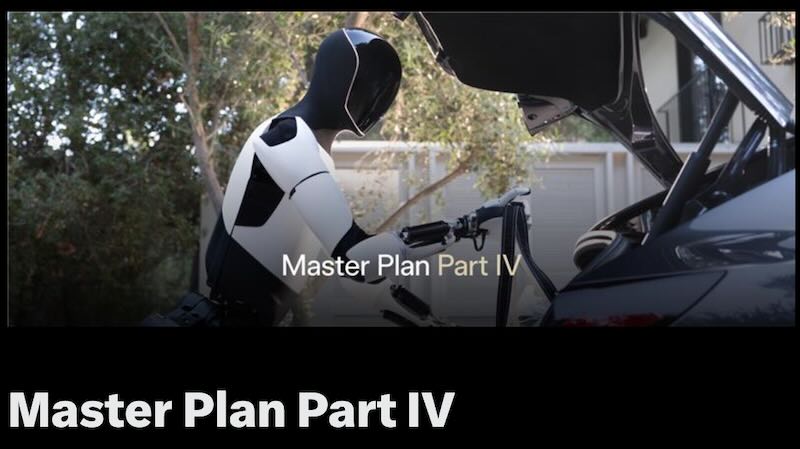
Tesla dropped Master Plan Part 4, and frankly, it’s a bold departure from previous iterations. This time, Tesla isn’t just talking about electric vehicles or solar panels—it’s betting everything on Optimus humanoid robots to achieve what CEO Elon Musk calls “sustainable abundance.” Plan represents Tesla’s most ambitious vision yet, combining artificial intelligence with physical robotics to reshape global economics.
Unlike Master Plan 3, which Elon admitted was “too complex for almost anyone to understand,” Master Plan Part 4 delivers a straightforward message: robots will solve scarcity. Tesla’s manufacturing expertise meets autonomous technology to create products that could fundamentally alter how we think about work, transportation, and energy distribution.
Document doesn’t mince words about the challenge ahead. Tesla acknowledges that eliminating scarcity through robotics “will be extremely difficult to overcome” and requires “tireless and exquisite execution.” However, the company’s confidence stems from years of developing autonomous systems for vehicles, which they’re now applying to humanoid robots.
What makes this plan different? Tesla isn’t just building robots—they’re creating an ecosystem where AI meets physical world applications. Optimus platform represents the convergence of everything Tesla has learned about batteries, motors, AI, and manufacturing at scale.
Tesla’s approach leverages existing production capabilities to mass-produce humanoid robots. The company’s Gigafactories, originally designed for vehicle production, can be retooled for robot manufacturing. This isn’t theoretical—Tesla has been testing Optimus units in their own facilities, gathering real-world data about performance and reliability.
Integration strategy focuses on unifying hardware and software at unprecedented scale. Tesla’s FSD technology, refined through millions of miles of driving data, provides the neural network foundation for robot decision-making. Engineers can transfer learning algorithms from vehicles to humanoid platforms, accelerating development timelines significantly.
Tesla Master Plan Part 4 doesn’t shy away from discussing economic transformation. The company envisions robots performing tasks across industries, from manufacturing to service sectors. Could address labor shortages while reducing production costs for essential goods and services.
However, Tesla frames this transition as “economic growth shared by all” rather than job displacement. Plan suggests that robots will handle dangerous, repetitive work while humans focus on creative and strategic roles. Whether this optimistic view materializes remains to be seen.
Critics will undoubtedly question Tesla’s timeline and technical feasibility. Tesla addresses skepticism head-on, stating that “plenty of others will laud every obstacle and setback we inevitably encounter.” Yet Tesla’s track record with electric vehicle adoption suggests they’re comfortable with initial resistance to transformative technologies.
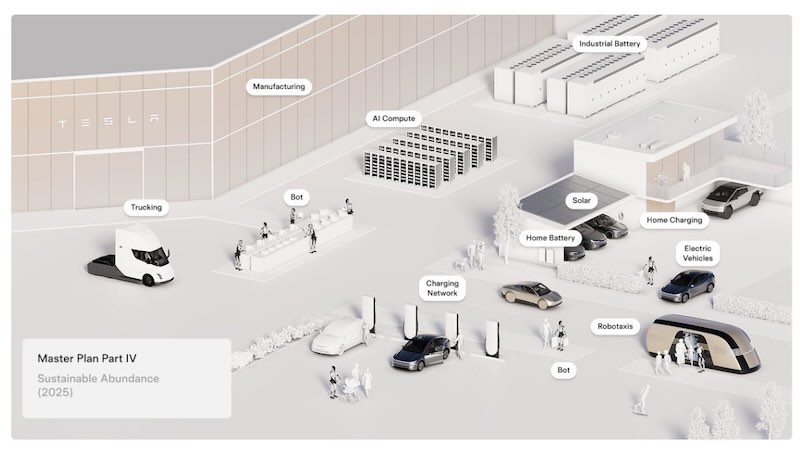
The Master Plan Part 4 identifies three fundamental areas for transformation: labor, mobility, and energy. Optimus robots could revolutionize each sector through coordinated deployment across Tesla’s expanding infrastructure network.
Labor transformation involves robots working alongside humans in controlled environments. Tesla’s own factories serve as testing grounds, where Optimus units learn complex assembly tasks. Data collected feeds back into neural networks, improving performance across the entire robot fleet.
Energy management becomes more sophisticated with robotic oversight. Robots can optimize power grids, maintain solar installations, and manage battery storage systems with precision that surpasses human capabilities. Level of coordination supports Tesla’s broader sustainable energy mission.
Tesla’s Master Plan Part 4 represents a calculated gamble on humanoid robotics reaching critical mass within the decade. Success depends on execution across multiple complex systems, but the potential payoff could indeed create the abundant future Tesla envisions.
Related Post
Elon Musk: Tesla Optimus Version 3 Will Be ‘Biggest Product Ever,’ Production Target of 100K Monthly
Tesla Optimus Robot Masters Complex Tasks Through Revolutionary Video Learning
Tesla Hollywood Diner Opens with Drive-In Movies & 80 Supercharger Stalls – Experience Now