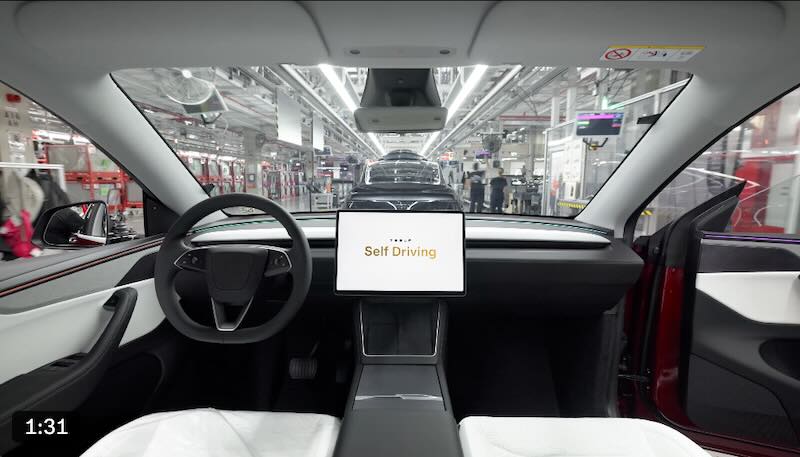
Tesla just reached another manufacturing milestone at Giga Berlin, and frankly, it’s the kind of automation breakthrough that makes science fiction feel routine. Tesla AI announced that newly manufactured vehicles now drive themselves autonomously from production lines to designated outbound parking areas without human intervention. Capability represents a significant step toward fully automated vehicle manufacturing and distribution processes.
System allows completed vehicles to navigate factory grounds independently, stop at on-site Superchargers for initial charging, then proceed to outbound lots for shipping preparation. Tesla’s autonomous factory operations now span three facilities, with Giga Berlin joining existing capabilities at other production sites. However, Giga Shanghai hasn’t implemented this functionality yet, though industry observers expect similar deployment soon.
Manufacturing automation has evolved beyond traditional assembly line robotics into sophisticated vehicle movement systems. Tesla’s approach eliminates what was previously a significant logistical bottleneck requiring extensive human resources. Workers no longer need to manually drive each completed vehicle through factory staging areas—a process that created delays and required dedicated personnel.
Autonomous system handles various operational tasks seamlessly. Vehicles navigate complex factory layouts, avoid obstacles, coordinate with other moving units, and execute precise parking maneuvers. Level of coordination requires advanced sensor integration and real-time decision-making capabilities that extend Tesla’s FSD into manufacturing environments.
Tesla’s autonomous factory operations at Giga Berlin demonstrate manufacturing sophistication that rivals Giga Shanghai’s proven capabilities. While Shanghai operates at 95% automation and produces vehicles (Model Y) every 35 seconds with minimal human involvement, Berlin has achieved comparable build quality according to recent reports.
Factory automation extends beyond vehicle assembly into comprehensive operational management. Completed vehicles receive initial software updates, undergo quality checks, and prepare for distribution—all while moving autonomously through designated pathways. Integration eliminates traditional staging bottlenecks that previously required significant workforce allocation.
European regulatory constraints currently prevent these vehicles from operating autonomously on public roads, limiting the technology’s application to factory premises. However, Tesla’s demonstration suggests readiness for broader autonomous deployment once regulatory frameworks evolve to accommodate such capabilities.
Autonomous movement capability positions Tesla for future distribution innovations that could revolutionize automotive logistics. Currently, vehicles still require human drivers for transport to nearby ports—approximately 10 kilometers from Giga Berlin—and loading onto shipping vessels. Full automation throughout the entire distribution chain remains a future objective rather than current reality.
Tesla has completing what appears to be the first fully autonomous delivery of a production vehicle from factory to customer. Model Y traveled across Austin, Texas, navigating highways without any human intervention or remote operation.
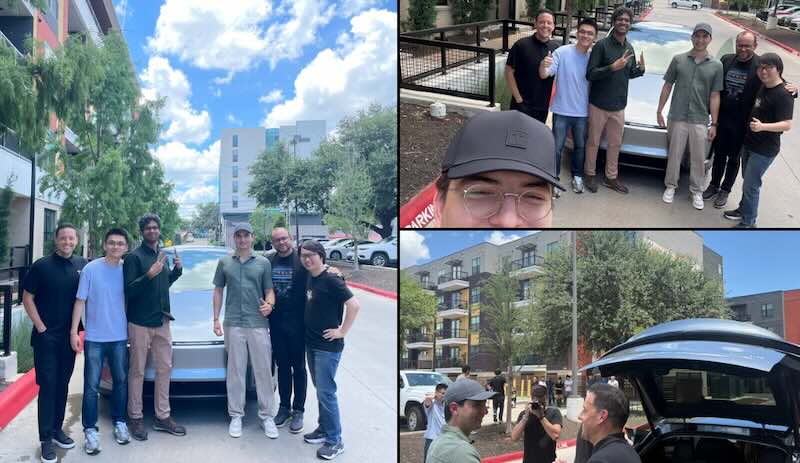
Tesla’s autonomous factory operations highlight the potential for direct-to-customer delivery systems that bypass traditional dealership networks. Regulatory bodies like Germany’s KBA would need to modernize registration processes to enable such direct distribution, but the technological foundation now exists within Tesla’s manufacturing infrastructure.
Real-world implementation reflects Tesla’s commitment to operational efficiency through advanced automation. Factory footage reveals the seamless integration of autonomous vehicles navigating complex industrial environments alongside human workers wearing protective equipment, demonstrating practical deployment rather than controlled demonstrations.
With three factories now operating autonomous vehicle movement systems, Tesla continues to auto-mate their path toward manufacturing leadership.
Related Post
Stockholm Denies Tesla FSD Testing Despite European Expansion in Paris, Amsterdam and Rome
Tesla Deploys “FSD Unsupervised” in Giga Texas: 50,000+ Driverless Miles Logged
Tesla FSD Supervised Tackles Amsterdam Chaotic Streets in European Debut