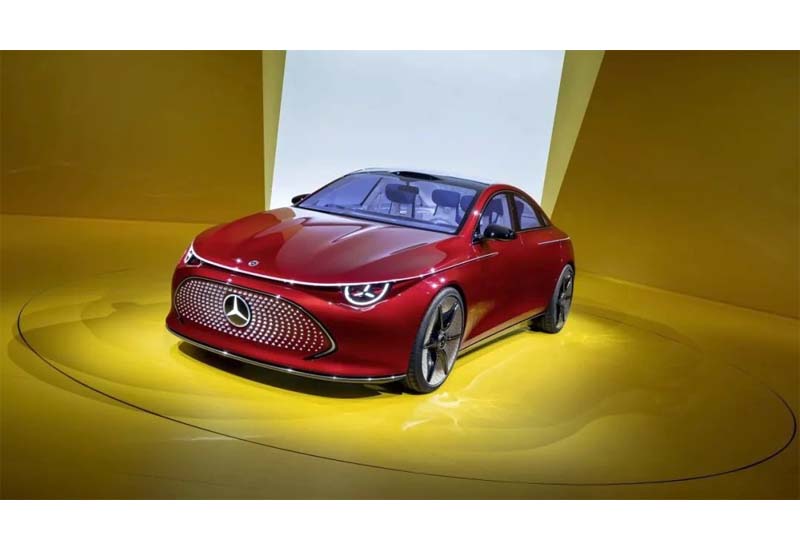
At the 2025 Munich Auto Show, a clear split has emerged in how automakers approach in-car interfaces. While Audi and others embrace minimalism, Mercedes-Benz is taking the opposite approach with its new all-electric GLC featuring a touchscreen spanning nearly a meter across the dashboard.
But there’s more to the story than just screen size. Mercedes is attempting to navigate the tricky balance between digital innovation and usability that’s challenged automakers for years.
“We want to meet the needs of different customers,” explained Matthias Geisen, Mercedes board member for Sales and Marketing. “Innovation shouldn’t just be about flashy displays; it has to genuinely matter to our customers. A big screen isn’t just about size — what really counts is giving users the ability to personalize their entire driving experience.”
This personalization extends beyond mere interface customization. Mercedes is aiming for what Geisen calls a “sense of home” in their vehicles, where the cabin atmosphere itself adapts to individual preferences.
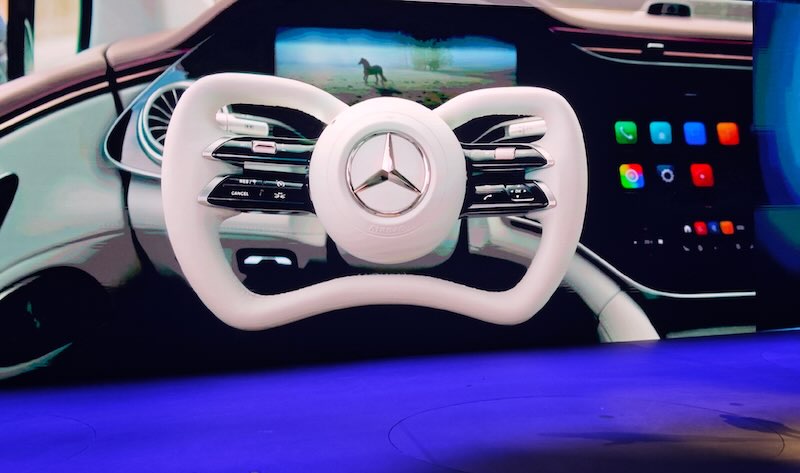
However, the company has also heard customer feedback loud and clear. After years of complaints about touch-only interfaces, physical controls are making a comeback in the new GLC.
“A large screen alone isn’t enough, which is why we reintroduced physical switches on the steering wheel — one of the most frequent complaints from customers,” Geisen admitted. “You’ll also find more buttons on the GLC’s center console for functions like adjusting volume.”
This shift represents a significant course correction in automotive UX design. Mercedes isn’t alone in this adjustment either. Volkswagen recently announced plans to bring back physical buttons for critical functions in future models, with design chief Andreas Mindt bluntly stating they “will never, ever make this mistake again.”
Mercedes Chief Software Officer Magnus Östberg provided additional context for these changes: “We reinstated the scroll wheel because data shows that certain demographics and age groups still have a strong preference for physical buttons. Striking the right balance between tactile and touch controls is critical.”
The company is taking a more nuanced approach to interface design, with Östberg noting that Mercedes is tailoring experiences based on regional markets, customer demographics, and even vehicle categories.
This hybrid approach — massive screens with strategic physical controls — represents Mercedes’ attempt to deliver the flashy tech consumers expect while addressing the practical realities of operating a vehicle. As automakers continue refining their digital cockpits, Mercedes is betting big that screens and buttons can peacefully coexist.
Related Post
Mercedes-Benz 2027 Electric GLC: 713km Range, 330kW Charging, Deliveries Begin in Late 2026
Mercedes AMG GT XX Shatters 25 EV Records in 40,075 km Endurance Run
Mercedes Unveils Revolutionary Steer-by-Wire System with Yoke Wheel Coming 2026