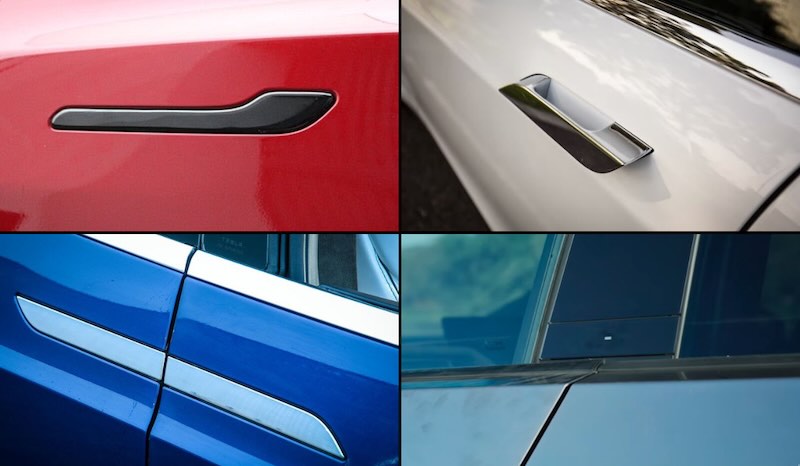
European regulators have sounded the alarm on potential design flaws in electronic door handles, connecting them to several fatal accidents. Authorities are pressing automakers—particularly Tesla—to urgently revise their door mechanisms to ensure vehicle doors can always be opened during emergencies.
The Netherlands Vehicle Authority (RDW), which approves Tesla models for the European market, confirmed that both Euro NCAP and the United Nations Economic Commission for Europe have initiated a critical review of door operability following crashes.
“Current regulations don’t specifically address the door design of electric vehicles,” an RDW spokesperson explained. “We must ensure that these vehicles’ doors can be opened under all circumstances—by occupants from the inside and by rescuers from the outside.”
The UNECE’s Passive Safety Working Group convened in May to address concerns over electronic door handles failing after accidents. Experts emphasized that manufacturers should guarantee doors remain functional even after collisions.
The European Transport Safety Council has noted that several drowning accidents in the Netherlands have been linked to electronic door handles. “This issue is no longer theoretical,” said ETSC Executive Director Antonio Avenoso. “People have died because they couldn’t escape their vehicles in time.”
A particularly tragic case occurred on September 7, when a Tesla Model S in Germany crashed and caught fire. Witnesses who tried to help couldn’t open the doors, resulting in the deaths of the driver and two children. This incident has intensified scrutiny of Tesla’s electronic door handle design.
On September 18, Tesla design chief Franz von Holzhausen revealed on Bloomberg’s Hot Pursuit podcast that the company is developing a new approach to its vehicle door handles.
“The idea of combining the electronic one and the manual one together into one button makes a lot of sense. That’s something that we’re working on,” said von Holzhausen, who has led Tesla’s design team for 17 years.
Tesla is currently testing this potential change in China and is “ready to make necessary changes,” promising “a really good solution” that creates a more intuitive system for vehicle occupants, especially in emergencies.
While Tesla vehicles perform well in standard crash tests, these evaluations typically focus on impact survivability rather than post-crash escape capabilities.
The company’s move comes as regulators worldwide are scrutinizing concealed door handle designs. A top Chinese regulator is reportedly considering prohibiting fully concealed door handles, while European authorities have implemented new measures to improve post-crash rescue protocols.
As Tesla handles this design challenge, the outcome may open doors to broader safety standards across the industry.
Related Post
Tesla Owner Survives Truck Collision Thanks to Model 3’s Ultra-Strong Safety Design
Tesla Model 3 Wins Euro NCAP Safest New Car 2025 Award | 359/400 Points
Tesla Cybertruck Protects Father and Daughter in 60 MPH Collision with Drunk Driver