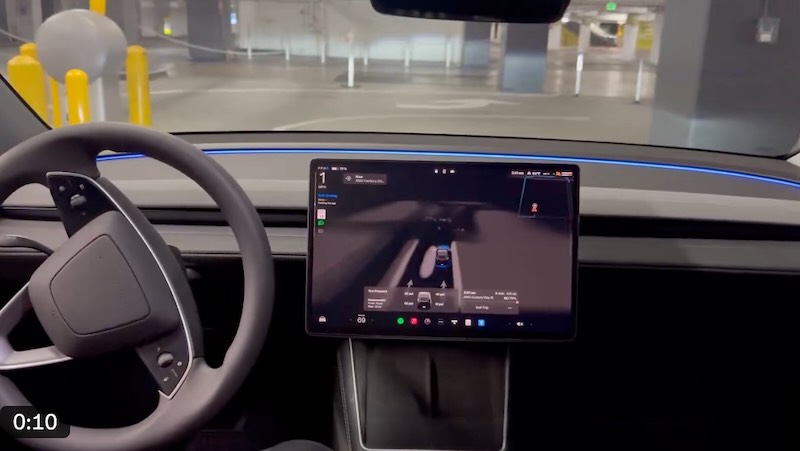
Tesla’s FSD has reached a turning point. V14.2.1 demonstrates what appears to be genuine recognition of human hand gestures, not simply waiting for pedestrians to clear the path. Represents a shift in how autonomous systems process real-time traffic control.
Latest iteration of FSD V14.2.1 introduces a decision hierarchy that mirrors human driving logic. When officers or traffic personnel provide hand signals, system now prioritizes these dynamic inputs over permanent road infrastructure.
Field testing revealed three distinct response patterns. First, when encountering a stop sign without human intervention, the vehicle attempts standard navigation. Second, pairing that same stop sign with a clear “do not proceed” hand signal causes the system to decelerate and halt completely. Third, sustained forward-waving motions prompt the vehicle to resume movement from its stopped position.
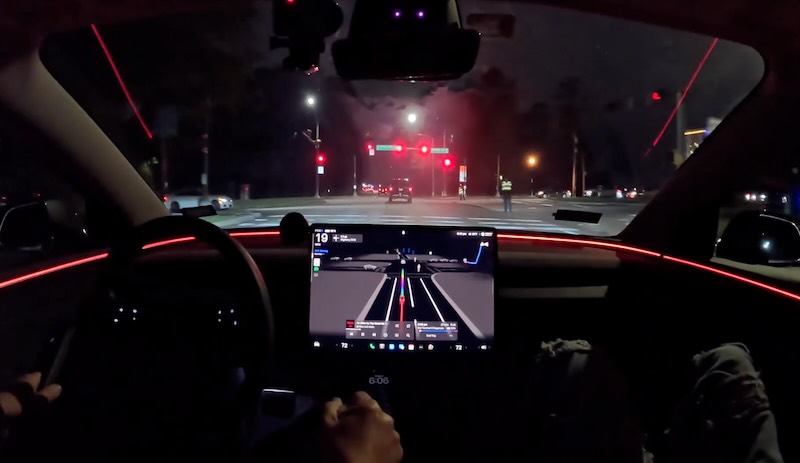
Tesla FSD V14.2.1 applies a rule structure similar to conventional driver training, human-directed traffic control supersedes fixed signage. During Bay Area trials, a vehicle running the software encountered a flashing red signal while two police officers continuously gestured for it to advance. System yielded initially, processed the repeated hand cues, then proceeded through the intersection.
This behavior suggests the neural network has learned to differentiate between static visual elements and active human communication. Software appears to weigh gesture-based instructions as higher-priority data streams within its perception model.
While early results indicate progress, broader validation remains necessary. System’s performance across varied weather conditions, lighting scenarios, and gesture variations hasn’t been fully documented. Edge cases, including conflicting signals from multiple sources or ambiguous hand movements, need systematic evaluation before deployment conclusions can be drawn.
Related Post
Tesla Launches Free 30-Day FSD Trial for 1.5M North American HW4 (AI4) Owners
Former Tesla AI Director Andrej Karpathy Calls HW4 Model X “Amazing” – FSD Makes Quantum Leap
Tesla AI5 Chip Targets 250W Power Consumption, Production Delayed Until 2027