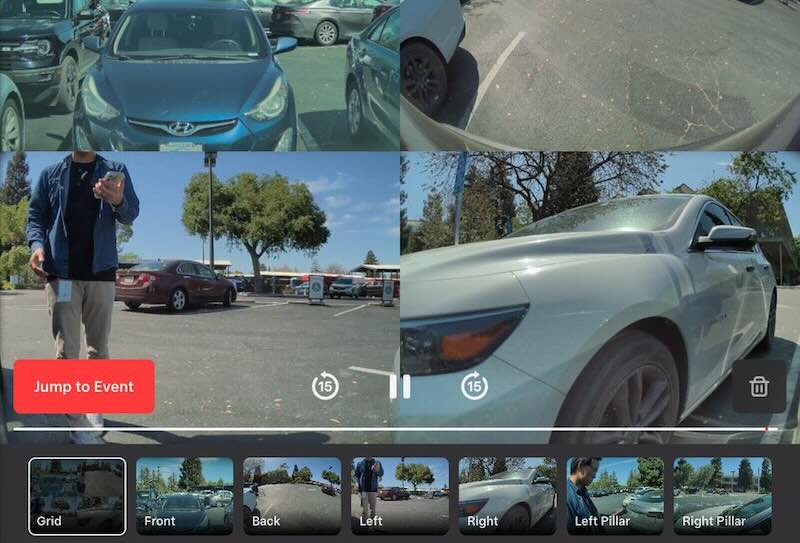
Tesla’s dashcam system is getting a long-overdue upgrade. Tesla will soon allow drivers to store up to 24 hours of rolling footage, a substantial improvement over the current 1-hour limitation that’s frustrated owners since the feature’s inception.
Change addresses one of the most persistent complaints about Tesla’s dashcam functionality: arbitrary storage limits that made no sense given modern USB drive capacities. Whether you plugged in a 128GB flash drive or a 2TB SSD, your vehicle would only preserve the last 60 minutes of footage before overwriting it.
Release notes from an upcoming software update in China reveal the new system will implement dynamic recording durations based on available storage capacity. Vehicle will now analyze your connected USB drive’s total space and adjust the Recent Clips buffer accordingly.
Here’s how the updated benchmarks work: drivers using a 128GB drive will retain approximately 3 hours of rolling footage, while those with 1TB drives or larger can store up to 24 hours. Calculations factor in any saved dashcam or Sentry Mode clips that occupy drive space.
Previous system created a paradox, larger drives could store more saved footage, but most of their capacity sat unused. Vehicle would still overwrite rolling footage after 60 minutes regardless of available space. Now, Tesla to increase dashcam recording history will actually utilize the full potential of high-capacity drives.
Upgrade delivers tangible benefits for multiple use cases. Long-distance travelers won’t need to worry about footage disappearing during extended trips. More importantly, if you discover vehicle damage hours after it occurred, you’ll have a much better chance of recovering the relevant footage.
Timing matters too. Tesla’s vehicles continue recording whenever they’re awake—even after parking. Under the old system, that meant your USB drive was constantly overwriting data, creating a narrow window to save important clips before they vanished forever.
However, there’s a catch. While 1TB drives unlock the full 24-hour capability, they must maintain sustained write speeds of at least 4 MB/s to prevent corruption. Means investing in quality SSDs built to withstand temperature extremes, not just any bargain-bin storage device.
For owners who’ve missed critical footage because they didn’t react within that frustrating one-hour window, Tesla to increase dashcam recording history represents a fundamental shift in how the system operates, and it’s about time.
Related Post
Tesla Finally Brings Dashcam Viewer to Android App – Check Footage on the Go
Tesla Adds B-Pillar Camera View to Cybertruck App | Critical Security Upgrade
Tesla B-Pillar Cameras Join Sentry Mode in 2025 Spring Update – Exclusive to HW4 Vehicles