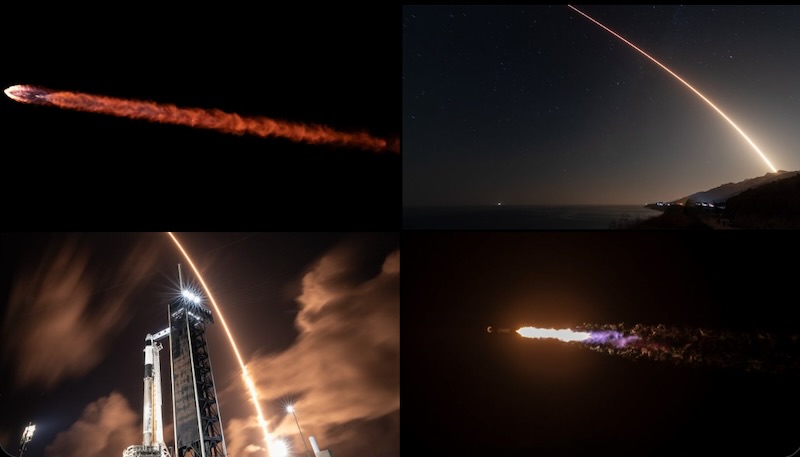
The FCC has accepted SpaceX’s application to deploy up to 1 million satellites for orbital data centers, launching a public comment period that ends March 6. Unusually swift response, just days after SpaceX filed on Friday, has drawn attention from space experts who question both the timeline and the proposal’s technical feasibility.
Currently, approximately 15,000+ satellites orbit Earth. SpaceX’s plan would increase that figure roughly 70-fold, prompting serious questions about launch emissions and orbital debris risks. The company framed its submission as urgent, requesting the agency “expeditiously authorize” the constellation.
Elon announced Tuesday that SpaceX has acquired xAI, marking one of the most significant corporate consolidations in the commercial space sector.
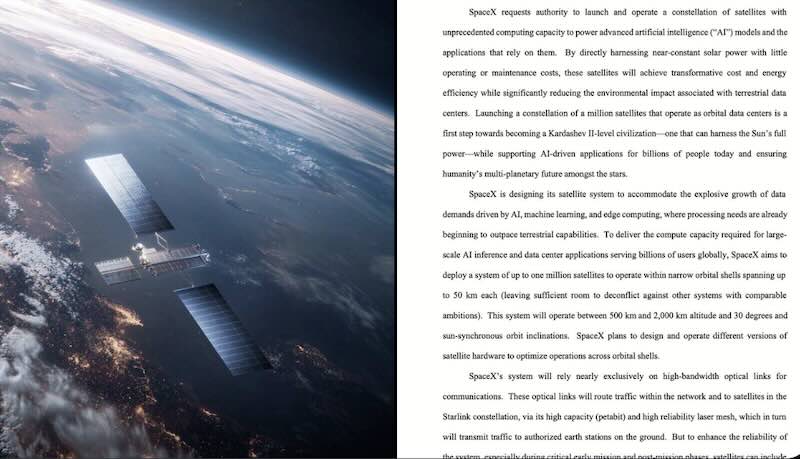
“In short, the sooner the SpaceX Orbital Data Center system is licensed for its limited use of the requested spectrum, the sooner this spectrum can support a revolutionary space platform that will benefit humanity,” SpaceX stated in its filing.
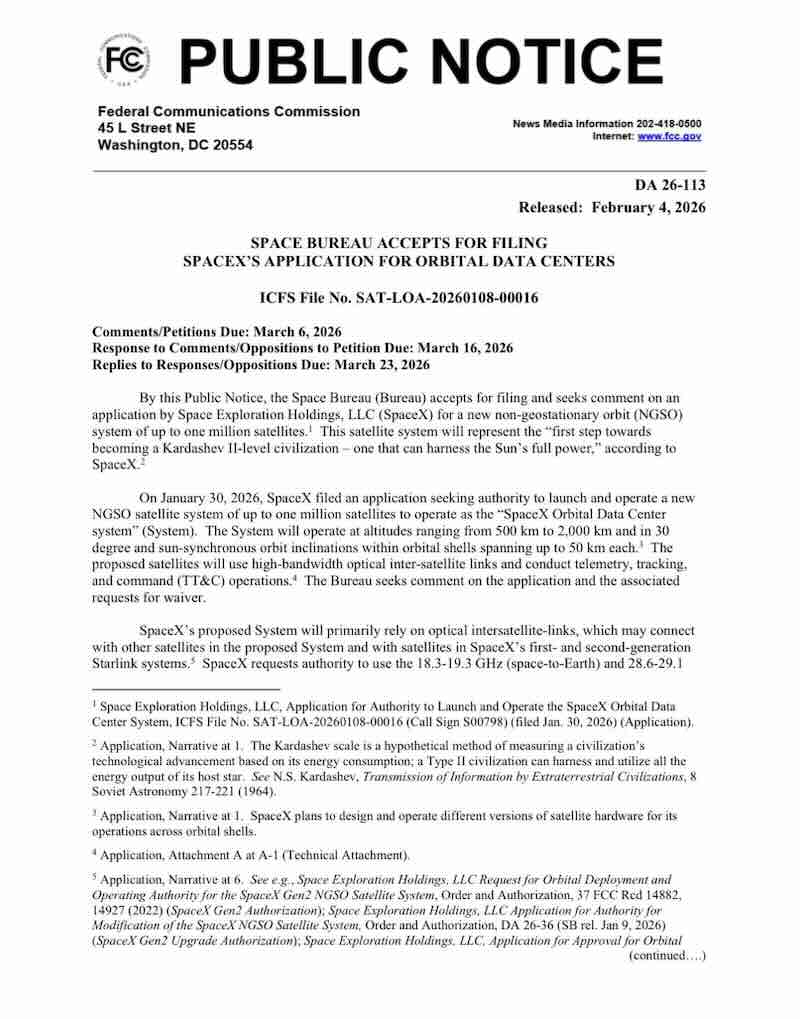
FCC Chairman Brendan Carr signaled openness to the concept Wednesday, posting on social media: “The FCC welcomes and now seeks comment on the SpaceX application for Orbital Data Centers.” A month prior, Carr had indicated the commission was shifting toward what he called a “Default to Yes” framework for certain satellite applications.
The filing describes a non-geostationary orbit system designed to function as space-based computing infrastructure. According to SpaceX, “This satellite system will represent the first step towards becoming a Kardashev II-level civilization – one that can harness the Sun’s full power.”
However, space experts have noted the application appears preliminary. Some characterize it as rushed, lacking the technical depth typically required for projects of this magnitude.
Acceptance doesn’t equal approval. The FCC will review public comments before making any determination about SpaceX’s proposal. Rival companies, environmental organizations, and astronomers are expected to submit critiques during the comment window.
SpaceX could modify its application based on feedback, or the FCC might authorize only a fraction of the requested satellites. Any interested party can participate through the FCC’s International Communications Filing System by referencing filing ID “SAT-LOA-20260108-00016” before the March 6 deadline.
Despite skepticism from industry observers, Elon continues defending the orbital data center concept. His argument centers on energy efficiency, satellites would draw power directly from solar radiation rather than terrestrial grids.
“So it’s actually much cheaper to do it in space,” Elon said during a Cheeky Pint podcast interview. “Mark my words, in 36 months, probably closer to 30 months, the most economically compelling place to put AI will be in space. Those who have lived in software land don’t realize that they’re about to have a hard lesson in hardware.”
Timeline Elon proposes depends on rapid Starship launch cadence, a capability SpaceX hasn’t yet demonstrated at the required scale. Whether the company can transform one million satellites from concept to orbit remains an open question, one that won’t be answered from the ground.
Related Post
SpaceX Starlink Hits 9M Customers With Record Growth, Satellite Internet Expansion
SpaceX Plans 2027 Launch for Second-Gen Cellular Starlink, 100x Faster Connectivity
FCC Approves SpaceX to Launch 15,000 Next-Gen Starlink Satellites, Gigabit Speeds Coming