
SpaceX has quietly reshuffled its residential satellite internet lineup, and if you’ve visited Starlink’s website recently, you may have noticed something different. The company is rolling out two new hardware bundle names Standard 4 and Standard 4 X, tied directly to its residential service tiers. Before you assume this signals a next-generation dish, it doesn’t. SpaceX has clarified that the “4” simply references the V4 model designation on its existing standard dish. It’s a rebranding exercise, not a hardware refresh.
What’s Starlink standard 4 X, Exactly? Two bundles break down along plan lines. Customers subscribing to the entry-level Residential 100Mbps plan receive the Standard 4 package, which pairs the standard dish with the compact Router Mini valued at $40, a dual-band Wi-Fi 6 device that SpaceX originally marketed as a mesh networking accessory.
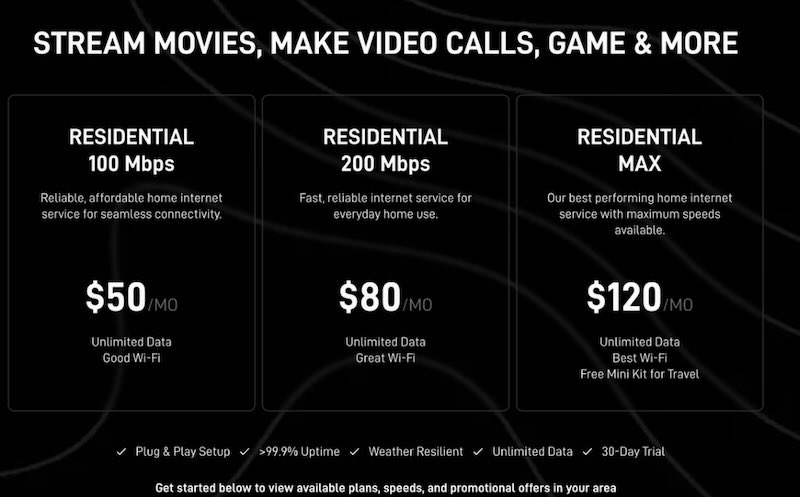
Subscribers on the pricier Residential 200Mbps plan, however, get the Standard 4 X bundle. Configuration includes the standard dish alongside what SpaceX now calls the Router 3 — previously known as the Gen 3 router — offering tri-band Wi-Fi 6 and broader coverage. Residential Max subscribers also receive Standard 4 X, though they can additionally request a Router Mini at no charge.
Rental terms vary by location. Standard 4 is currently rental-only under the 100Mbps plan, while Standard 4 X is available as a free rental for higher-tier subscribers. That said, in congestion-affected areas, new customers may need to pay $349 for Standard 4 X hardware outright.
It’s worth noting that pairing the Router Mini with the most affordable tier makes practical sense. SpaceX markets the 100Mbps plan toward one-to-three-person households with basic internet needs, and the Router Mini’s dual-band Wi-Fi 6 capability is more than sufficient for that use case, while likely trimming hardware costs on SpaceX’s end.
Here’s where things get interesting. Two bundles appear to ship with entirely different power supplies. Standard 4 includes a unit with dual PoE (Power over Ethernet) ports for connecting both the Router Mini and the dish. Standard 4 X, by contrast, uses a barrel jack connector designed specifically for the Router 3.
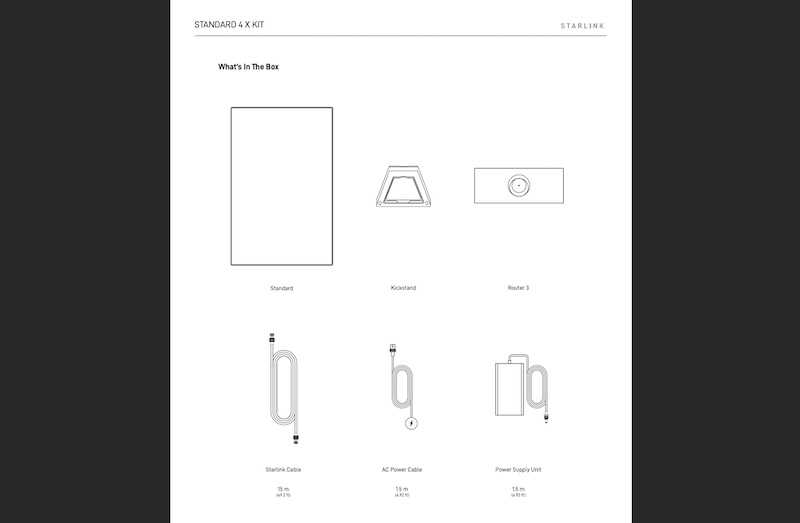
Industry installers have flagged concerns that Standard 4’s power supply may rely on SpaceX’s proprietary PoE standard rather than widely supported active or passive alternatives, which could limit third-party compatibility. SpaceX hasn’t addressed this publicly yet.
Both configurations do appear to support third-party routers via an extra Ethernet port, which at least preserves some networking flexibility.
Ultimately, what SpaceX is calling a simplification is shaping up to be anything but standard.
Related Post
SpaceX Cuts Starlink Mini Kit Price to Record Low $199, Drop From Usual Price $249
SpaceX Delays Free Router Mini for Starlink Max Due to High Demand
FCC Approves SpaceX to Launch 15,000 Next-Gen Starlink Satellites, Gigabit Speeds Coming