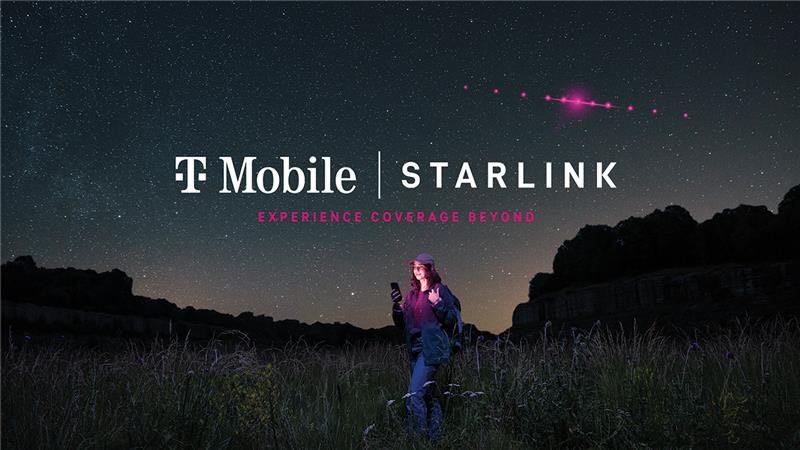
T-Mobile has rolled out a new connectivity solution for businesses that merges its 5G infrastructure with Starlink’s satellite technology. Service—branded as SuperBroadband, targets enterprises with locations in areas where traditional broadband providers haven’t established reliable coverage.
Collaboration between T-Mobile and SpaceX’s satellite division isn’t entirely new. T-Satellite, carrier’s Direct-to-cell service, already relies on Starlink’s orbital network. However, this latest offering shifts focus to commercial customers rather than individual consumers.
“We use T-Mobile’s network, which already covers 98% of the U.S. population, and complement it with Starlink and we are able to provide the service nationwide in every single zip code in America,” said André Almeida, president of growth and emerging businesses at T-Mobile.
Dual-network approach positions T-Mobile’s 5G as the primary connection, with Starlink’s satellite system functioning as automatic backup. This configuration aims to prevent downtime for businesses operating in remote territories or regions prone to infrastructure failures.
Multi-location enterprises stand to benefit most from the arrangement. Companies managing retail chains, construction sites, or field operations often struggle with inconsistent internet access across different geographic areas. SuperBroadband attempts to standardize connectivity regardless of location.
“With over 10,000 Starlink satellites launched, Starlink and 5G keep operations running when other paths fail and extends connectivity to millions of new sites,” said Jason Fritch, VP of Starlink Enterprise Sales.
T-Mobile hasn’t released specific rate structures for SuperBroadband. The company stated that costs will fluctuate based on bandwidth requirements and geographic deployment factors. That variable pricing model suggests customized packages rather than standardized tiers.
Timing coincides with SpaceX’s development of next-gene Starlink satellites v3, currently in production—promise higher throughput capabilities that could enable cellular-grade speeds from orbit. When those satellites reach operational status, the performance gap between terrestrial and satellite connections may narrow significantly.
For now, T-Mobile and Starlink appear focused on securing business customers who’ve exhausted other connectivity options.
Related Post
SpaceX Starlink Mobile Gen 2: 150Mbps Speeds from Space Coming Mid-2027
T-Mobile Offers Free Satellite 911 Texting to All Carriers, Even Verizon and AT&T Customers
iPhone Users Can Now Access Apple Apps via T-Mobile Cellular Starlink Satellite Service