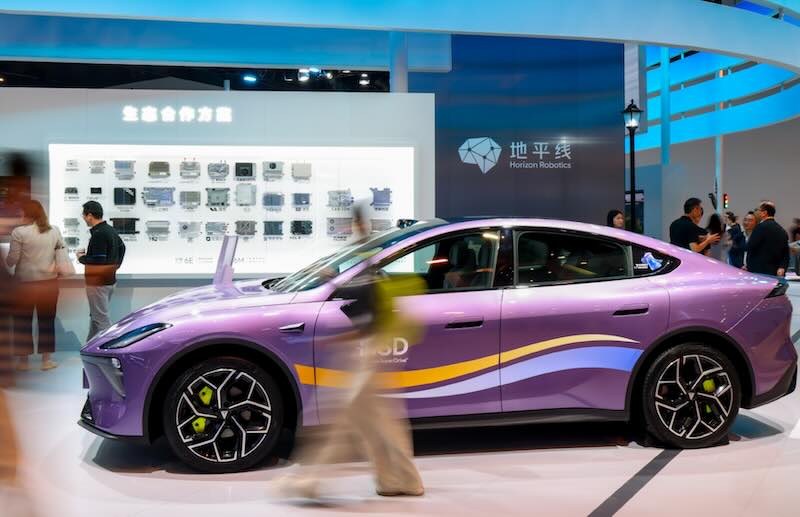
The autonomous vehicle industry continues to wrestle with a question that extends far beyond sensor selection. During a recent technical discussion, Horizon HSD’s leadership team articulated a position that challenges conventional wisdom about perception stacks and sensor fusion. Their framework reframes the ongoing debate about LiDAR’s role in production vehicles—not as a binary choice between cameras and lasers, but as a fundamental question about system architecture and algorithmic dependency.
Conversation between Su Qing, Chief Architect, and Liu Wenyao, Product Marketing Director, touched on parking-to-parking autonomy, L3 certification pathways, and AEB implementation. However, their most pointed observations centered on perception hierarchy and the risks of over-reliance on any single sensing modality.
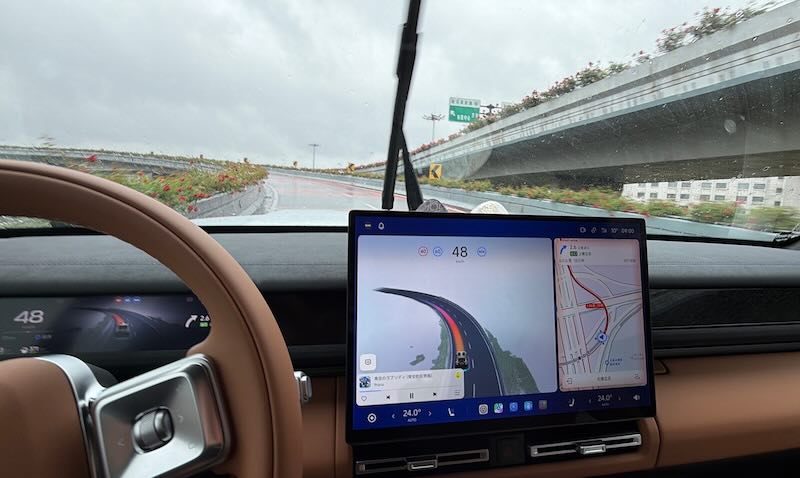
Horizon HSD’s framework for understanding LiDAR deployment starts with an educational metaphor. When calculators become permitted tools during examinations, students begin using them for problems that don’t require computational assistance. Device’s availability creates behavioral change—not because complex calculations demand it, but because precision tools encourage dependency.
This pattern repeats itself in perception systems. Once LiDAR enters the sensor suite, development teams often build algorithmic pipelines that lean heavily on its strengths. Point cloud data becomes the primary input for object detection, localization, and path planning. Camera-based approaches, despite their potential, receive less investment and refinement.
Challenge isn’t LiDAR’s capability—it’s the architectural choices that follow its introduction. Teams that begin with LiDAR-heavy approaches face significant technical debt when attempting to reduce dependency. According to Horizon HSD’s experience, this process rarely succeeds through gradual optimization. Instead, it typically requires fundamental re-architecture of the perception stack.
Horizon HSD’s development philosophy inverts the typical sequence. Their teams prioritize vision-first architecture, ensuring robust camera-based perception before introducing LiDAR for specific edge cases. This approach treats visual processing as the foundational capability—the “mental math” that handles common scenarios efficiently.
Only after establishing strong vision-first performance do they deploy LiDAR for challenging situations where camera systems encounter genuine limitations. This sequencing prevents algorithmic over-reliance and maintains system flexibility across different hardware configurations.
Production implications are significant. Vehicles equipped with Horizon HSD systems avoid ultra-high-cost LiDAR units because their architectures don’t demand flagship-grade sensors for baseline functionality. High-resolution point clouds don’t meaningfully improve performance in typical driving scenarios, and premium LiDAR conflicts with cost targets for volume production vehicles.
LiDAR pricing has decreased substantially over recent years, but most of that progress comes from more affordable units entering the market. Flagship-grade sensors with extended range, higher resolution, and improved solid-state reliability remain expensive. For automakers targeting mainstream segments, this cost structure creates tension between sensor capability and business viability.
Horizon HSD’s position is that vision-first architecture resolves this tension. By limiting LiDAR’s role to edge case handling, they can deploy cost-effective sensors without compromising system performance. Common scenarios—lane keeping, adaptive cruise control, object avoidance in structured environments—rely primarily on camera data and neural network processing.
In end-to-end neural architectures, vision provides advantages that extend beyond cost. Cameras capture richer semantic information about the driving environment, including traffic signals, road markings, and behavioral cues from other vehicles. Temporal continuity across video frames enables prediction and planning that discrete LiDAR scans can’t match.
Information density makes vision the natural backbone for scalable autonomy. LiDAR supplements rather than replaces camera-based perception, handling specific scenarios where range, precision, or occlusion resistance become critical. Architecture remains vision-centric, with LiDAR introduced only where it adds measurable value.
Horizon HSD’s approach establishes clear boundaries for LiDAR deployment. Sensor serves as a powerful calculator—carefully bounded and strategically applied. For parking-to-parking autonomy and L3, philosophy maintains performance while controlling costs. AEB implementations similarly benefit from vision-first processing, with LiDAR providing additional confidence in ambiguous situations.
Development philosophy doesn’t reject LiDAR’s value. Instead, it questions the assumption that more capable sensors automatically improve system performance. In many cases, vision-first architecture delivers better results because it forces teams to solve fundamental perception challenges rather than masking them with expensive hardware.
Industry’s trajectory suggests that vision-first architecture with targeted LiDAR deployment will become the dominant paradigm for production vehicles. As neural networks improve and computational power increases, camera-based systems will handle an expanding range of scenarios. LiDAR will remain valuable—but only when teams resist treating it as the first tool they reach for, rather than the last calculator they truly need.
Related Post
XPeng VLA 2.0 Drops LiDAR for Vision-Based Self-Driving, 99% Fewer Hard Brakes
Tesla Drops Lidar/Radar from FSD: Vision-Only Future Ahead for Autonomous Driving
LiDAR Weather Performance: Rain and Fog Challenges for Autonomous Vehicles