Tesla’s Q4 2025 earnings call marked a turning point, one that signals the company’s departure from traditional automotive priorities and its aggressive pivot toward autonomy, robotics, and energy production. Numbers tell a compelling story: automotive gross margins hit 18% excluding regulatory credits, while the Energy division posted margins near 30%. Yet these figures, however strong, serve as backdrop to the bigger narrative that unfolded during the call.
What became clear is that Tesla’s conventional vehicle business now functions primarily as a funding mechanism for more ambitious ventures. CEO Elon Musk didn’t mince words about where the company’s heading, announcing decisions that would have seemed unthinkable just a few years ago.
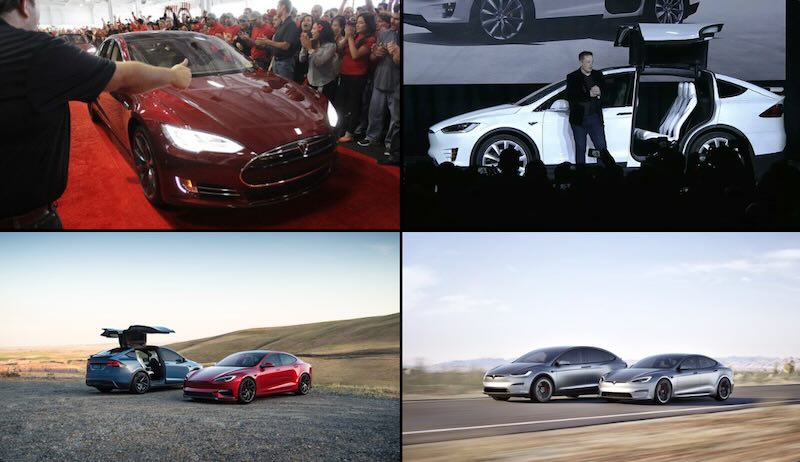
By June 30, 2026, Tesla will officially end production of the Model S and Model X. Model S launched in 2012 and the Model X in 2016, collectively delivered approximately 740k units and helped establish Tesla as a legitimate automaker rather than a Silicon Valley experiment.
Production space won’t sit idle. Instead, Tesla plans to convert the facilities into manufacturing capacity for Optimus, its humanoid robot project. “We are going to convert that production space to an Optimus factory,” Elon explained. “It’s part of our overall shift to an autonomous future.”
This decision represents more than product portfolio management. It demonstrates Tesla’s willingness to abandon proven revenue streams in pursuit of technologies that remain largely speculative from a market perspective.
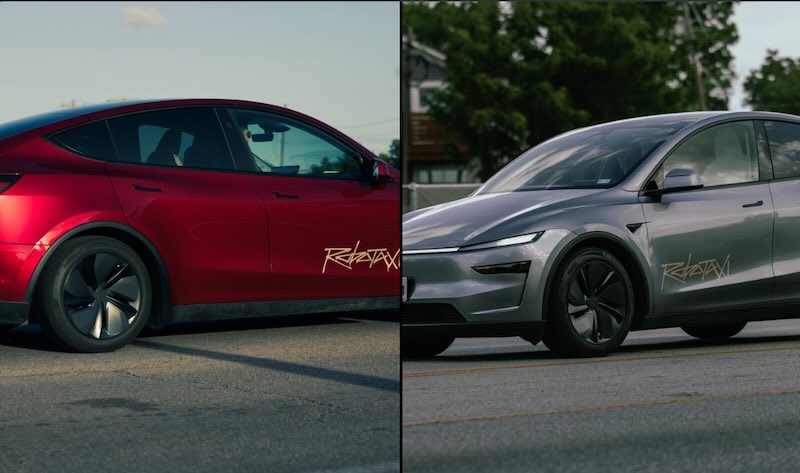
Tesla now operates 500 Model Y robotaxis across the Bay Area and Austin, providing paid rides to customers. As of the Q4 2025 earnings call, Elon announced that these vehicles running FSD Unsupervised no longer require follow cars, a significant operational milestone that suggests growing confidence in the technology’s reliability.
The company disclosed that 330k customers globally currently pay monthly subscriptions for FSD Supervised, while cumulative purchases and subscriptions have reached 1 million. These metrics, newly visible due to Elon’s 2025 CEO Performance Award requirements, provide transparency into adoption rates that Tesla previously kept private.
Elon projected that fully autonomous vehicles could operate in 25-50% of the United States by year-end, pending regulatory approvals. Whether regulators will move that quickly remains an open question, but the timeline reveals Tesla’s internal expectations.
CFO Vaibhav Taneja announced that 2026 capital expenditures will exceed $20 billion, roughly double what the company spent in 2025. Massive increase will fund expansion across multiple fronts: autonomous vehicle production, robot manufacturing, and solar cell production.
Elon declared that Tesla aims to become “a big manufacturer of solar cells,” targeting 100 gigawatts per year of cell production with vertical integration across the supply chain. Solar opportunity, according to Elon, remains significantly underestimated by analysts and investors.
On the semiconductor front, Elon identified chip production as the primary constraint for future growth. “I think Tesla needs to build a terafab,” he stated, noting that even optimistic projections from existing suppliers won’t meet anticipated demand within three to four years. Building domestic fabrication capacity presents enormous technical and financial challenges, but Elon positioned it as necessary to avoid bottlenecks.
Tesla plans to unveil Optimus 3 within months, with Elon describing it as “quite capable.” Robot currently operates in Tesla factories for learning purposes rather than material production contributions. Volume manufacturing isn’t expected until late 2026, with Elon projecting that Fremont facilities could eventually produce 1 million units annually.
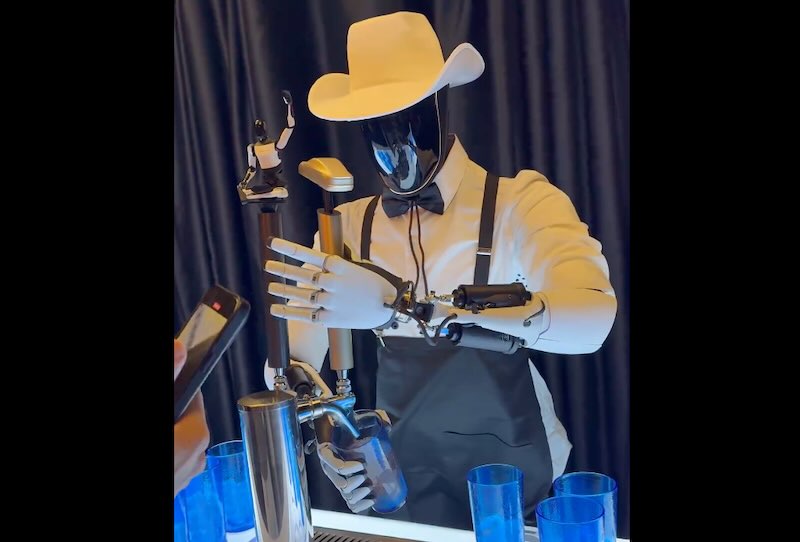
Regarding competition, Elon tages in three critical areas: hand dexterity, real-world AI capabilities, and manufacturing scale. “Long term, Optimus will have a very significant impact on the U.S. GDP,” he predicted.
Elon’s vision for Tesla’s future product portfolio is remarkably focused. “In the future, the only vehicles we’ll make are autonomous vehicles and the Roadster,” he announced. The Roadster, which the company hopes to debut in April 2026, represents the sole exception to the autonomy mandate.
Even the Cybertruck, still ramping production, will eventually transition to a fully autonomous vehicle platform. “An autonomous Cybertruck could be very useful,” Elon noted, though specifics about applications and timeline remained vague.
The Cybercab, Tesla’s purpose-built robotaxi, epitomizes this approach. “It does not have steering wheel or pedals,” Elon emphasized. “It either drives itself or it does not drive.”
With vehicle order backlogs larger than recent years and margins holding steady, Tesla pulls off this strategic transformation from a position of financial strength rather than desperation, a luxury that few automakers attempting similar pivots can claim.
Related Post
Tesla Q3 2025: Record Revenue and AI5 Chip Breakthrough with 40× Performance
Tesla Giga Shanghai Delivers Record 97K Vehicles in December 2025
Tesla FSD Drives Coast-to-Coast Without Human Intervention, Full Story