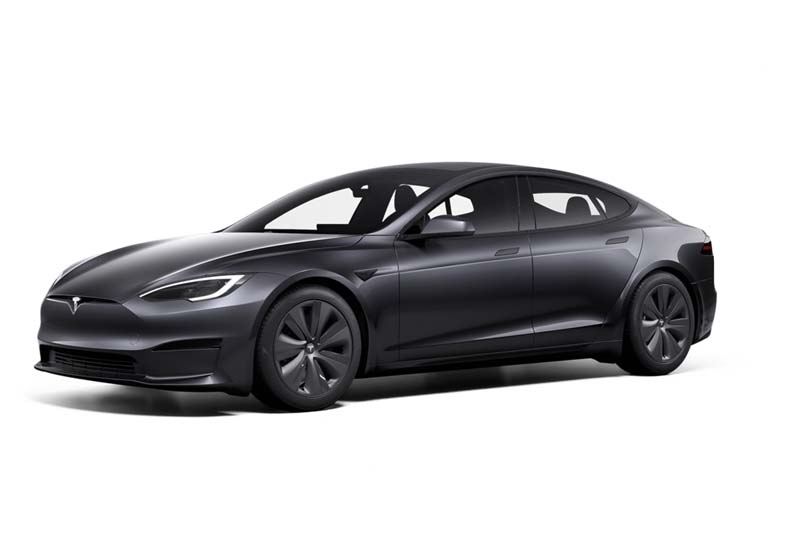
Fourteen years is a long time in the automotive industry. Platforms get replaced, brands get repositioned, and consumer tastes shift faster than most engineering cycles can accommodate. Yet somehow, Tesla Model S managed to stay relevant through all of it — not by chasing trends, but by quietly reinventing itself from the inside out. Now, as production winds down, it’s worth examining exactly what this car did to the industry, and why its absence will be felt well beyond Tesla’s own lineup.
Before the Model S arrived in 2012, Tesla had already built an electric car. Original Roadster was real, drivable, and genuinely quick, but it wasn’t a market-mover. With fewer than 2,500 units produced and a price point that limited its audience to the very wealthy, it registered more as a proof-of-concept than a commercial statement.
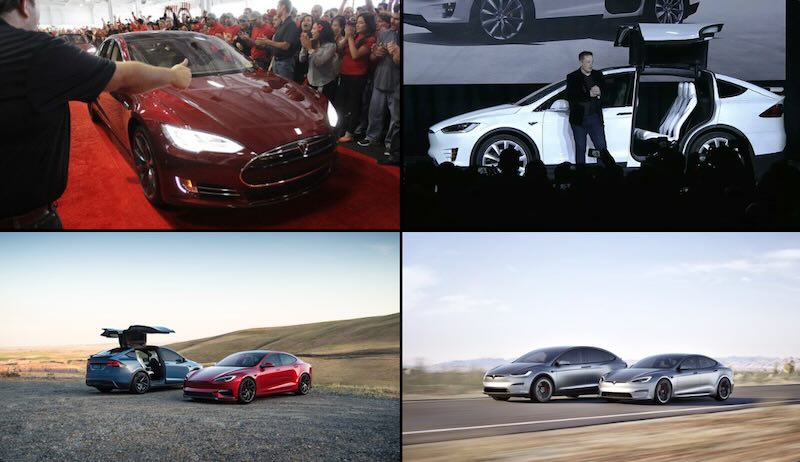
Model S was different. It arrived as a full-size luxury sedan targeting mainstream premium buyers, and it made a case that electric vehicles weren’t a compromise. In doing so, it forced the entire industry to reconsider its assumptions. Today, legacy automakers’ EV lineups — along with newer entrants — can trace part of their strategic pivot back to that moment.
Here’s where things get genuinely interesting. Model S that exists today shares roughly 3% of its components with the 2012 original. Suspension, powertrain, body structure, and both low- and high-voltage systems have all been replaced over time, yet there was never a formal “new generation.” Part count dropped from approximately 5,000 to around 3,000, reflecting years of integration work that simplified manufacturing and reduced failure points.
This continuous iteration, without hard model-year breaks, is a direct result of how Tesla operates internally. Traditional automakers build toward a Start of Production milestone — a fixed date around which entire product cycles are organized. Tesla doesn’t work that way. It ships hardware and software updates on rolling timelines, treating the car more like a platform than a product.
One internal framework that captures Tesla’s approach well is the concept of “battery dollars.” Rather than measuring efficiency gains in abstract engineering terms, the company quantifies improvements by comparing their cost against the equivalent battery capacity needed to achieve the same range benefit.
A higher-quality wheel bearing, for instance, might cut rolling resistance dramatically, adding meaningful range at a marginal per-unit cost. Sourcing that same range gain from additional battery cells would cost hundreds of dollars more, plus trigger cascading structural changes. In that accounting system, the bearing is the obvious choice. It’s a disciplined, cost-per-mile framework that explains why the Tesla Model S kept getting better without necessarily getting more expensive to produce.
Before this car existed, over-the-air (OTA) updates simply weren’t part of automotive vocabulary. A door handle malfunction on an early test drive was fixed overnight via a software patch — something that would’ve required a dealer visit, a technical service bulletin, and weeks of delay at any traditional automaker.
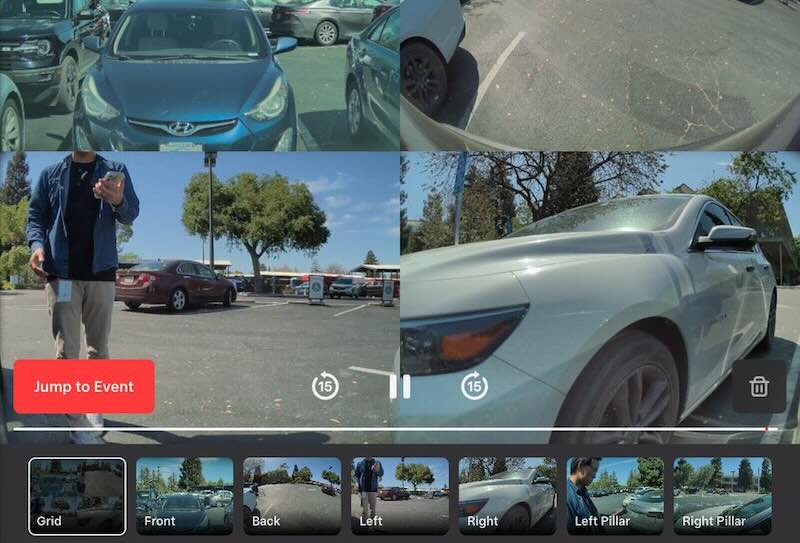
That same philosophy extended to features like Sentry Mode, a 360-degree security system built entirely from existing hardware — cameras, onboard storage, low-voltage systems — and developed internally in under a week. Zero added cost. Pure software execution.
When Tesla designed the Model S’s large central display, the iPad hadn’t been released yet. The company had no reference point, so it built its own interaction paradigms from scratch. That decision now looks prescient — nearly every vehicle interior launched in the past five years has followed the same template.
Model S didn’t just sell well. It rewrote what a car could be — and the industry is still catching up.
The Model S may be ending its run, but its model lives on everywhere you look.
Related Post
Tesla Model S & Model X Plaid Signature Edition: 350 Exclusive Units at $159,420
Tesla Actually Smart Summon Coming to Legacy Model S and Model X in Q4 in this year
Tesla Model S and X 2025 Refresh: New Features Coming to Premium Electric Vehicles