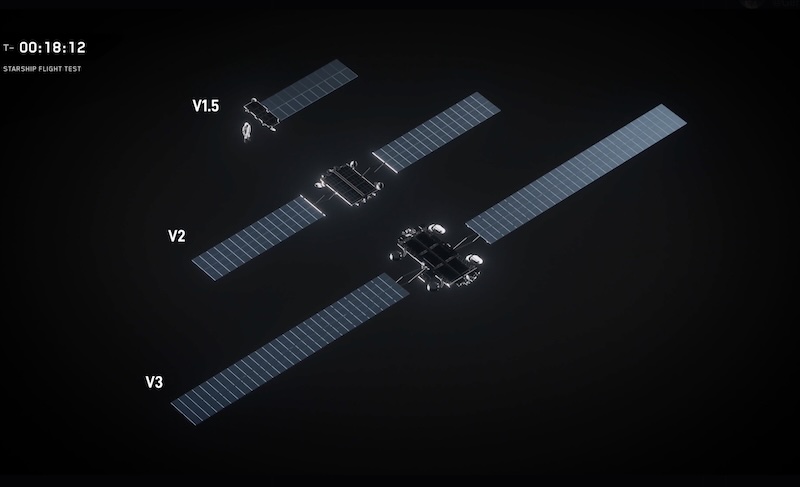
SpaceX is treating its 13th Starship test flight as more than a technical exercise. For the first time, the company plans to carry operational V3 Starlink hardware into space, a step that ties the rocket’s engineering progress directly to the revenue side of the business. The mission, expected to launch from Starbase, folds together a heat shield inspection campaign, a batch of upgraded satellites, and a long list of hardware changes made after the previous flight fell short of a clean landing.
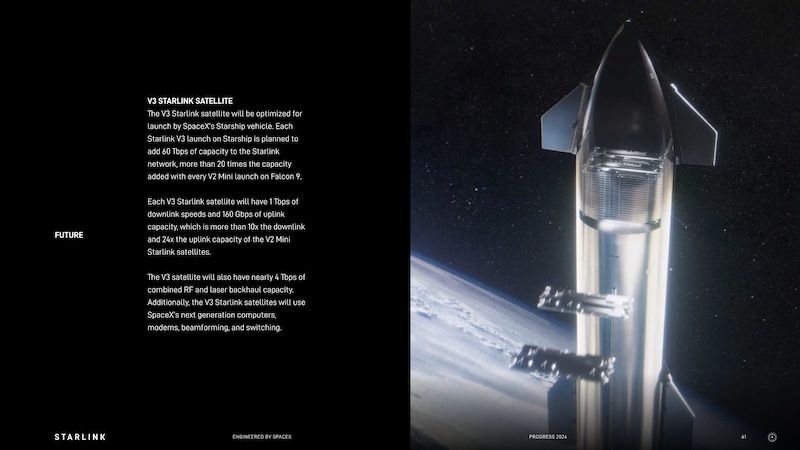
Starlink is currently the only part of SpaceX that generates consistent profit, V3 satellite generation is central to keeping that pattern intact. Instead of another round of mass simulators, Ship 40 is scheduled to release 20 V3 satellites equipped with laser links, deployable solar arrays, and onboard antennas. Once released, the satellites will extend their arrays and attempt contact with ground stations in South Africa, then link into the broader Starlink network. That sequence, if it goes as planned, would confirm that Starship can deploy satellites capable of joining live constellation operations rather than simply riding along for data collection.
6 of the 20 satellites carry an additional job. Equipped with cameras, they’re tasked with scanning Starship’s heat shield after reentry and sending that imagery back to engineers on the ground. SpaceX has painted several tiles white to act as stand-ins for missing sections, giving the onboard cameras clear reference points to photograph. It’s a low-cost way to gather comparison imagery without waiting for a full teardown after landing.
Heat shield performance has been a persistent bottleneck for Starship’s reuse ambitions, and this SpaceX Starlink V3 flight adds more instrumentation to that effort. New tile designs and mounting hardware will be tested, including sections on the aft flaps and aft skirt where stress tends to concentrate during reentry. Some tiles now include load sensors, which will record the physical stresses the shield experiences throughout the flight rather than relying solely on post-flight visual inspection.
The ascent profile has also changed. SpaceX plans to fly a steeper dynamic pressure curve this time, intentionally putting more stress on the heat shield while also testing the vehicle’s payload limits under those conditions. Combined with a planned in-space Raptor relight, the flight plan reads less like a routine checkout and more like a structured effort to close out open questions from Flight 12.
Those questions weren’t minor. During the previous flight, one of Super Heavy’s 33 engines dropped out during ascent, and the booster subsequently struggled through its boostback burn before missing its splashdown target. In response, SpaceX has rebuilt the stage separation flip sequence to keep the booster from rotating off course, added hardware meant to improve Raptor re-light reliability, and revised the engine alarm and abort logic for situations involving multiple engines. Separate changes address the propulsion issue that caused Flight 12’s engine dropout directly.
None of these fixes guarantee a clean flight. Starship’s test campaign has moved in fits and starts, with strong results on some flights offset by rough landings on others. What’s different about this attempt is the stacking of objectives: propulsion fixes, heat shield instrumentation, and a live satellite deployment all riding on the same mission. A partial success on any one front would still generate useful data, but a fully clean flight would mark real progress toward Starship functioning as a routine satellite launcher rather than a test article.
If Starship pulls off the V3 Starlink deployment cleanly, SpaceX won’t just be testing a rocket. It’ll be launching a business.
Related Post
SpaceX Reveals Gigantic Starlink V3 Satellites: Gigabit Faster Internet Coming Soon
Starlink Performance Hits 200 Mbps: V3 Satellites Coming 2026
Starlink V3 Satellites Promise Sub-20ms Latency Launch in 6-9 Months