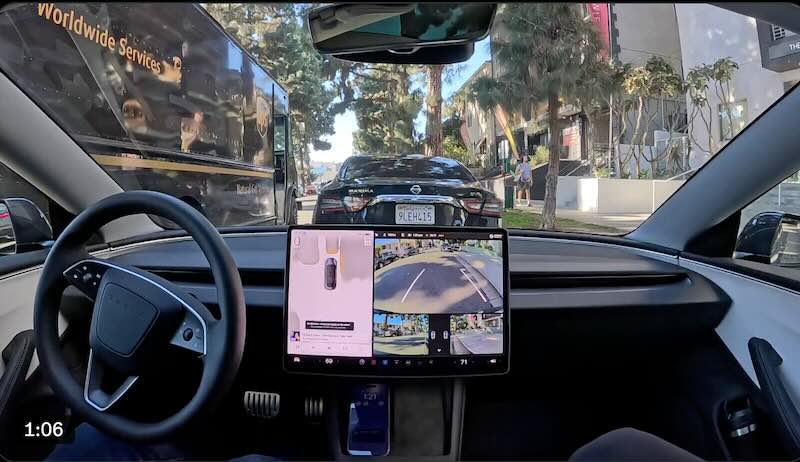
Elon has confirmed a shift in how Tesla’s FSD system will operate going forward, moving away from a single driving logic applied across every vehicle in the fleet. Instead, neural network behind FSD will begin learning the habits of individual drivers, remembering their preferences, and adjusting its behavior to match. Consequently, two people driving identical Teslas could soon experience noticeably different behavior behind the wheel, simply because the system has learned what each of them actually wants.
Announcement, made directly by Elon in response to a driver complaint on X, signals that Tesla views standardization as a limitation rather than a feature. Human drivers rarely make identical choices in identical situations, after all, so a system built to serve millions of individual habits needs more flexibility than one built to serve a single average driver.
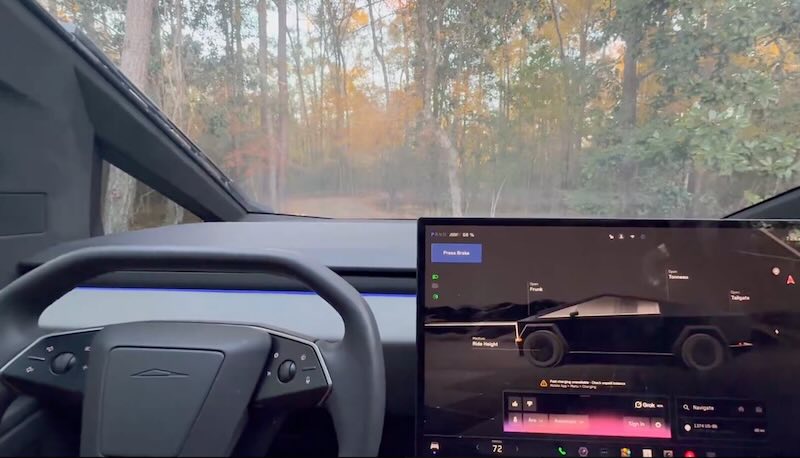
Tesla FSD bloger Omar raised a frustration that will sound familiar to many owners: the vehicle exits HOV lanes or express lanes earlier than necessary, even in cases where staying put would clearly be more efficient. Omar described watching other vehicles continue smoothly in the far-left lane while their own Tesla merged into heavier traffic, seemingly against their better judgment.
Elon’s reply cut straight to the point. He confirmed that the car would begin remembering specific driver interventions and matching individual preferences going forward. That’s a meaningful departure from how FSD has operated until now, since previous versions learned one standardized approach meant to satisfy the entire fleet rather than any one driver’s habits. Moving forward, though, the system may learn several different approaches to the same scenario, then apply whichever one fits the person actually sitting in the driver’s seat.
Parking style offers one of the clearest examples of why standardization falls short. Some drivers back into a space out of habit, while others pull in head-first without a second thought. Neither approach is objectively better, yet a fleet-wide model has no way to account for that kind of personal variation.
Once FSD learns multiple parking patterns, however, it can observe how a specific driver typically approaches a space and select the behavior that matches their preference. Elon has previously indicated that future FSD versions will extend this concept even further, learning where a driver prefers to park near frequently visited places such as home, work, or a child’s school. Given how often parking triggers manual takeovers today, this may end up being one of the first areas where personalization becomes noticeable to everyday drivers.
HOV lane issue isn’t new, and Tesla has already taken steps to address it through manual controls. Drivers can adjust the vehicle’s approach through Controls > Navigation > Use HOV Lanes, or simply issue a voice command such as “Enable HOV lanes.” A recent update simplified this further by introducing three distinct options.
Auto relies on the cabin camera to determine eligibility based on time, location, and passenger count, while Yes forces the vehicle to use HOV lanes whenever they’re available. No, on the other hand, prevents the vehicle from entering HOV lanes entirely. These settings work well enough as a manual workaround, but they still require the driver to specify a preference upfront rather than having the system infer it automatically over time.
Tesla has recently introduced a persistent FSD takeover feedback menu, prompting drivers to explain why they took control whenever an intervention occurs. This detail matters more than it might initially seem, since it suggests Tesla is actively building a feedback loop between driver behavior and system improvement rather than treating interventions as isolated corrections.
If FSD can learn from these patterns, repeated interventions in similar situations become valuable signals rather than nuisances. System could begin to understand why a driver takes over in a specific context, then adjust its strategy for that driver specifically. Over time, this could reduce the number of unwanted decisions the system makes, provided Tesla’s approach to processing this feedback holds up at scale.
Tesla is expected to launch FSD v15 later this year or in early 2027, and the update is reportedly built around a model with roughly ten times more parameters than its predecessor. A model of that size could plausibly support the kind of individualized learning Musk has described, since personalization at this scale requires significantly more capacity than a single standardized driving policy.
Whether v15 delivers on this promise remains to be seen, and Tesla hasn’t detailed exactly how quickly the system will adapt to a new driver or how it will handle households where multiple people share one vehicle. Still, the direction is clear enough. Tesla wants FSD to stop treating every driver the same way, and if the company pulls this off, personalized autonomy might finally live up to its name.
Related Post
Tesla FSD V14 Lite Rolls Out to HW3 Owners After 14-Month Wait
Tesla FSD + Grok Voice Control: Talk to Your Tesla Like a Human Driver
Tesla FSD V14.3.3 Update: 8 MPH Summon & Intervention Tracking