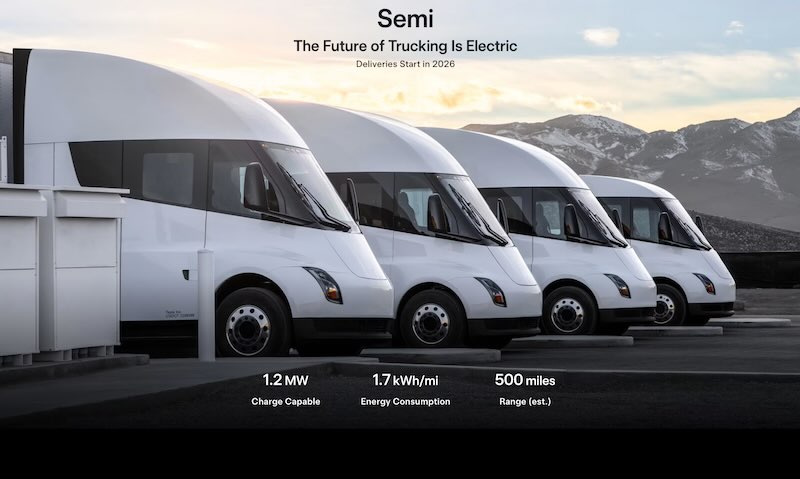
Tesla has officially pulled the wraps off the European version of the Tesla Semi, and it’s a truck that’s been clearly engineered for the continent’s specific regulatory and operational demands. Announced ahead of IAA Transportation in Hannover, where Tesla’s Dan Priestley is set to take the keynote stage on Tuesday, September 15th at 11:30 am Euro-spec Tesla Semi carries meaningful differences from its American counterpart, not just cosmetic tweaks.
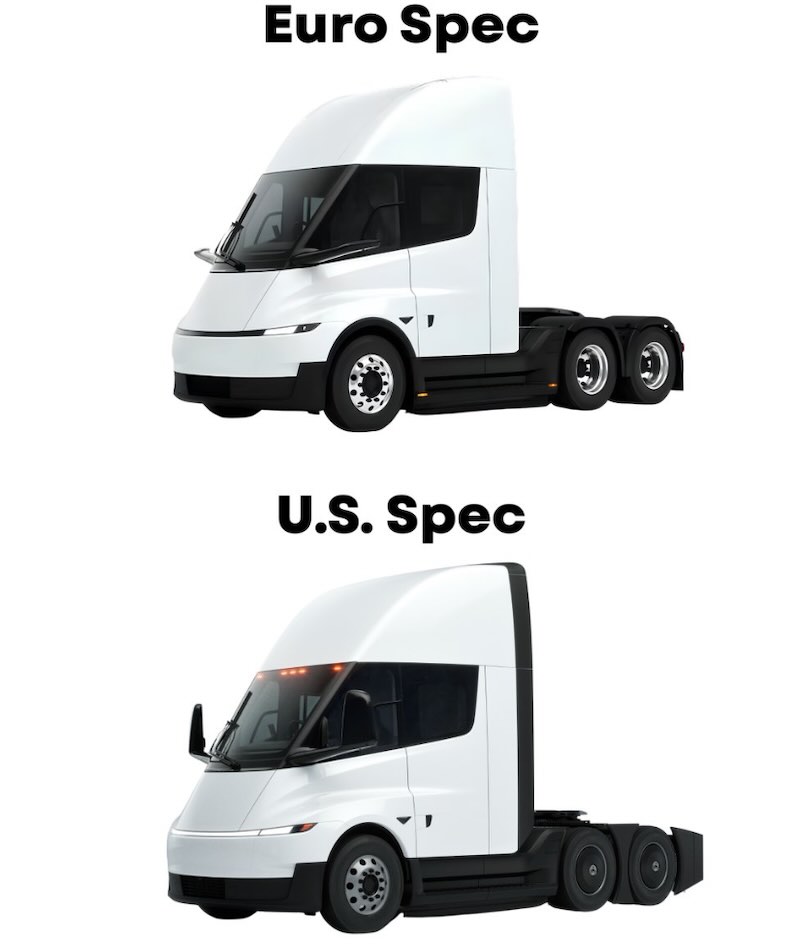
Most immediately visible departure is the side mirror setup. Gone are the traditional mirrors; in their place, camera monitor systems handle rear visibility. Interestingly, European truck regulations have permitted this change since 2016, while U.S. rules still haven’t caught up, making the Euro-spec truck actually more technologically current in this regard. Headlight configuration also differs: the European Tesla Semi adopts a design closer to the Model Y Standard, featuring discrete headlight units rather than the full-width light bar seen on the American variant.
Tesla is confirming 550 km (approximately 342 miles) of range at a fully loaded 40-metric-ton gross combination weight, a figure that fleet operators will scrutinize carefully. That’s not a best-case scenario number; it’s rated at maximum legal European payload capacity.
Energy consumption is pegged at 1.0 kWh/km (or 1.61 kWh/mile), and Megacharger support tops out at 800 kW of drive power, allowing the truck to recover roughly 60% of its battery within 30 minutes. For operators running hub-to-hub routes with scheduled breaks, that charging window fits neatly into mandatory rest periods under European driving regulations.
Curb weight comes in under 9,100 kg (under 20,000 lbs), which is a practically significant figure. Fleet managers calculating payload capacity within the 40-tonne gross limit will appreciate the headroom that lean curb weight provides.
One spec that deserves more attention than it typically gets: the electric power take-off, or ePTO, rated at up to 25 kW. This allows Tesla Semi to power auxiliary equipment, refrigeration units, hydraulic lifts, tail lifts, without running a diesel engine at idle. For cold-chain logistics operators in particular, this isn’t a minor convenience; it’s a direct operating cost reduction with meaningful emissions implications in urban loading zones where idling restrictions are tightening.
European deliveries are currently scheduled to begin in 2027, and Tesla’s European Semi website is now live for fleet inquiries. Based on the range figures disclosed, it appears the Standard Range variant will lead the European rollout, with higher-range configurations likely to follow.
Timing relative to IAA is deliberate. Europe’s freight sector is under sustained pressure to decarbonize, and regulators are tightening CO₂ targets for heavy trucks through 2030. Tesla is positioning the Semi not as a future concept but as an operational product with a concrete timeline.
For the long-haul freight industry, real question isn’t whether electric trucks are coming, it’s whether the Tesla Semi can carry the weight of that transition.
Related Post
Einride Orders 500 Tesla Semis in World’s Largest EV Truck Deal — What It Means
Tesla Semi FSD: What the New Ground-Truth LiDAR Sightings Actually Mean
Tesla Semi Charging for Businesses: Pricing, Hardware & Network Fees Explained