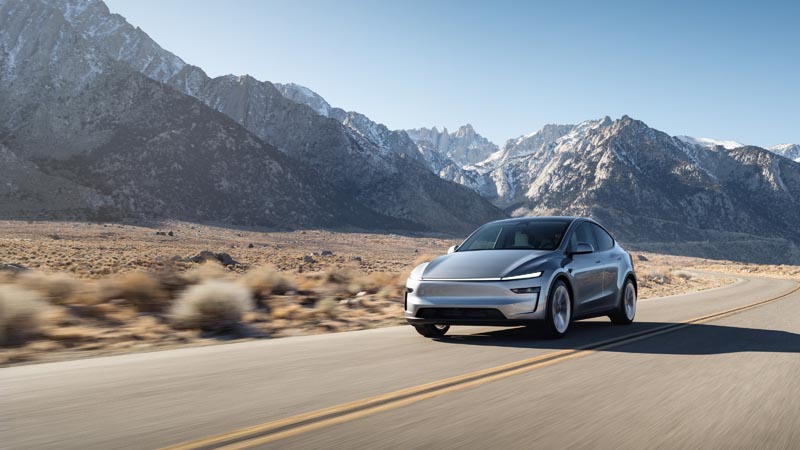
The line between automotive and aerospace tech keeps getting shorter. Elon Musk confirmed this week that Tesla’s entire vehicle lineup could have Starlink satellite internet integrated directly into the hardware by the end of 2027, would fundamentally shift what it means to sit inside a Tesla.
Elon stated the rollout is targeted for “towards the end of next year,” framing Tesla’s Starlink connectivity not as a convenience feature, but as a critical infrastructure layer for the company’s autonomous driving ambitions.
Unsupervised FSD can’t function in a data vacuum. For passengers to trust a vehicle operating without human oversight, the system needs reliable, high-bandwidth connectivity at all times, not just in cities with dense cell towers, but on highways, in rural corridors, everywhere.
Elon was explicit about this dependency. Starlink integration is “important for unsupervised FSD, so passengers have high bandwidth everywhere for work and entertainment.” Phrasing covers two distinct use cases: the backend requirements of autonomous navigation and the front-facing passenger experience. Both matter. Neither is optional if Tesla wants unsupervised FSD to scale globally.
Interestingly, technology isn’t purely theoretical at this point. Cybercabs operating in Dallas already carry Starlink hardware integrated into the vehicle. There’s a catch, though: riders can’t actually connect to it yet. Hardware’s there; the consumer-facing service layer isn’t.
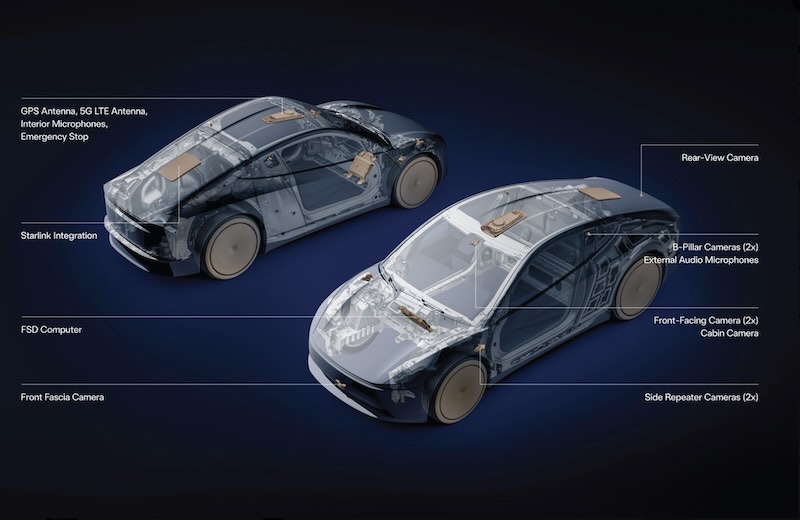
That gap, between hardware deployment and functional access, tells you something about where Tesla is in this process. They’re building the infrastructure ahead of the demand curve, which is consistent with how Tesla has historically approached platform rollouts.
No global rollout announcement would be complete without geopolitical asterisks. Elon acknowledged the China exception directly: Starlink is illegal there, meaning Tesla’s Starlink ambitions have a hard ceiling in one of the company’s most significant markets.
This isn’t a small footnote. China represents a substantial portion of Tesla’s global sales volume. Any connectivity feature unavailable there creates a bifurcated product experience, one version of Tesla for most of the world, and a different one for Chinese consumers. How Tesla manages that divergence over the long term is a question the company will need to answer, especially as unsupervised FSD rolls out in stages across different regulatory environments.
Beyond FSD argument, the passenger value proposition here is straightforward: consistent, high-speed internet regardless of location. For long-distance travel, that’s genuinely useful. Streaming, video calls, and file transfers that currently depend on spotty LTE coverage would become reliable.
It’s worth noting that Starlink’s low-earth orbit satellite network has matured considerably over the past few years. Latency and throughput figures have improved to the point where real-time applications, not just passive media consumption, are viable. Integrating that into a vehicle platform isn’t just a novelty; it’s a legitimate infrastructure upgrade.
Of course, remains a projection. Tesla has a well-documented history of ambitious target dates shifting. But the hardware already riding in Dallas Cybercabs suggests this one has more substance behind it than a headline announcement.
Whether it arrives precisely on schedule or not, Tesla’s Starlink integration signals where connected vehicles are heading, it’s well beyond just streaming a podcast on your commute.
Related Post
Tesla Cybercab: Inside the Robotaxi Production Line Rewriting Autonomous Driving
The All-In Podcast: SpaceX IPO, Tesla, The Space Opportunity
Starlink V3 Satellites Promise Sub-20ms Latency Launch in 6-9 Months