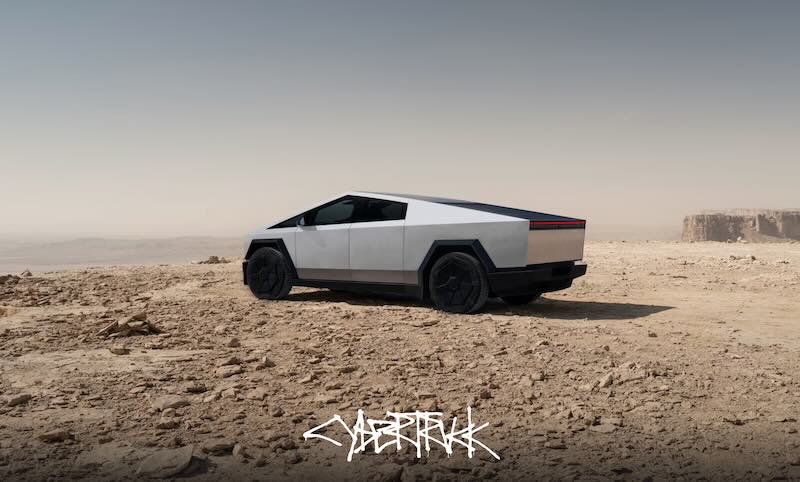
Elon Musk has confirmed what many industry watchers had started to anticipate: Tesla will discontinue Cybertruck production at Gigafactory Texas around mid-2027. Pivot isn’t just a product decision, it’s a signal about where Tesla sees its future, and that future doesn’t have much room for a stainless-steel pickup truck that never quite hit its stride.
In Elon’s own words: “Tesla will be winding down production of the Cybertruck at Gigafactory Texas around the middle of next year to make room for increased Cybercab production.”

That’s a pointed statement. Factory floor space currently dedicated to Cybertruck will be repurposed for Cybercab manufacturing, a move that reflects a straightforward calculation: Tesla can produce far more Cybercabs than Cybertrucks in the same footprint, with significantly better revenue potential per square foot.
Tesla moved roughly 8,000 Cybertrucks in Q3 2026. For context, that’s underwhelming for a vehicle that was supposed to reshape the American pickup market. Cybertruck launched with enormous fanfare, and while it found a passionate early-adopter base, volume never scaled to anything resembling the original ambitions.
What’s more telling is what’s been happening to its pricing. Tesla has raised Cybertruck prices in the U.S. by up to 9%, on top of increases that already came through in August 2026:
- Cybertruck Premium AWD: now $92,490, up from $84,990 (a 9% jump)
- Cybertruck Cyberbeast: now $102,490, up from $99,990 (a 2.5% increase)
Premium AWD trim tells the starkest story. Earlier this year, it started at $79,990. It now opens at $92,490. That’s a $12,500 increase nearly 16%, in under twelve months. Meanwhile, new orders for the base Dual-Motor AWD trim, previously listed at $74,990, have been paused entirely. Trim still appears on Tesla’s configurator, grayed out at $82,490, suggesting a 10% increase is waiting in the wings if it ever returns.
Raising prices while simultaneously winding down a product isn’t a turnaround strategy. It’s an end-of-life signal.
Tesla’s discontinuation of Cybertruck fits into a broader trend that’s been forming quietly at the company. Model S/X recently faced similar fates, not because they were outright failures, but because the internal calculus had shifted.
Consider the scenario Tesla’s engineering leadership reportedly found itself in: one group mapping out where to build production lines for Optimus robots, another making the case that Model S/X platforms had simply aged past the point of economical redesign. Two conversations didn’t take long to converge into one obvious answer—repurpose the space.
Cybertruck’s situation is distinct. Unlike Model S/X, which carried the brand through years of growth, Tesla’s Cybertruck was positioned as a high-volume mainstream product. It was meant to compete directly in one of the most lucrative vehicle segments in the United States. That it didn’t reach those volumes is the more uncomfortable truth here.
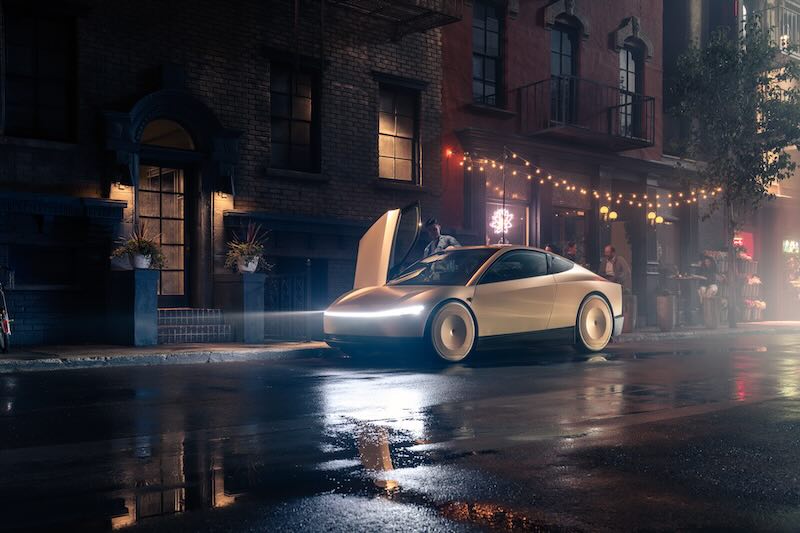
Elon has been increasingly direct about Tesla’s strategic direction: autonomy, humanoid robotics, and energy. Cybercab represents the autonomy pillar, a fully driverless vehicle designed from the ground up without a steering wheel or pedals. Scaling Cybercab production isn’t just a product bet; it’s the operational foundation for Tesla’s robotaxi network ambitions.
Optimus, Tesla’s humanoid robot, represents the robotics pillar, factory floor space at Gigafactory Texas is a finite resource. Every square meter dedicated to low-volume truck production is a square meter not building the future Elon keeps describing in earnings calls.
Energy storage, through Megapack and Powerwall, rounds out the picture. Tesla isn’t abandoning vehicles, but it’s clearly narrowing its vehicle portfolio to protect capacity for higher-margin, higher-velocity bets.
Traditional auto industry has spent years trying to figure out what Tesla actually is. The answer, it turns out, is that Tesla is still figuring that out too and right now, Cybertruck doesn’t fit the answer they’re writing.
Discontinued, overpriced, and over-promised, looks like the Cybertruck is finally getting cyber-trucked.
Related Post
Tesla Ends Model S & X Production, Goes All-In on Robots & Autonomy, Q4 2025 Earnings
Tesla Cancels Cybertruck for Australia & New Zealand, Here’s What Reservation Holders Get
Tesla Cybercab: Inside the Robotaxi Production Line Rewriting Autonomous Driving