
Tesla’s latest OTA brings an unexpected yet practical enhancement to the Cybertruck’s towing capabilities. V2025.26 introduces an undocumented feature that actively monitors vehicle load distribution and warns drivers when weight limits are exceeded.
New load monitoring system operates through sophisticated analysis of existing vehicle sensors. Tesla’s engineering team appears to have developed a dual-method approach for detecting rear axle overload conditions.
The primary detection method likely utilizes the Cybertruck’s advanced air suspension system. By continuously measuring pressure requirements and adjustment efforts needed to maintain vehicle level, the system can calculate the load being placed on the rear axle. Capability isn’t available in traditional trucks without original equipment manufacturer air suspension systems.
Secondary load detection comes from the rear motor assemblies themselves. Electric motors provide constant feedback regarding torque output and strain levels during operation. Data stream allows the vehicle’s computer to infer weight distribution and detect when loads exceed safe operating parameters.
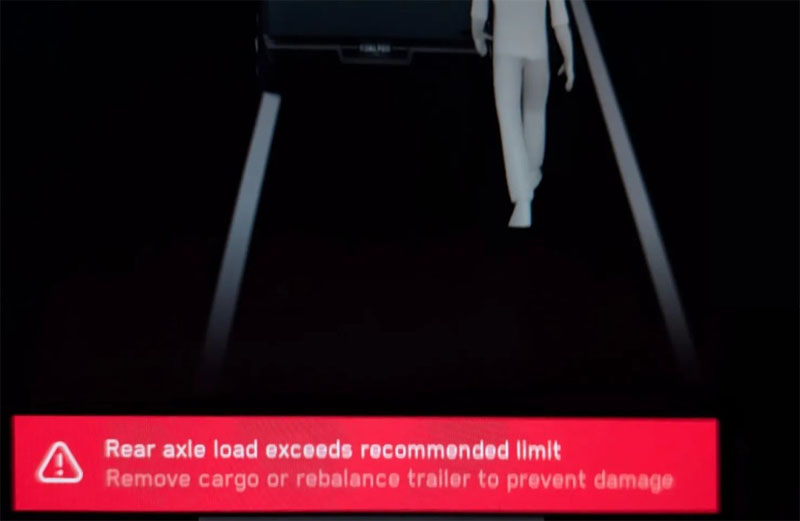
When the Cybertruck’s sensors detect an overloaded rear axle condition, the system doesn’t simply flash a generic warning light. Instead, it provides specific, actionable guidance to help drivers address the situation safely.
Alert system offers two primary recommendations: removing weight to reduce trailer tongue weight, or redistributing load placement on the trailer itself. Both suggestions directly address the root cause of the overload condition rather than leaving drivers to guess at appropriate solutions.
Beyond the automated warnings, proper towing practices remain essential. Weight-distributing hitches can significantly improve load balance and reduce tongue weight transferred to the vehicle. Cybertruck’s new detection system complements these traditional safety measures rather than replacing them entirely.
Enhancement showcases Tesla’s unique approach to vehicle improvement through software rather than hardware modifications. Load detection feature required no additional sensors, new components, or model year changes. Instead, clever engineering extracted new functionality from existing systems.
System’s real-time monitoring capability means drivers receive immediate feedback about loading decisions. Instant awareness helps prevent costly repairs and potential safety incidents that might otherwise occur with traditional passive weight rating systems.
Will this smart detection technology become standard across Tesla’s entire vehicle lineup? Cybertruck’s enhanced load monitoring represents exactly the type of practical innovation that transforms everyday utility vehicles into intelligent safety partners.
Related Post
Tesla Launches $69,990 Cybertruck RWD: 350-Mile Range, Fewer Features, June 2025 Delivery
Tesla Cybertruck Protects Father and Daughter in 60 MPH Collision with Drunk Driver
Cybertruck Earns Top NHTSA Safety Score: Wes Revealed Engineering Crumple Zone Secrets