
SpaceX is implementing strategic pricing adjustments for its satellite internet service in a calculated move to expand market penetration. Starlink’s decision to reduce monthly subscription costs represents a significant shift from previous pricing strategies, targeting new customers across select US markets with substantial savings opportunities.
The revised pricing structure offers compelling incentives for prospective subscribers considering satellite internet options. New customers in participating locations can access the Residential plan for $99 monthly, representing a $21 reduction from the standard $120 fee. Additionally, the Residential Lite option drops to $65 per month, down from its regular $80 pricing tier.
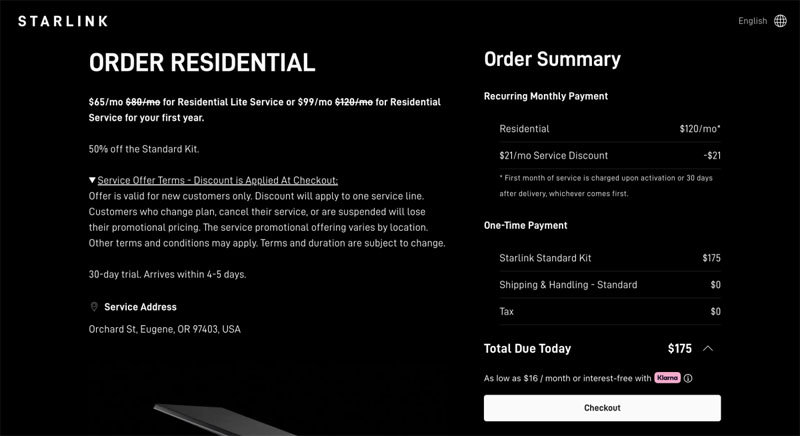
Promotional rates apply exclusively to first-year subscriptions, after which standard monthly fees resume. SpaceX emphasizes that promotional offerings vary by geographic location, with availability determined by network capacity and regional demand patterns. Starlink’s terms specify that discounts apply to single service lines per customer account.
SpaceX hasn’t disclosed specific markets where these promotions apply, but industry analysis suggests availability correlates with regions where Starlink maintains excess network capacity. Over two dozen US states appear eligible for Residential Lite discounts, indicating substantial geographic coverage for the promotional campaign.
The selective rollout strategy reflects SpaceX’s operational approach to managing network resources while pursuing customer growth objectives. Areas with established infrastructure and available bandwidth receive priority access to promotional pricing, enabling the company to optimize service delivery while expanding subscriber numbers.
While promotional service rates offer monthly savings, hardware pricing structures have also evolved. SpaceX previously offered free satellite dishes valued at $349 to customers willing to commit to 12-month service agreements. That promotion has ended, but the company now provides nationwide hardware discounts reducing dish costs from $349 to $175.
Hardware pricing adjustment affects all customers regardless of location, available through multiple retail channels including the company’s website, major retailers, and electronics stores. Strategy shifts from subsidizing hardware completely to providing meaningful discounts that reduce initial setup costs.
The mathematics behind these promotions reveal significant first-year savings potential. Residential plan subscribers save $252 over 12 months, while Residential Lite users save $180 during the promotional period. Combined with hardware discounts, total first-year savings can exceed $400 for new customers choosing standard residential service.
These savings calculations demonstrate SpaceX’s commitment to reducing barriers for customer acquisition. The company appears willing to accept reduced short-term revenue per subscriber in exchange for accelerated market penetration and subscriber base expansion.
SpaceX’s subscriber metrics indicate steady growth momentum, with US customer numbers reaching over 2 million, representing a substantial increase from 1.4 million subscribers one year prior. This growth trajectory supports the company’s decision to invest in promotional pricing strategies that could further accelerate adoption rates.
International markets including Canada, Australia, and New Zealand have reportedly received similar promotional offers, suggesting a coordinated global pricing strategy.
Promotional campaign represents SpaceX’s most aggressive pricing strategy to date, moving beyond hardware subsidies to direct service discounts. As the satellite internet market becomes increasingly competitive, these price drops position Starlink as a more accessible option for customers seeking alternatives to traditional broadband providers. Whether this pricing strategy succeeds in significantly expanding market share will depend on customer response rates and the company’s ability to maintain service quality while scaling operations to support increased demand.
Related Post
Starlink Performance Hits 200 Mbps: V3 Satellites Coming 2026
Starlink V3 Satellites Promise Sub-20ms Latency Launch in 6-9 Months
Starlink Router Mini: SpaceX New Solution for Enhanced Wi-Fi Coverage